Attendance System
 Access Control
 Door Security
 Turnstile & Entrance Control
 Security Inspection
 Parking Management
 Safety Products
 Software
 Other
How eBiddyaPro Helps Schools Organize Student Medical Information and Emergency Records
October 27, 2026
How eBiddyaPro Helps Schools Organize Student Medical Information and Emergency Records
Every school has a responsibility to know how to contact a student’s family when an urgent situation occurs. Alongside academic information, schools may also need access to relevant health details that parents or guardians have chosen to share, such as an allergy, a medical condition or an emergency care instruction.
In many educational institutions in Bangladesh, this information is collected during admission and stored in paper files, notebooks or separate spreadsheets. As students move between classes and families change phone numbers, keeping these records accurate can become challenging. When an urgent situation arises, staff may need to search through multiple sources before finding the right contact details.
A digital school management system can help institutions organize student and guardian information more consistently. eBiddyaPro, a school management platform by TRIMATRIK MULTIMEDIA, provides a starting point for schools that want to manage student profiles and guardian information digitally. Its published guidance discusses student records and guardian contacts; schools should confirm whether their chosen package includes dedicated medical fields, emergency records or related permissions before relying on those features.
This guide explains how educational institutions can plan a responsible approach to student medical information and emergency records, and how eBiddyaPro can fit into that process.
What Are Student Medical Information and Emergency Records?
Student medical information refers to health-related details that may be relevant to the school’s duty of care. Depending on the student’s circumstances and the institution’s policies, this may include information about allergies, ongoing conditions, mobility needs or instructions provided by a parent and healthcare professional.
Emergency records identify the people and resources the school may need to contact when a student needs urgent assistance. These records can include a primary guardian’s name and telephone number, an alternative contact and the relationship of each contact to the student.
The purpose of collecting this information is practical: authorized school staff should be able to identify whom to contact and understand any relevant instructions when necessary. A record should be clear enough to support communication without requiring staff to search through unrelated documents.
A school should collect only the information it needs for a defined purpose. Health information is sensitive, and families should understand why the school is requesting it, who may see it and how they can request an update.
Why Student Health and Emergency Records Matter in Bangladesh
Schools in Bangladesh serve students with a wide range of personal and health needs. Some students may have food allergies or require regular medication. Others may need particular support during physical activities, school trips or periods of illness.
A school may also need to contact a parent quickly if a student becomes unwell during the day. In a busy institution, the class teacher, administrative office and principal may not all have the same current contact information. If a family changes its mobile number without updating the school, an old record can delay communication.
The need is especially relevant when an institution manages several classes, sections or shifts. A student’s academic record may be easy to find, but medical details and emergency contacts may be stored separately. A well-organized process connects the right information to the right student while restricting access to staff who need it.
Digital records can assist with this work, but they do not replace emergency planning. Schools still need trained personnel, a clear communication process and an appropriate response to the actual situation.
The Challenges of Paper-Based Student Records
Paper-based systems are familiar to many schools, but they can be difficult to maintain as the number of students and records grows. Admission forms may be stored in one location, while contact details are kept in a class register and health notes are held by an individual teacher.
When a student moves to a new class, information may need to be copied or shared with new staff. If the same detail is written in several places, one copy may be updated while another remains out of date.
Paper files can also be misplaced or damaged. Searching through them during an urgent situation may take time, particularly if the staff member handling the situation does not know where the document is stored.
Digitization provides an opportunity to improve consistency, but simply copying old information into a system is not enough. Schools need to verify the details with families, assign responsibility for updates and decide how sensitive records should be accessed.
What Is eBiddyaPro?
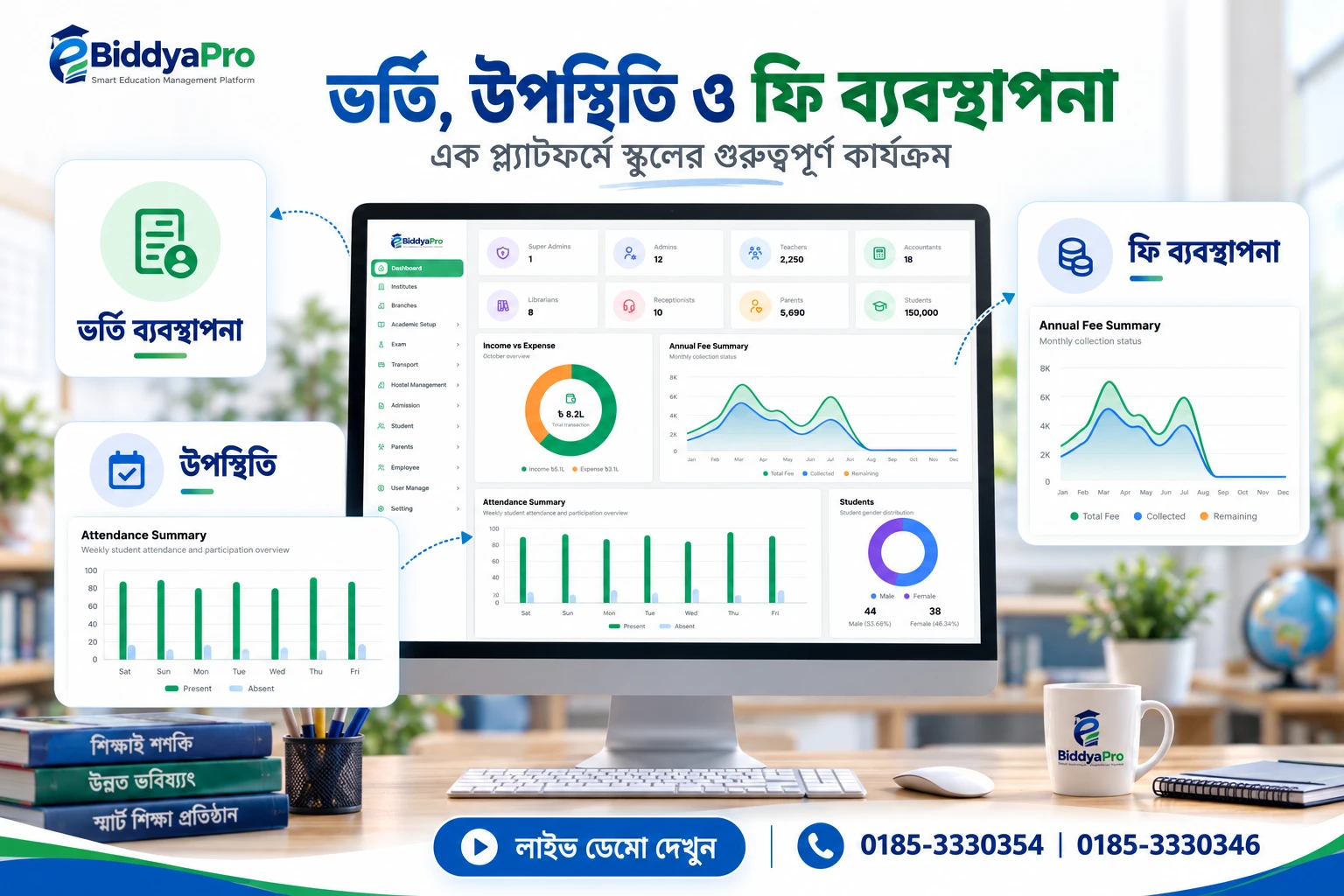
eBiddyaPro is a smart education management platform designed to support the administrative and academic activities of educational institutions. Its published information discusses student profiles, guardian management, academic setup and other school management processes.
For a school considering digital emergency records, student and guardian information provides an important foundation. An accurate student profile and a correctly linked guardian contact can help staff identify the right family and follow the school’s communication procedure.
However, schools should distinguish between a general student information system and a confirmed medical-record feature. The publicly available eBiddyaPro guidance identifies student and guardian information as areas of school management, but it does not establish that every package includes a dedicated medical module, allergy alerts or emergency notifications. Institutions should verify those requirements directly with the eBiddyaPro team.
Connecting Student Profiles with Guardian Information
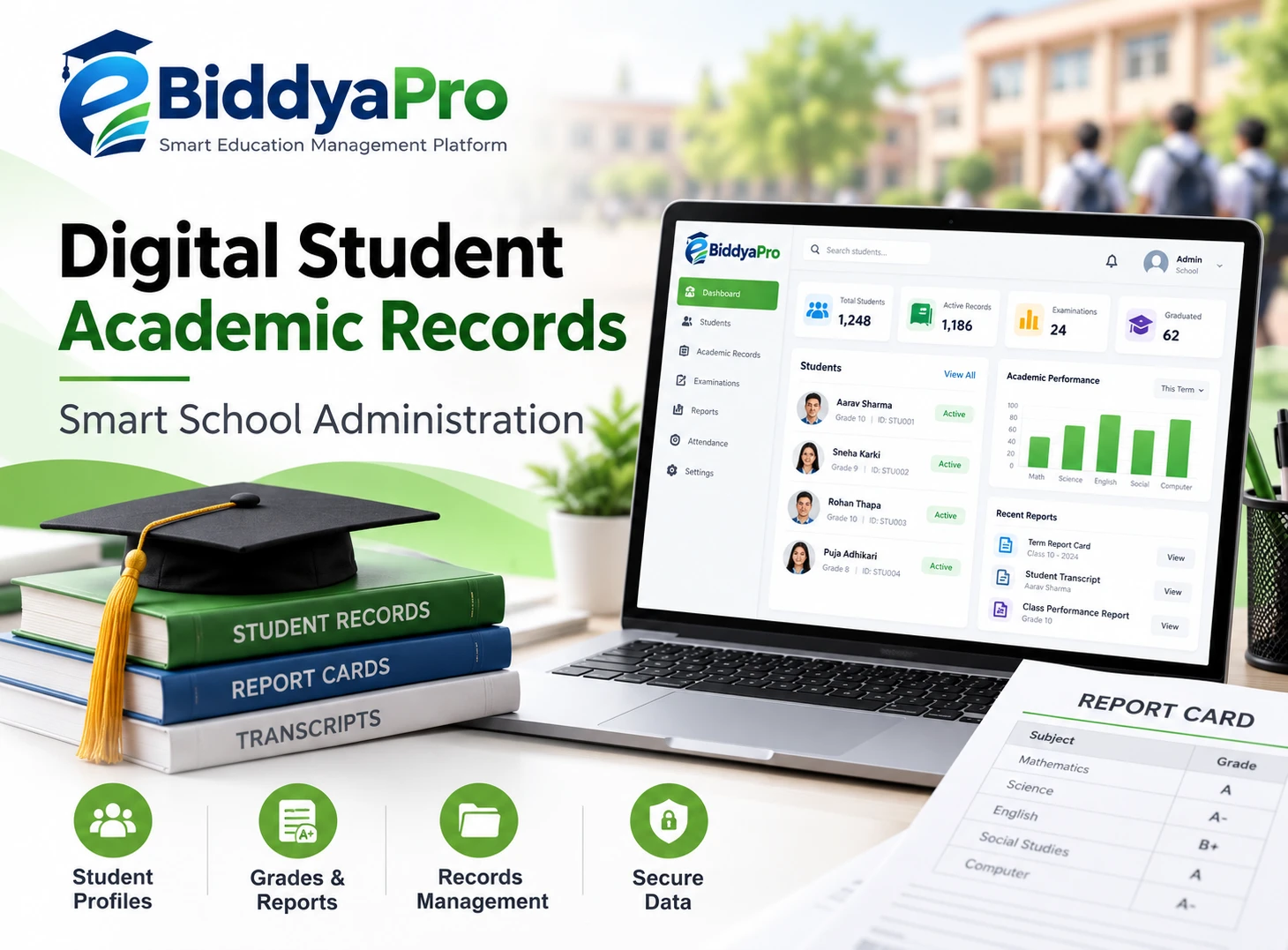
An organized student profile is the starting point for managing emergency contact information. When a school maintains accurate identification details, staff can distinguish between students with similar names and connect each student to the appropriate guardian.
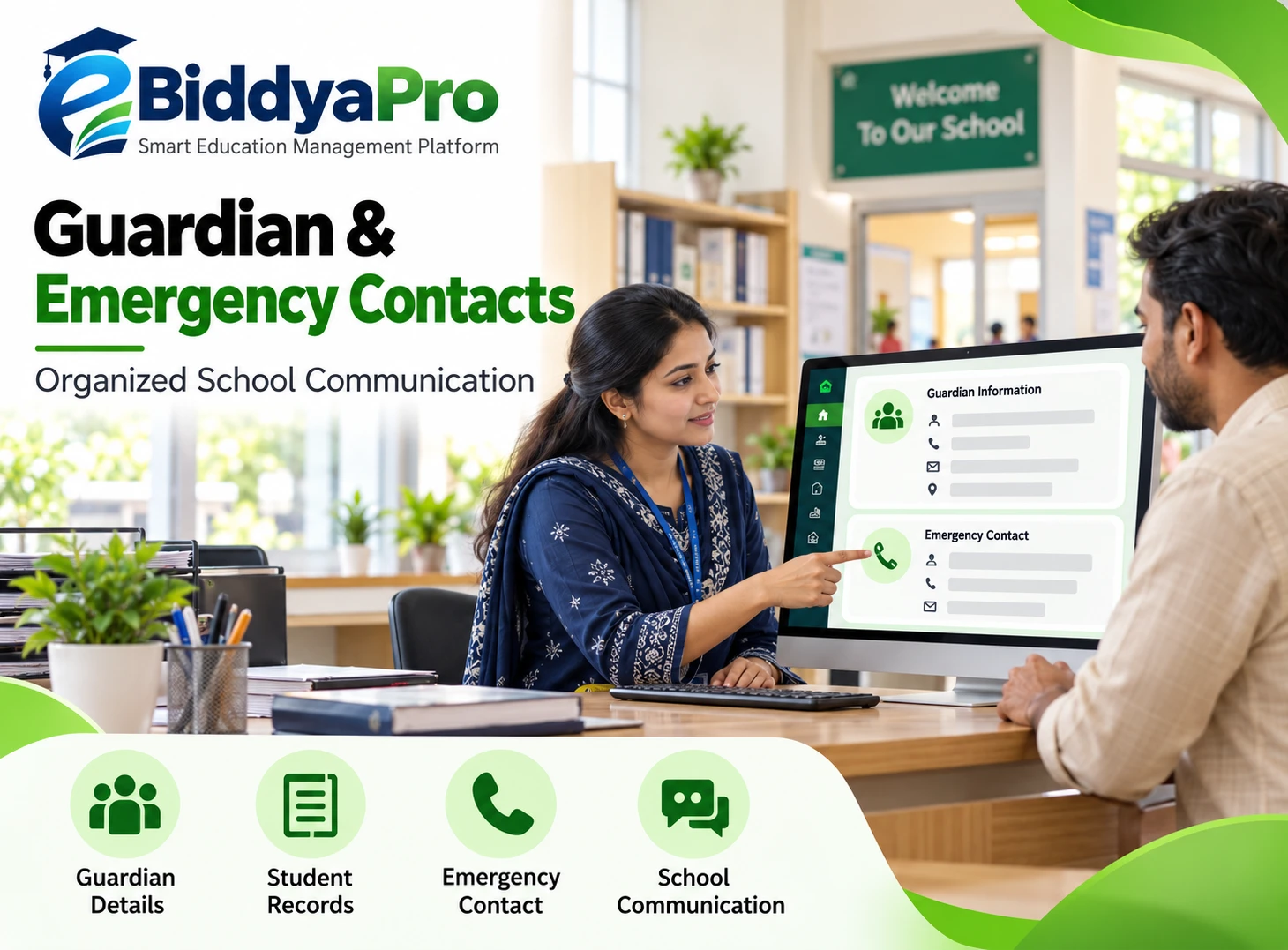
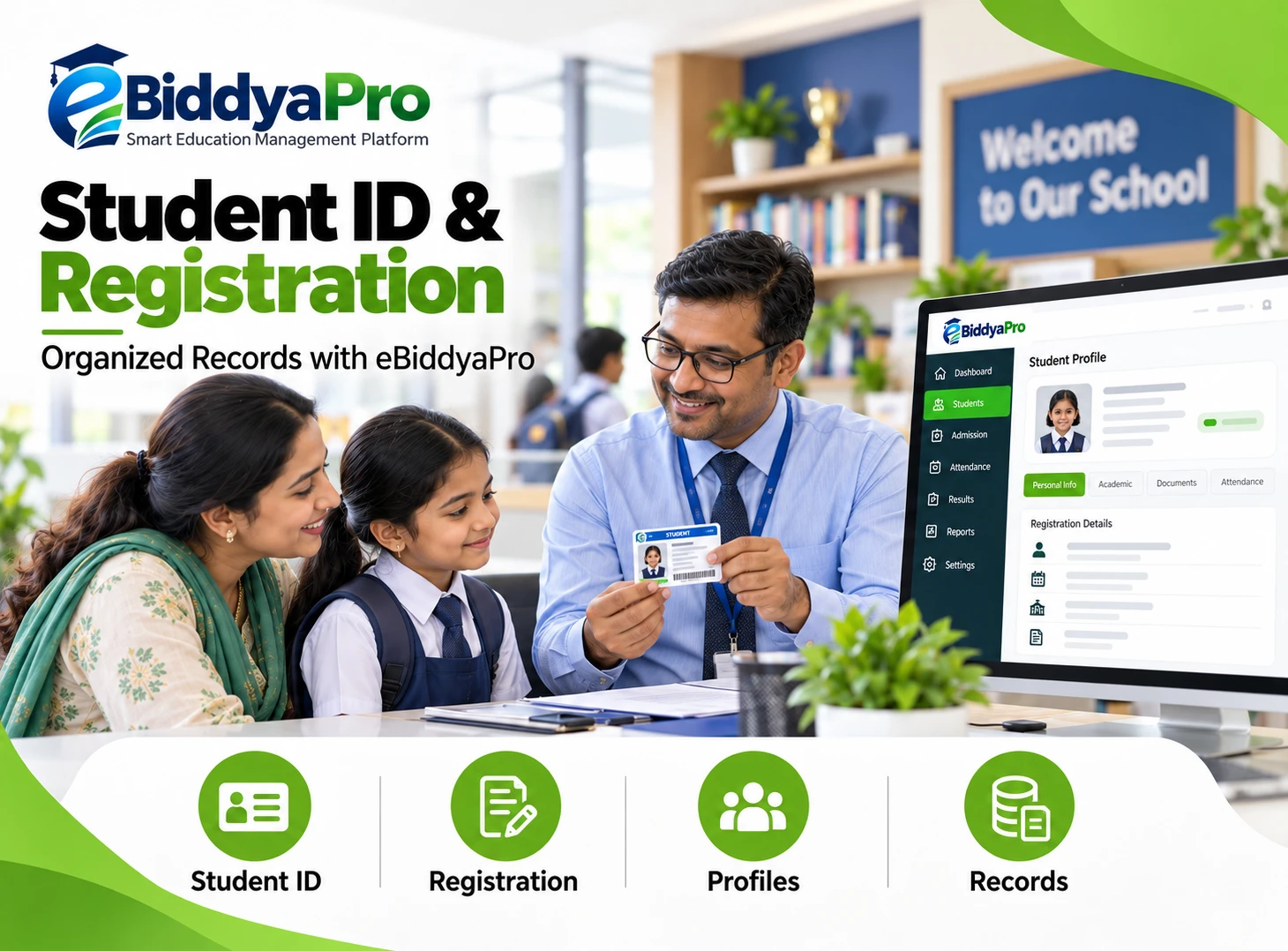
A profile may include the student’s name, an internal student ID, admission details, current class and section. Guardian information can then be associated with the correct student according to the software’s available structure and the institution’s own procedures.
Consider a school where two students share the same name but study in different sections. If staff rely only on a handwritten name, they may contact the wrong family. A combination of student ID, class and guardian details provides a clearer reference.
eBiddyaPro’s published guidance describes guardian management as maintaining contact details and linking guardians to relevant students. Schools should use a demonstration to confirm how many contacts can be stored, how relationships are identified and how information is updated.
Maintaining Primary and Alternative Emergency Contacts
A primary guardian may not always be reachable during the school day. Parents may be at work, travelling or unable to answer their phones. For this reason, schools often benefit from collecting an alternative emergency contact when appropriate.
The school should ask families to identify each contact clearly and explain the relationship to the student. It should also establish whether the person is authorized to receive information, collect the student or make particular decisions under the institution’s policy.
An emergency contact is not automatically the same as a legal guardian or an authorized person for every purpose. Schools should avoid making that assumption and should document the roles according to their own procedures.
Before implementing the process in eBiddyaPro, the institution should confirm whether its selected configuration can store multiple contacts and indicate their roles. If a required field is unavailable, the school should discuss an appropriate alternative with the provider before collecting information.
Recording Relevant Medical Information
Schools may need to know about health conditions that can affect a student during the school day. For example, a parent may inform the school that a child has a serious allergy or follows a care plan prepared by a qualified healthcare professional.
The information collected should be relevant to the school’s responsibilities. A school does not need to request every detail of a student’s medical history when only a limited instruction is required. The purpose, source and date of the information should be clear.
If a school wants to store health information in eBiddyaPro, it should first confirm whether dedicated fields or an appropriate secure method are available. It should also verify who can view or edit the information and whether it can be kept separate from ordinary academic details.
A digital record can help authorized staff locate information, but it is not a clinical assessment. School personnel should follow their training, the school’s emergency procedure and qualified medical advice rather than using software as a substitute for healthcare.
Organizing Allergy and Health Care Instructions
Allergy information can be important for classroom activities, food-related events and school trips. A record may need to explain what the family has reported, which staff members should be informed and whether the school has received a written care plan.
The same principle applies to other health needs. If a student requires specific support, the school should request clear instructions from the parent or guardian and, where appropriate, a qualified healthcare professional. Staff responsibilities should be established before an emergency occurs.
Information should be written in a way that avoids uncertainty. For example, a note saying “allergy” without identifying the reported concern or the source of the information may not be sufficiently useful.
Schools considering eBiddyaPro for these details should test how instructions would be entered, displayed and updated. The provider should also confirm whether the system offers the level of access restriction needed for sensitive health information.
Preparing for Emergencies at School
An emergency may occur in a classroom, playground, school vehicle or during an educational trip. The first priority is to follow the school’s emergency response procedure and seek appropriate help. Staff should not delay urgent action while searching for a digital record.
When emergency services are needed in Bangladesh, 999 is the national emergency number for police, fire service and ambulance assistance. Bangladesh Police states that the service operates around the clock.
Once immediate steps are underway, authorized staff may need to identify the student, contact a guardian and share relevant information with appropriate responders. A clear record can help support that communication.
For example, if a student becomes suddenly unwell, a designated staff member can follow the school’s response procedure while another contacts the family. Any health details shared should be relevant to the situation and provided only to the people who need them.
Keeping Guardian Contact Details Up to Date
Contact information can change throughout the academic year. Parents may change their phone numbers, move to another area or nominate a different person as an emergency contact.
A record that was accurate at admission may no longer be reliable months later. Schools should therefore make contact verification part of their regular administrative routine rather than treating it as a one-time task.
A school can ask families to review their details at the beginning of a new academic year and inform the office whenever a change occurs. The institution should explain how requests are submitted and how it verifies the identity of the person requesting a change.
In eBiddyaPro, the administrative team can review the available guardian information workflow and determine who is authorized to make updates. The school should confirm how changes are saved and whether previous contact details remain accessible when needed.
Building a Clear Process for Parents and Guardians
Parents and guardians are important partners in maintaining accurate student records. They are often the first source of information about a student’s health needs and the people who should be contacted in an emergency.
A school can improve the quality of its records by explaining why particular information is requested and how it will be used. Families should know whom to contact if a phone number changes, a care instruction is updated or a previously reported condition is no longer current.
Schools should also provide a way for parents to review and correct information. Depending on the institution’s processes, this might involve a conversation with the office, a signed form or another approved method.
If a school wants families to view or update information through eBiddyaPro, it should confirm whether that capability is available in its selected package. Until that is verified, staff should use the institution’s established update process.
Privacy and Confidentiality of Student Health Information
Health information requires particular care because it concerns a student’s personal circumstances. A school should not make medical details visible to every teacher or employee simply because they work at the institution.
The World Health Organization’s guidance on school health services emphasizes confidentiality and the secure handling of personal information, including student records. This principle is relevant when schools decide how to collect, store and share health information.
A practical approach is to give access only to staff who need particular information for their responsibilities. For example, a designated administrator may need access to guardian contact details, while a person responsible for a student’s care plan may need relevant health instructions.
Before storing sensitive information in eBiddyaPro, the school should ask about user permissions, data storage, backups and methods of sharing or exporting records. The answers should be documented and reviewed against the institution’s own policies and applicable requirements.
Who Should Be Able to View Emergency Records?
Access should reflect the role of each staff member. A class teacher, school administrator, principal and designated health staff may each need different information.
For example, a teacher supervising a trip may need a reliable emergency contact and relevant instructions for a student. That does not necessarily mean the teacher needs access to every health document the school holds.
Schools should decide who can view information, who can make changes and who can approve an update. When a staff member changes responsibilities or leaves the institution, the school should review that person’s access.
The availability of role-based permissions for particular eBiddyaPro fields should be confirmed during a demonstration. If the school’s privacy requirements cannot be met by the selected configuration, it should agree on an appropriate alternative before placing sensitive information in the system.
Recording Incidents and Following Up with Families
After an incident has been addressed, a school may need to document what happened according to its internal procedure. The record might include the date, the staff members involved, whom the school contacted and any follow-up agreed with the family.
A factual record can help the school communicate consistently and review whether its emergency procedure worked as intended. Staff should avoid unsupported medical conclusions and record only information relevant to their responsibilities.
For example, a school may note that a student reported feeling unwell, that the guardian was contacted and that the family collected the student. Any clinical diagnosis should come from an appropriate healthcare professional rather than being inferred by school staff.
Schools interested in maintaining incident records through eBiddyaPro should verify whether the necessary fields, attachments and access controls are available. A dedicated incident-management feature should not be assumed without confirmation.
Supporting Schools, Colleges and Madrasas
Educational institutions in Bangladesh differ in size, operating hours and administrative resources. A small school may rely on a few staff members to manage student records, while a larger institution may have separate academic and administrative teams.
Colleges, madrasas and schools may also use different admission forms, contact procedures and approaches to student welfare. A useful digital process should reflect those differences rather than forcing every institution into the same workflow.
For example, a school with morning and day shifts may need to ensure that the correct staff member can access emergency contact information during each shift. An institution with several buildings may need a clear procedure for contacting the main office when an incident occurs elsewhere on campus.
eBiddyaPro can be evaluated against these real situations. The school should provide the software team with its existing forms and expected workflows, then confirm how those requirements can be supported in the selected configuration.
Managing Information Across Classes and Academic Years
A student’s class and section can change each year, but the need for accurate guardian and health information continues. Schools should ensure that a change in academic placement does not cause important contact details to be overlooked.
During the transition to a new academic year, the administration can ask families to confirm whether their information is still current. Staff should also identify which teachers or authorized personnel need to know about relevant care instructions for the coming year.
The school should test how eBiddyaPro handles student and guardian information when a student moves to a new class or session. Any medical information process should be reviewed separately to ensure that the right people retain appropriate access.
Historical information should not automatically be treated as current. If a care plan or phone number is old, staff should verify it with the family before relying on it for future decisions.
Migrating Existing Records into a Digital System
A school moving from paper files to digital records should begin by understanding what information it already holds. Some admission forms may contain complete guardian details, while others may be missing an alternative contact or contain an outdated number.
Before transferring records, the school should decide which fields are needed and which information should not be collected or retained. Families can then be asked to confirm or update the relevant details.
A small pilot can help identify problems before the school processes every student record. For instance, the administration could review a sample of profiles and verify that each student is connected to the correct guardian.
The eBiddyaPro team should confirm what import methods are available and whether sensitive health data can be stored securely in the proposed setup. Original records and digital entries should be checked for accuracy, and the school should decide how old paper copies will be stored or disposed of.
Training Staff to Use Student Records Responsibly
Software is most effective when staff understand both the technology and the school’s procedures. Training should explain how to find the correct student profile, verify a guardian’s contact details and report a change.
Staff should also understand the limits of their role. A digital health note does not authorize a teacher to make a medical diagnosis or administer treatment outside the school’s policy and the person’s training.
Emergency practice can include a realistic scenario: a student becomes unwell, one staff member follows the emergency procedure and another locates the guardian’s contact. The team can then review whether the information was easy to find and whether the contact process worked.
Training should cover confidentiality. Staff need to know that student health details should not be casually shared in group messages or discussed with people who do not need the information.
What Schools Should Confirm Before Choosing a Solution
When evaluating eBiddyaPro, a school should start with its actual responsibilities. The administration can bring a sample admission form, a guardian contact form and a proposed emergency procedure to the product demonstration.
The eBiddyaPro team can then explain how student profiles and guardian information are handled. The school should also ask whether its selected package supports dedicated medical fields, multiple emergency contacts, restricted access, record updates and the reports it requires.
A useful demonstration should include a realistic example. Staff can ask to see how they would locate a student, identify the correct guardian, update a phone number and restrict access to sensitive information. If medical records are not supported in the desired way, the school should discuss an alternative process before implementation.
The aim is to choose a solution that fits the institution’s workflow and protects the information entrusted to it.
Frequently Asked Questions
1. What are student medical records?
Student medical records contain health-related information a school has a reason to collect and maintain. The information should be relevant to the school’s responsibilities and handled confidentially.
2. What is an emergency contact record?
An emergency contact record identifies the people a school should contact when a student needs urgent assistance. It may include names, phone numbers and relationships to the student.
3. What is eBiddyaPro?
eBiddyaPro is a school management platform by TRIMATRIK MULTIMEDIA. Its published guidance discusses student profiles, guardian information and other academic and administrative processes.
4. Can eBiddyaPro help schools organize guardian information?
The provider’s published guidance describes guardian management as maintaining contact details and linking guardians to students. Schools should confirm the exact workflow in their chosen package.
5. Does eBiddyaPro have a dedicated student medical records module?
The published information reviewed for this article does not confirm a dedicated medical module in every package. Schools should ask the eBiddyaPro team to demonstrate the relevant fields and permissions.
6. Can schools store multiple emergency contacts?
This depends on the fields and configuration available in the selected eBiddyaPro package. Schools should confirm whether primary and alternative contacts can be recorded and identified separately.
7. What student health information should a school collect?
Schools should collect information that is relevant to their responsibilities and explain the purpose to families. The precise information depends on the student’s circumstances and the institution’s policies.
8. Can a school record allergy information?
A school may need to maintain relevant allergy information provided by a family. Before storing it in eBiddyaPro, the institution should confirm that suitable fields and access restrictions are available.
9. Is a digital health record a substitute for medical advice?
No. A school record supports communication and organization; it does not provide a diagnosis or replace advice from a qualified healthcare professional.
10. Who should access a student’s health information?
Access should be limited to authorized people who need the information for their responsibilities. The school should define those roles and verify the software’s permissions.
11. How often should emergency contact information be updated?
Schools should establish a regular review process and ask families to report changes promptly. A new academic year is a useful opportunity to verify existing details.
12. What happens if a guardian changes their phone number?
The guardian should inform the school using its approved process. An authorized staff member can then verify and update the information in the relevant record.
13. Can parents update medical information directly in eBiddyaPro?
Direct parent access or editing should not be assumed. Schools should confirm whether this is available in their selected package and how changes are verified.
14. Can teachers access student emergency contacts?
That depends on the school’s policy and the permissions available in its eBiddyaPro setup. Teachers should receive the information they need for their responsibilities.
15. Can eBiddyaPro send automatic emergency alerts?
Automatic emergency alerts were not established in the published information reviewed for this article. Schools should ask the provider whether such a feature is available and how it works.
16. What should staff do during a medical emergency?
Staff should follow the school’s emergency response procedure, seek appropriate help and contact the guardian. Urgent action should not be delayed while searching for a software record.
17. What is the emergency number in Bangladesh?
The national emergency number is 999. Bangladesh Police identifies it as a service for emergency police, fire and ambulance assistance.
18. Can medical information be used during a school trip?
Relevant information may support the school’s response if an incident occurs. The school should decide what authorized staff need to carry or access and how to protect it.
19. How can a school protect sensitive student information?
The school can restrict access, train staff, review storage and backup arrangements, and establish clear procedures for sharing and updating records. It should also verify the provider’s security arrangements.
20. Can old paper records be transferred to eBiddyaPro?
Schools should ask the eBiddyaPro team about available import methods and supported fields. Existing records should be reviewed and verified before transfer.
21. Is eBiddyaPro suitable for small schools in Bangladesh?
Small schools can evaluate eBiddyaPro based on their student records, staffing and budget. A demonstration can help determine whether the selected package meets their needs.
22. Can colleges and madrasas use a similar records process?
Yes. The general principles of accurate contacts, limited access and regular updates can apply across educational institutions. Each institution should confirm that the software fits its own workflow.
23. Should a school keep a backup emergency process?
Yes. Schools should plan how to access essential contact information and respond to emergencies when a device, internet connection or software system is unavailable.
24. How can a school get started with eBiddyaPro?
The school can contact the eBiddyaPro team and request a demonstration using its student profile and guardian contact requirements. It should verify medical-record capabilities before storing sensitive data.
Conclusion
Student medical information and emergency records are most useful when they are accurate, accessible to the right people and supported by a clear school procedure. Guardian details should be kept current, while health information should be collected and shared responsibly.
eBiddyaPro offers schools in Bangladesh a foundation for organizing student and guardian information as part of a broader digital administration process. By discussing medical fields, emergency contacts and privacy requirements with the eBiddyaPro team, an institution can determine how the platform fits its student safety workflow.
A well-prepared school combines organized information with trained staff, family cooperation and an effective emergency response plan.