Attendance System
 Access Control
 Door Security
 Turnstile & Entrance Control
 Security Inspection
 Parking Management
 Safety Products
 Software
 Other
Connecting Every Stage of the Student Journey with eBiddyaPro
October 28, 2026

Connecting Every Stage of the Student Journey with eBiddyaPro
A student’s relationship with an educational institution begins before the first classroom lesson. It starts with an admission enquiry, continues through enrollment and academic development, and eventually reaches transfer, completion or graduation. Throughout this journey, the institution creates and maintains information that must remain accurate and accessible.
For schools, colleges and madrasas in Bangladesh, managing these stages through separate registers and spreadsheets can become difficult. Admission staff collect information, teachers maintain academic records, and accounts personnel manage payments. When these activities are disconnected, employees may repeatedly request information that the institution already holds.
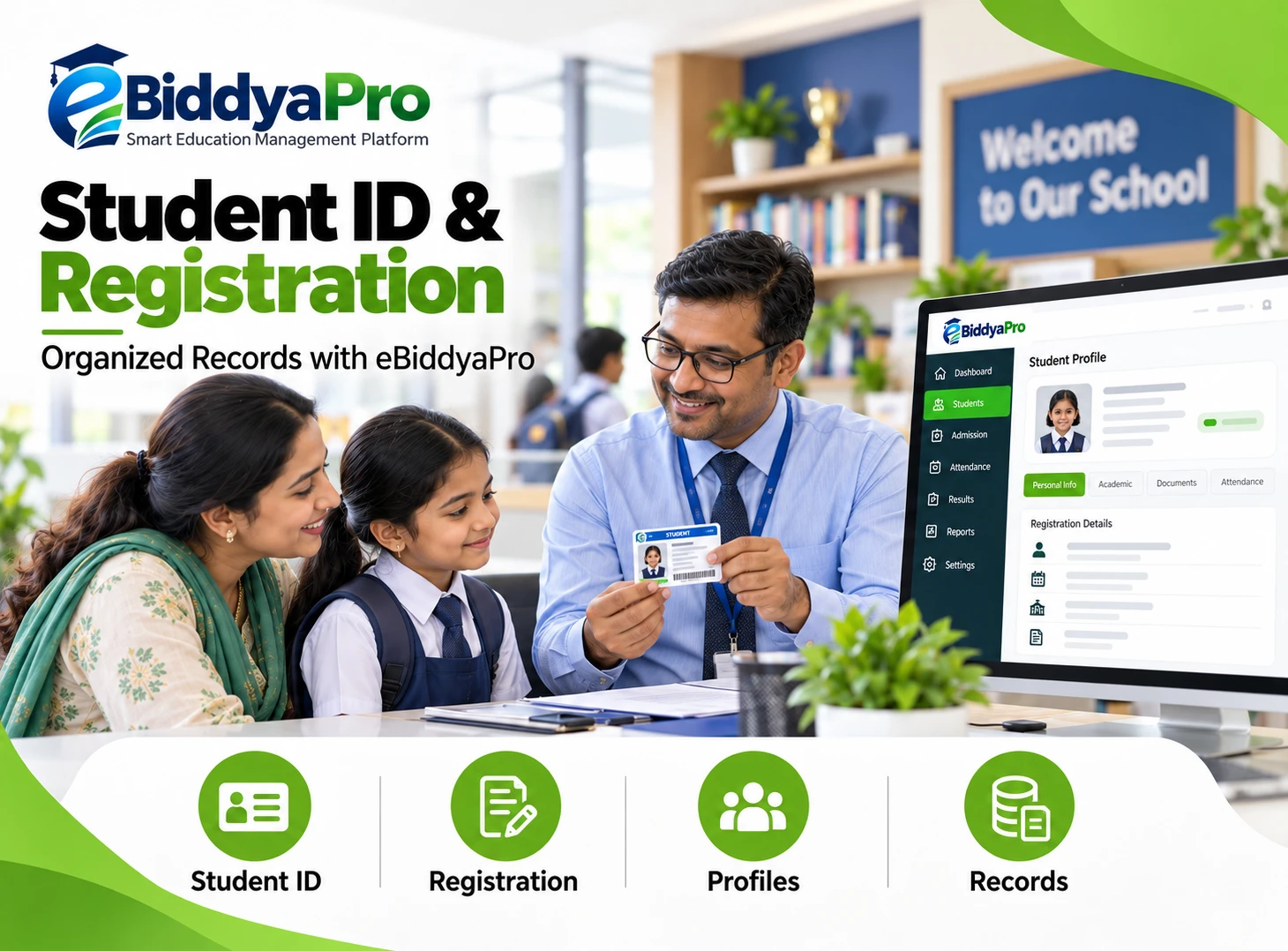
eBiddyaPro provides a platform around which institutions can plan more connected administration. Its provider describes it as a smart education management platform and discusses student records, academic setup and related school management processes. Specific modules, integrations and package contents should be confirmed before implementation.
This article explains how a connected student lifecycle can work, where eBiddyaPro fits into that approach, and how institutions in Bangladesh can organize the transition from admission to academic completion.
What Is Student Lifecycle Management?
Student lifecycle management means organizing the information and administrative processes associated with a student’s entire relationship with an institution. It includes the initial application, enrollment, class placement, ongoing study, progression and eventual departure.
The central idea is continuity. A student should remain identifiable even when their class, section or roll number changes. Information from an earlier academic year should remain understandable in its original context.
For example, a student entering Class Six may later progress through several classes before completing studies at the institution. Administrators need to distinguish the student’s permanent identity from details that change each year.
A connected lifecycle therefore concerns both information and responsibility. Staff need to understand which records they maintain, who approves changes and how information passes between departments.
Why This Matters for Institutions in Bangladesh
Bangladesh’s educational institutions operate with different academic structures, staffing arrangements and administrative resources. A small school may rely on a few employees, while a large college may have separate admission, academic and accounts departments.
Despite these differences, institutions face similar questions. Has an application been approved? Which class is the student enrolled in? Is a result final? Which guardian should receive a communication? What information must remain available after the student leaves?
When these questions require searching several unrelated sources, routine tasks become slower. Conflicting versions of a name, contact number or class assignment can also create confusion.
A connected approach helps staff work from an agreed record and follow consistent procedures. The purpose is practical: reduce avoidable repetition, improve access to relevant information and make administrative decisions easier to verify.
Understanding eBiddyaPro’s Role
eBiddyaPro should be considered in relation to the institution’s actual work rather than a generic list of software features. The provider’s guidance encourages institutions to identify operational priorities and test relevant workflows in a demonstration.
The broader Trimatrik IT education software guide describes how school management systems can connect academic, administrative and financial activities. It also identifies eBiddyaPro as an education management platform.
The workflows below illustrate how an institution can plan its student lifecycle around such a platform. They should not be interpreted as confirmation that every eBiddyaPro package includes automatic promotion, document verification, certificate generation or alumni management.
A useful implementation discussion starts with real forms, sample records and approval rules. This allows the institution and provider to establish which processes are supported and where configuration or an alternative procedure is needed.
Beginning with Admission Applications
Admission is the first major information-gathering stage. Institutions need a consistent way to identify applicants, record the class or programme requested and understand whether the application is ready for review.
A clear process separates an applicant from an enrolled student. Receiving a form does not necessarily mean that admission has been approved. The institution may still need to review documents, confirm eligibility or complete other requirements.
For example, a school admitting students to Class Seven may receive applications from several previous institutions. Staff should know which applications are complete and which require clarification.
When evaluating eBiddyaPro, demonstrate this distinction using a sample application. Ask how applicant information is handled and how approved details become part of the student record.
Reviewing Admission Documents
Admission documents help institutions establish the information required by their policies. Depending on the application, these may include identity details, previous results or a transfer document.
Document collection and document verification are different activities. A file being received does not automatically establish that its contents are correct or acceptable. Staff must follow the institution’s review procedure and consult the issuing authority when appropriate.
The workflow should make missing or unclear information understandable to both administrators and families. Instead of asking an applicant to “submit documents,” explain exactly what needs attention.
If the institution requires file uploads, review statuses or document access restrictions, these should be demonstrated in the selected eBiddyaPro configuration before the process is introduced.
Establishing a Consistent Student Identity
After admission, the student needs an identifiable record that remains useful throughout their time at the institution. A stable internal student identifier helps distinguish students with similar names and connects records across academic years.
Class, section and roll number should be treated as academic placement details rather than permanent identity. A student’s roll may change annually, while their institutional identity should remain traceable.
For example, a student could move from Class Six, Section A to Class Seven, Section B. Staff should still be able to identify the same student without treating the new placement as an unrelated person.
During an eBiddyaPro demonstration, ask how identifiers are assigned, how duplicate profiles are handled and how records are found after placement changes.
Building Reliable Guardian Information
Guardian information remains important beyond admission. Institutions use it for routine communication, academic discussions and situations requiring prompt family contact.
A reliable process identifies the relationship between the student and each contact. It should also distinguish a primary contact from an alternative person, according to the institution’s policies.
Consider a parent who changes their mobile number midway through the year. Updating one list while leaving another unchanged can create inconsistent communication. The institution should establish an approved update process and identify who maintains the current record.
For eBiddyaPro, confirm the available contact fields, supported guardian relationships and permissions for making changes. Direct guardian editing or automated communication should be verified rather than assumed.
Organizing Classes, Sections and Academic Sessions
Academic setup creates the structure within which student activity is recorded. Sessions, classes, sections, subjects and shifts need clear definitions before teachers and administrators begin entering information.
Poor setup can create problems later. For example, two slightly different names for the same section may divide records that should belong together. An incorrect academic session can make a result difficult to interpret.
Institutions should agree on naming conventions and responsibility for creating or changing academic structures. Historical information should remain associated with the session in which it was recorded.
When discussing eBiddyaPro, test both a current-year example and a transition to the next academic year. This reveals how the structure supports continuity.
Supporting Everyday Attendance Administration
Attendance is part of a student’s ongoing academic record. Teachers need a practical way to record presence according to the institution’s timetable and attendance policy.
A connected process begins with an accurate class list. If a transferred student remains on the wrong list or a newly admitted student is missing, attendance records can become misleading.
For example, a teacher taking attendance should be working with the approved enrollment for that class and date. Changes should follow an administrative process rather than informal edits across separate records.
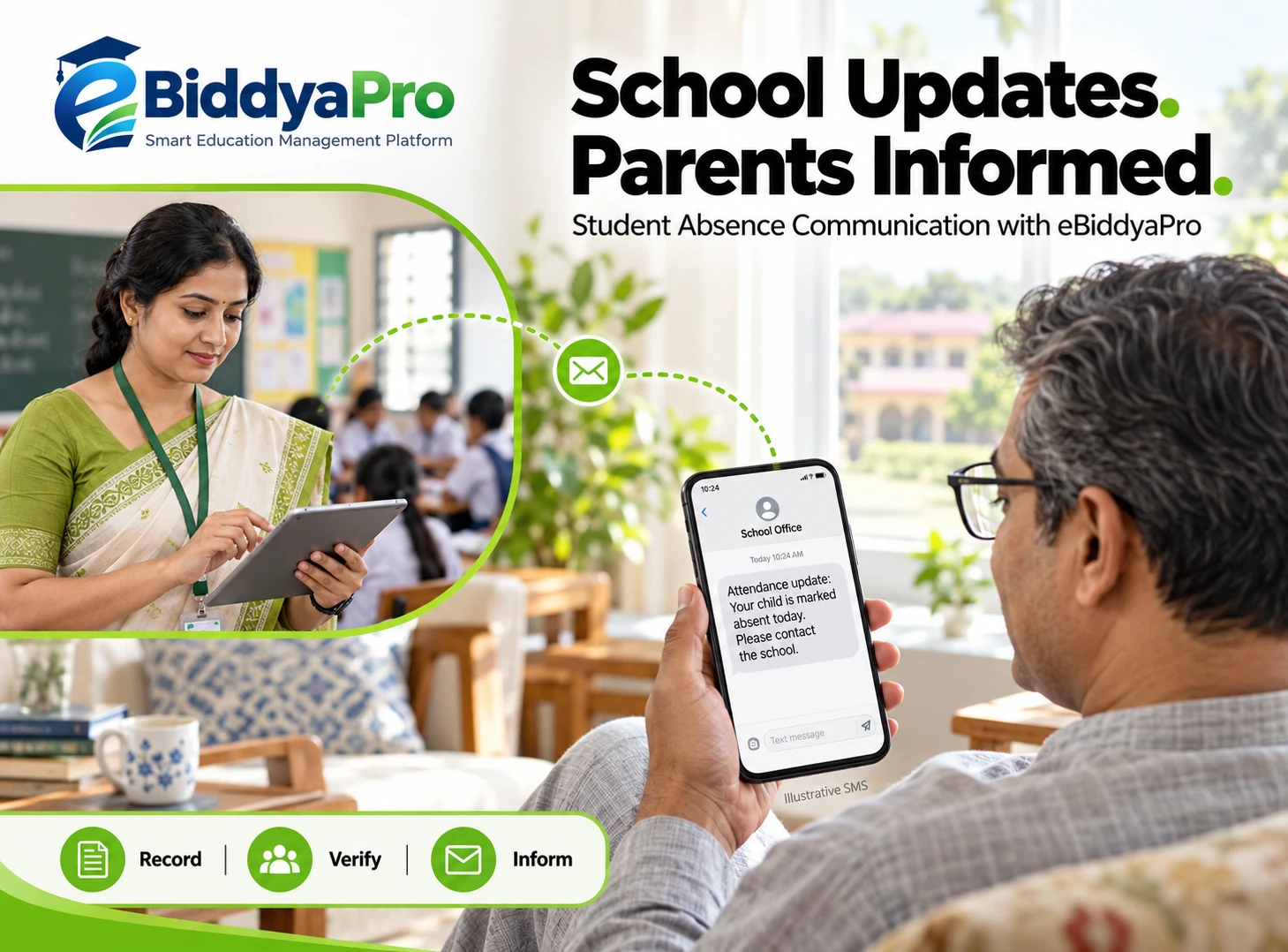
Institutions evaluating eBiddyaPro should demonstrate attendance entry, corrections and reporting. Any device integration, mobile entry or guardian notification requirement should be checked separately for availability and cost.
Connecting Subjects and Academic Activities
A student’s academic experience includes the subjects or courses they study and the activities used to assess learning. These relationships need to remain clear as the student progresses.
An institution may have different subject combinations across classes or programmes. Changes should not overwrite the historical meaning of earlier records.
For instance, a student’s subjects in one academic year may differ from those studied the following year. Staff reviewing previous results need to see the subjects that applied at that time.
With eBiddyaPro, institutions can discuss their actual subject structure and request a demonstration using representative classes. The objective is to confirm that the setup reflects the curriculum the institution delivers.
Managing Examinations and Results
Examination administration involves more than entering marks. Institutions must define assessment components, grading rules, review responsibilities and the point at which results become final.
A connected student record gives staff the context needed to associate results with the correct student, subject and academic session. This reduces the risk of treating current placement details as historical information.
A practical demonstration should include an absent student, a missing mark and a corrected entry. These situations often reveal more about a workflow than a completely error-free example.
When evaluating eBiddyaPro, provide the institution’s approved calculation method and a sample expected result. Verify the available processing and reporting functions before using them for actual examinations.
Using Information to Support Academic Follow-Up
Organized records can help teachers prepare for conversations about a student’s progress. Attendance, assessment results and previous academic information may provide useful context.
However, administrative data should support professional judgment rather than replace it. A low result or several absences can have different causes, and a discussion with the student or family may be necessary.
For example, a teacher preparing a parent meeting might review the student’s recent assessments and attendance information. The conversation can then focus on specific concerns rather than incomplete recollections.
Institutions should confirm which views and reports eBiddyaPro makes available to teachers. Automatic predictions, risk alerts or recommendations should not be assumed without explicit product confirmation.
Keeping Fee Administration Connected
Student identity also matters in financial administration. Accounts staff need to associate charges and payments with the correct student and academic period.
A connected process can reduce confusion when students share names or move between classes. It should also distinguish current obligations from historical transactions.
For example, a payment received for a previous period should not be assigned to the wrong student simply because a current roll number looks similar. The institution needs a consistent identification method and a correction procedure.
During an eBiddyaPro evaluation, demonstrate the fee workflow your institution actually uses. Confirm applicable reporting, receipt handling and any payment integration separately, including charges and reconciliation responsibilities.
Managing Promotion Between Academic Years
Promotion is an important transition because current placement changes while historical records must remain understandable. An institution should establish who approves promotion and which criteria apply.
Not every student follows the same path. Some progress normally, some remain in the same class and others leave before the next session. These outcomes need distinct handling.
For example, creating the new academic year should not erase the class under which an earlier examination was taken. Teachers and administrators may need that information later.
Ask the eBiddyaPro team to demonstrate promotion using several outcomes. Confirm whether individual or bulk processing is supported and how previous sessions remain accessible after the transition.
Handling Transfers and Withdrawals
A student may leave before completing the institution’s full academic pathway. Transfer, withdrawal and completion should therefore be treated as different administrative outcomes.
The institution should record the effective date and follow its approved procedure for any supporting documents. Staff must also understand how the change affects current class lists and future administration.
For example, a student transferring during the year should not continue appearing as an unexplained absence indefinitely. At the same time, earlier attendance and results may need to remain available.
When reviewing eBiddyaPro, test how an inactive or transferred student is handled. Confirm access to historical records and any document preparation requirements instead of deleting a profile simply to remove it from a current list.
Preparing for Completion or Graduation
At the final stage, institutions may need to confirm academic completion, prepare their own approved documents and explain how students can obtain official records.
The term “graduation” varies by institution. A school may refer to completing its final class, while a college may have a different completion process.
Institution-issued reports must also be distinguished from certificates or transcripts issued by an education board or another authority. A software-generated document does not automatically become an officially recognized credential.
For eBiddyaPro, confirm any completion status, report template or certificate function you require. Demonstrate the approval process and verify that the institution’s wording accurately describes the document being issued.
Maintaining Records After Students Leave
A student’s departure does not necessarily end the institution’s need to maintain relevant records. Former students may later request confirmation of enrollment or information about their academic history.
The institution should decide what must be retained, for how long and under whose authority. Retention should reflect applicable requirements and a documented institutional policy.
Access arrangements may also change. Former students should not automatically retain the same permissions as currently enrolled students, and staff should know how to handle later requests.
Discuss archiving, record retrieval and export arrangements with eBiddyaPro. A searchable former-student record and a dedicated alumni engagement module are different capabilities; institutions should confirm precisely what is available.
Protecting Student Information Throughout the Journey
A connected record can contain identity information, family contacts and academic details. Institutions need clear rules about who may access each type of information.
An accountant may require financial information, while a teacher needs academic records for assigned students. Access should reflect responsibilities rather than being granted broadly for convenience.
Institutions should ask the provider about permissions, backups, restoration and data export. They should also train staff to avoid sharing sensitive information through uncontrolled channels.
Security depends on both the platform and everyday practice. Account management, staff departures and correction procedures require ongoing attention throughout the student lifecycle.
Introducing eBiddyaPro in Practical Stages
An institution does not need to change every process simultaneously. A phased approach can begin with student identity, guardian details and academic setup before expanding into other verified modules.
The first phase should focus on data quality. Duplicate profiles, inconsistent class names and incomplete contact information can undermine later workflows.
A pilot using one class or a small group of students allows staff to test realistic situations. Include a correction, a class change and an incomplete record.
After the pilot, review staff feedback and resolve configuration issues before expanding. Training should explain who owns each task, not merely which buttons to press. Clear responsibilities make the system more sustainable.
Measuring Whether the Process Is Improving
The value of lifecycle management should be assessed through observable changes in administration. Institutions can compare how long it takes to locate a record, resolve an information mismatch or prepare a routine report.
For example, admission staff may previously have requested the same details several times. After implementation, the institution can examine whether approved information is reused correctly.
Teacher and guardian feedback also matters. A technically complete process may still be difficult to understand or operate.
Review progress after each phase and adjust training or procedures as needed. The aim is a connected, dependable student record that supports staff and families throughout the educational journey.
Frequently Asked Questions
1. What is student lifecycle management?
It is the organization of information and administrative processes from application through enrollment, progression and departure. Its purpose is to maintain continuity across the student’s relationship with the institution.
2. What is eBiddyaPro?
eBiddyaPro is an education management platform offered by TRIMATRIK MULTIMEDIA. Institutions should confirm the modules and configuration included in their proposed package.
3. Is eBiddyaPro suitable for Bangladesh institutions?
Institutions in Bangladesh can evaluate it against their academic structure and administrative needs. Suitability should be established through relevant demonstrations and a clear implementation proposal.
4. Does an application automatically create an enrolled student?
That should depend on the institution’s approval process. Ask how eBiddyaPro distinguishes applicants from enrolled students and handles approved information.
5. Why is a consistent student ID important?
It helps connect records even when class, section or roll changes. An internal institutional ID is separate from government identity or examination registration numbers.
6. Can guardian information be updated?
Institutions need an approved update procedure. Confirm the available fields, editing permissions and any guardian access options in the selected eBiddyaPro setup.
7. Can previous academic years remain accessible?
Historical access is an important requirement to demonstrate. Test how records are retrieved after a student moves to a new session.
8. Can eBiddyaPro manage attendance?
Attendance is discussed within the provider’s education management guidance. Confirm the supported entry methods, reports and correction process for your selected package.
9. Are guardian notifications automatically included?
Do not assume so. Ask about availability, communication channels, configuration and any additional charges before promising notifications to families.
10. Can the system follow our grading method?
Provide your approved rules and request a complete sample result. Confirm how missing marks, absences and assessment components are handled.
11. Does eBiddyaPro automatically promote students?
Automatic or bulk promotion should be verified directly. Institutions should retain an appropriate approval process and test several progression outcomes.
12. Can a student remain in the same class?
The required workflow should support the institution’s academic decision. Demonstrate how repeat enrollment is recorded without losing earlier information.
13. Can transferred students retain historical records?
Institutions should confirm how transferred or inactive students are represented. Earlier academic information may need to remain available under the retention policy.
14. Can eBiddyaPro generate transfer certificates?
Specific document templates and certificate functions must be confirmed. Ask to see the required format and approval process in a demonstration.
15. Does it issue official board certificates?
A school management platform does not replace the issuing authority. Official board documents must follow the relevant authority’s procedures.
16. Can financial and academic records use the same identity?
A consistent student identity can support both processes. Confirm how the selected modules associate transactions and academic information with each student.
17. Can existing records be imported?
Ask about supported formats, required fields and migration assistance. Clean and verify existing information before attempting a full transfer.
18. Who should access student records?
Access should reflect each person’s responsibilities. The institution should define roles and confirm that the proposed permissions meet its needs.
19. Is a dedicated alumni module included?
It should not be assumed. Archiving former-student records and managing alumni engagement are different requirements that need separate confirmation.
20. Should staff receive training?
Yes. Training should cover data entry, approvals, corrections and privacy responsibilities. Staff also need to understand how their work connects with other departments.
21. How can a small institution begin?
Start with accurate student records and academic setup. Add other verified processes gradually according to operational priorities and available resources.
22. What should a demonstration include?
Use a realistic student journey: application, enrollment, class placement, a correction and academic progression. Include the reports your institution needs.
23. What happens if the institution changes providers?
Export formats, data return and service-ending arrangements should be agreed in advance. Confirm what information can be retrieved and how.
24. How should success be measured?
Review record accuracy, retrieval time and the effort required for routine tasks. Feedback from staff and families can identify where further improvements are needed.
Connecting the Journey with a Clear Plan
Student lifecycle management works when each stage preserves the information needed for the next. Accurate admission details support enrollment, consistent identities connect academic records, and clear progression procedures preserve the student’s history.
For educational institutions in Bangladesh, eBiddyaPro offers a platform to evaluate for this connected approach. Begin with your actual student journey, demonstrate the required workflows and confirm the package that fits your institution. With reliable information and trained staff, digital administration can support a more organized experience from admission to academic completion.