Attendance System
 Access Control
 Door Security
 Turnstile & Entrance Control
 Security Inspection
 Parking Management
 Safety Products
 Software
 Other
Student ID Generation and Unique Registration Management with eBiddyaPro: A Guide for Schools in Bangladesh
October 27, 2026
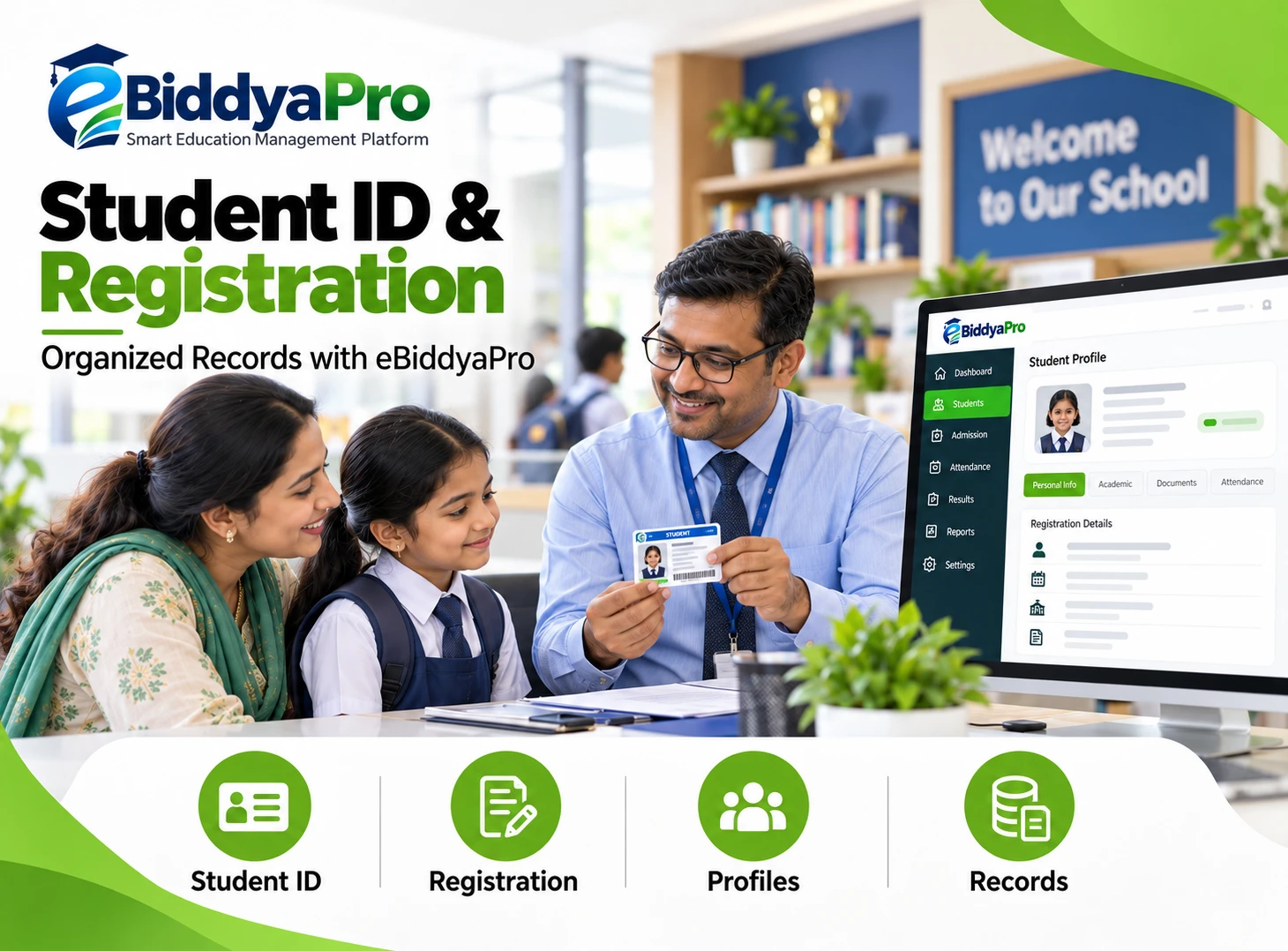
Student ID Generation and Unique Registration Management with eBiddyaPro: A Guide for Schools in Bangladesh
Every student needs a reliable identity within a school’s records. Names, class rolls and sections are important, but they do not always provide a stable way to distinguish one student from another. Two students may have similar names, and a student’s roll number may change when they move to a new class or section.
A unique student ID gives a school a consistent reference for organizing information throughout the student’s academic journey. When used alongside accurate registration records, it can help staff locate the right profile and connect admission, attendance, examinations and other activities to the correct learner.
eBiddyaPro’s published solution areas include student admission, student information, attendance, examinations, results, fees and reporting. These functions provide a foundation for schools that want to organize their student records digitally.
This article explains how schools in Bangladesh can plan a unique registration process around eBiddyaPro. The reviewed public information recommends a consistent student ID, but it does not confirm that every eBiddyaPro package automatically generates IDs. Automatic numbering, duplicate checks and ID card printing should therefore be confirmed in the chosen setup.
What Is a Unique Student ID?
A unique student ID is an identifier used to distinguish one student’s record from another within an institution’s system. Ideally, it remains associated with the same learner even when their class, section or roll number changes.
For example, a school might use an internal reference such as ST-2026-0042. In this illustrative format, the identifier contains an admission-year element and a sequence. The exact format is a school policy decision, not a confirmed eBiddyaPro numbering rule.
A good identifier helps staff locate the correct record without depending only on a name. It should be easy to read, consistently applied and managed by authorized staff.
The ID itself does not guarantee that a profile is accurate. The information linked to it must still be collected and verified carefully.
Student ID, Class Roll and Registration Number: The Difference
A class roll usually identifies a student within a particular class or section. It may change when the student progresses to another year or when the school reorganizes sections.
An internal student ID is intended to identify the learner across those changes. A registration number may refer to a separate institutional or examination process, depending on how the school uses the term.
These identifiers should be labelled clearly. If an office uses “registration number” for both a school-generated code and an examination-board number, staff may enter the wrong information into a form.
A practical registration policy explains what each number means, who assigns it and where it is used. Keeping the identifiers distinct supports clearer communication with teachers, administrators and guardians.
Why Unique Registration Matters in Bangladesh
Bangladesh’s educational information landscape includes government initiatives that use student identity and profile information. BANBEIS publishes links for its Unique ID and student-profile services on its official website.
A school’s internal student ID and a government-issued student UID serve different administrative purposes. A code assigned by a school should not be presented as an official government UID.
The United Nations’ Bangladesh CRVS case study describes government institutions’ role in generating and communicating student UID numbers within the national identity initiative. That context illustrates why schools need to distinguish internal records from official identifiers.
The reviewed eBiddyaPro sources do not establish automatic government UID issuance, verification or integration. Schools should continue following the relevant official process and current instructions.
How eBiddyaPro Supports Student Registration
eBiddyaPro is presented as a smart education management platform covering admissions, student records and academic administration. These areas give schools a framework for organizing student information from the beginning of enrollment.
The provider’s practical guide discusses maintaining student profiles and recommends a unique ID that remains consistent when a student moves to another class. The guide describes this as a practice to evaluate; it does not establish the exact numbering behaviour of every deployment.
A school can use that principle when planning its eBiddyaPro workflow. Admission staff verify the learner’s information, the institution assigns or confirms the internal identifier, and authorized staff use the resulting profile for relevant activities.
The specific method of assigning the ID should be confirmed before registration begins.
Designing a Student ID Policy
A school should decide what its internal ID represents before issuing numbers. The policy should explain when an identifier is assigned, who can approve it and how staff should handle an error.
A simple identifier may include a school prefix, an admission year and a sequence. A more complex code may be tempting, but embedding too much changing information—such as the current class or section—can make the number less useful over time.
Schools should also decide whether IDs are unique within one campus or across the whole organization. This matters when an institution operates more than one branch.
The numbering format should be tested with realistic examples. Staff need to read and enter it consistently, and the school needs a process for preventing accidental reuse.
Automatic and Manual ID Assignment
Automatic ID generation can reduce repetitive entry when a system supports it. Manual assignment can also work when the institution has a controlled numbering process and checks for errors.
The reviewed public sources do not confirm whether eBiddyaPro automatically generates IDs, supports a custom prefix or prevents simultaneous duplicate assignment in every package. These requirements should be demonstrated rather than assumed.
A practical test is to create two sample student records and observe how IDs are assigned. Staff should also test an incomplete registration and a correction.
If numbering is manual, the school should define who controls the sequence and how two staff members avoid assigning the same value. The important outcome is a dependable identifier and an understandable audit trail of decisions.
Building a Reliable Student Profile
A student profile brings together the information required for the institution’s authorized work. Depending on the school’s needs, this may include the student’s name, admission details, class assignment and guardian contact information.
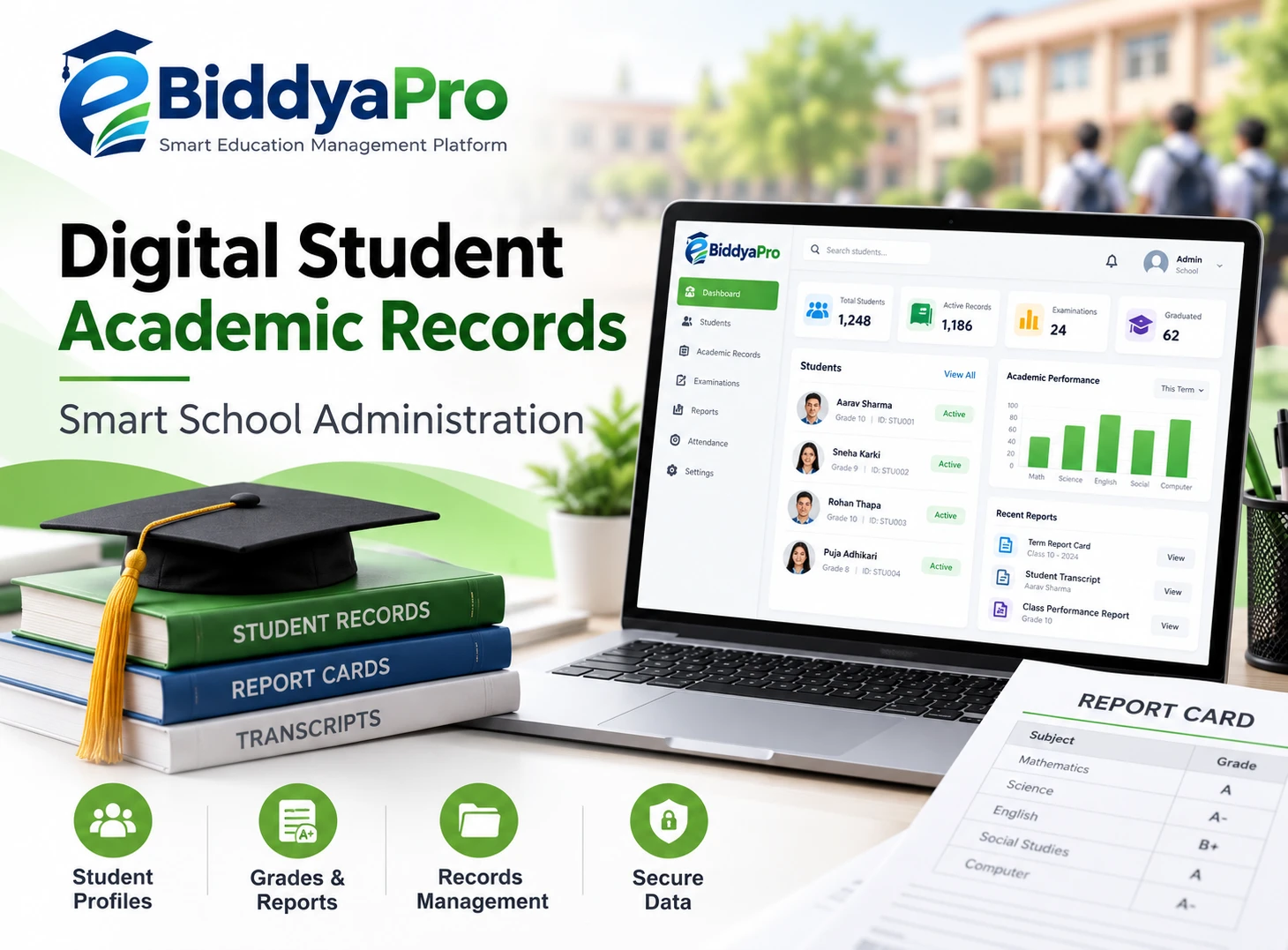
The eBiddyaPro guide describes student profiles as an area for personal information, guardian contacts, admission details and academic history.
Before entering information, the school should determine which fields are necessary and who will verify them. A guardian may provide the initial details, while admission staff compare the information with the institution’s approved records.
Names and dates should be checked carefully. An accurate ID attached to an incorrect profile can still create problems in attendance, examinations and communication.
Preventing Duplicate Student Records
Duplicate records can arise when a student applies twice, changes their name or returns after an interruption. They may also occur when separate staff members enter the same learner’s details without checking existing information.
A recommended registration process begins with a search for an existing profile using the available authorized information. Staff should review possible matches rather than assuming that a similar name proves two records represent the same person.
If a duplicate is found, the school needs a controlled correction process. Records should not be deleted or merged casually, especially if attendance, results or financial information may already be attached.
The reviewed sources do not confirm automated duplicate detection or merging in eBiddyaPro. Schools should test those capabilities if they are important to their registration process.
Connecting Admissions with Academic Placement
Admission and academic placement are related but distinct. A student may submit an application before the institution confirms enrollment or determines the final class and section.
A clear workflow distinguishes the application stage from an active student registration. After approval, staff should verify the appropriate academic session and class assignment.
eBiddyaPro’s published materials identify admission and student management as relevant functions. The school should demonstrate how an approved applicant becomes an enrolled student in its selected configuration.
The internal student ID should then be used consistently according to school policy. This helps teachers and administrators identify the same learner when handling different parts of the academic process.
Keeping the Same Identity During Class Promotion
Students progress through classes, but their underlying identity remains the same. A stable student ID can help the school connect earlier and current records.
For example, a student may move from Class Six to Class Seven and receive a new roll number. The internal student ID can continue to identify the same profile, provided the school’s process and software configuration support that approach.
Before a new session begins, administrators should test a sample promotion. They should check how the current class changes and whether previous academic information remains accessible.
The reviewed eBiddyaPro guide recommends a consistent ID across class changes. Specific promotion automation and historical-report behaviour should be verified in the deployed system.
Linking Identity with Attendance
Attendance is most useful when the record clearly belongs to the correct student and the correct academic period. Similar names or duplicate profiles can otherwise create confusion.
eBiddyaPro publicly identifies attendance as a solution area. A school can plan how the approved student profile will be used when teachers record and review attendance.
The teacher’s class list should reflect current enrollment. When a student joins late or changes sections, the relevant staff need a clear process for checking the updated list.
A student ID helps with identification, but it does not automatically prove that an attendance entry is correct. Teachers and administrators still need a process for reviewing missing or disputed information.
Supporting Examination and Result Records
Examinations require accurate participant lists, subject information and recorded results. A stable student identity helps staff distinguish learners across classes and academic sessions.
eBiddyaPro’s published solution areas include examinations and results. Schools should test how their chosen configuration connects a student profile with the institution’s examination workflow.
A realistic example should include a student with a changed roll number and another with an incomplete entry. Administrators can then verify how the system displays and corrects the information.
Schools should also confirm which documents are available, such as result sheets or report cards. A student ID in a profile does not automatically establish that all desired documents can be generated or printed.
Supporting Fee and Payment Records
Financial records need a clear association with the correct student. If two students have similar names, an internal ID can help the accounts team verify which profile is involved.
eBiddyaPro’s published materials include fee management among its solution areas. The school should establish how authorized staff use student records when reviewing charges and recorded payments.
An admission correction or a change in class may affect the information accounts staff need to see. The institution should define who communicates those changes and who may amend financial entries.
An internal student ID helps identify the record; it does not replace payment verification or an approved receipt process. Online payment integration is also a separate requirement that should be confirmed.
Giving Teachers the Right Information
Teachers need accurate class lists and sufficient information to carry out their responsibilities. They do not necessarily need access to every administrative detail collected during admission.
The eBiddyaPro portfolio describes a teacher portal concept covering areas such as class routine, attendance, homework and results. The available features and permissions should be confirmed for the proposed deployment.
A school can use a role-based operating process in which admission staff maintain approved registration information and teachers report discrepancies through a defined channel.
When a teacher notices a student missing from a class list, the correction should be made by the authorized person. This keeps responsibility clear and reduces conflicting changes.
Helping Parents Understand Student Records
Parents may need to confirm their child’s identity, class, attendance or result information. Clear labels are especially important when a family has more than one child at the same institution.
Schools should explain which identifier is used for internal queries and whether the parent needs to provide it when contacting the office. The school should also clarify how corrections to guardian contact information are requested.
If an eBiddyaPro parent portal is part of the chosen setup, a realistic test should show how the correct child is linked to the guardian account.
An internal school ID should not be described as a government-issued UID. Parents need accurate information about the purpose of each number and the authority responsible for it.
Managing Transfers and Rejoining
A student may leave the school, move between branches or return after an interruption. These events require clear decisions about identity and record continuity.
For an internal branch move, administrators should establish whether the existing profile remains available and how the receiving branch identifies the student. Shared records and automatic inter-branch transfer are not confirmed by the reviewed public sources.
For a returning student, HR-style assumptions should not be applied to student administration. The admissions team should check whether an earlier profile exists and follow the institution’s approved process.
Before making changes, staff should examine attendance, examination and fee records that may be associated with the original identity. A controlled review is safer than creating a new profile without checking.
ID Cards and Printed Documents
A student ID number and a physical ID card are related but separate. The number identifies the student in the school’s records, while the card is a document the institution may use for visual identification.
A school considering card production should determine which information is appropriate to print and who approves it. A photograph or class label should be reviewed for accuracy before cards are distributed.
The reviewed eBiddyaPro sources do not confirm a universal card-design or card-printing function. Schools should request a sample output and establish whether a separate tool or service is required.
Any card should follow the institution’s policies. An internal school card should not be presented as an official government identity document.
Student Information and Access Permissions
Student registration records can contain personal information about children and their families. The institution should collect information for a clear purpose and limit access according to staff responsibilities.
For example, a teacher may need a class list and relevant academic information, while accounts staff need access to authorized fee records. Not every user needs the ability to change admission details.
The eBiddyaPro practical guide discusses user accounts and permissions as areas for evaluation. Schools should test their own roles and responsibilities in the proposed configuration.
A correction process is also important. Staff should know how to report a discrepancy, who may approve a change and how guardians will be informed when relevant.
A Practical Example for a School in Bangladesh
Consider a hypothetical school in Gazipur admitting a new group of students. The institution decides to use a consistent internal numbering format and separate that number from the class roll.
Admission staff first check the approved information and look for possible existing records. After enrollment is confirmed, the school assigns or confirms each student’s internal ID according to its policy.
The academic team checks the class and section. Teachers then review the class lists used for attendance. Later, administrators test whether examination information appears under the intended student profile.
This is an illustrative workflow, not a documented eBiddyaPro customer case. Its purpose is to show how a school can connect responsibilities around a reliable student identity.
Introducing the Process in Stages
A school does not need to change every record at once. A practical starting point is one class or a small group of new admissions.
The institution can test the proposed identifier, registration fields and staff responsibilities using sample records. It should also test an error, a possible duplicate and a class change.
After the pilot, staff can review where confusion occurred. The school may need to adjust naming conventions, clarify approvals or improve training before expanding the process.
Successful implementation should be measured through practical outcomes: fewer duplicate records, less time locating profiles and clearer correction responsibilities. Those results depend on people and procedures as well as software.
Frequently Asked Questions
1. What is a unique student ID?
A unique student ID is an identifier used to distinguish a learner’s record within an institution. It can provide a consistent reference when class, section or roll changes. The school should define its format and assignment process.
2. Does eBiddyaPro automatically generate student IDs?
The reviewed public sources do not confirm automatic generation in every eBiddyaPro package. Schools should demonstrate the proposed numbering workflow and confirm whether IDs are generated automatically, assigned manually or configured through another supported method.
3. Is a school student ID the same as a government UID?
No. An internal school ID is used for the institution’s records, while an official student UID belongs to a government process. Schools and parents should use clear labels and continue following instructions from the relevant authorities.
4. Can eBiddyaPro issue an official Bangladesh student UID?
The reviewed eBiddyaPro sources do not establish official UID issuance or automatic government integration. Schools should use the relevant official process for government identifiers and verify any claimed integration before relying on it.
5. Why should the student ID be different from the roll number?
A roll number may change by class, section or academic session. A stable internal student ID can help identify the learner across those changes. The school should explain the purpose of each identifier to staff and parents.
6. Can a school choose its own ID format?
The school can define its desired policy, but support for custom prefixes or numbering rules should be confirmed in the selected software. Test the format with realistic registrations and ensure it remains understandable when students change classes.
7. What happens if two students have the same name?
Staff should use additional authorized information and the internal ID to distinguish their profiles. Similar names do not necessarily indicate a duplicate record. A controlled review is needed before changing or merging student information.
8. Does eBiddyaPro automatically detect duplicate students?
Automated duplicate detection was not confirmed in the reviewed public sources. Schools should test any proposed duplicate-checking feature. Staff should also have a process for investigating possible matches without deleting records prematurely.
9. Can a student keep the same ID after promotion?
A consistent ID across class changes is a recommended practice in the provider’s guide. Schools should demonstrate the promotion workflow and confirm how current class, roll and historical information are handled in their deployment.
10. Can the ID connect attendance records?
A stable student identity supports accurate association of attendance with the correct learner. Schools should test how the selected eBiddyaPro configuration displays attendance across sessions and how authorized staff correct mistakes.
11. Can the ID be used for examination results?
It can serve as a reference for identifying the intended student, subject to the school’s configured workflow. Administrators should test exam lists, marks entry and result documents with representative records before relying on the process.
12. Can accounts staff use the student ID?
A consistent identifier can help accounts staff locate the correct student profile when reviewing authorized fee information. The school should define what financial access each user needs and how corrections are approved.
13. Can parents use the student ID?
A school may use its internal ID as a reference when responding to parent queries. If a parent portal is offered, the institution should demonstrate how guardian accounts link to the correct student and what information is visible.
14. Can eBiddyaPro print student ID cards?
A universal ID card design and printing capability was not confirmed in the reviewed sources. Schools should request a sample card or identify a separate production process if physical cards are required.
15. What if a student changes section?
The school should update the approved academic assignment through its established process while preserving the student’s identity. Staff should check the relevant class lists and confirm how earlier attendance and examination information remains visible.
16. What if a student moves to another branch?
The institution should demonstrate how its chosen setup handles branch movement, shared records and historical information. Automatic inter-branch transfer was not established by the reviewed sources and should not be assumed.
17. Should a returning student receive a new ID?
The school should first check whether an earlier profile exists and apply its approved policy. The correct treatment depends on the institution’s recordkeeping approach and software configuration. Creating an unchecked duplicate can fragment academic history.
18. What information is needed for registration?
Requirements vary by institution and applicable official instructions. Schools should identify necessary student, guardian and admission information, explain the purpose and verify accuracy. They should avoid treating another institution’s document list as universally required.
19. How should old student data be migrated?
Review duplicate identities, incomplete profiles and inconsistent class names first. Confirm the supported import format and test a small sample. Compare the resulting records with the approved source before migrating the remaining information.
20. How can a school start using eBiddyaPro for registration?
Begin with a representative admission scenario and a small set of records. Confirm the ID assignment method, profile fields, permissions and correction process. Train responsible staff and expand only after the workflow produces accurate, understandable results.
Create a Reliable Registration Foundation with eBiddyaPro
A unique student ID can give a school a consistent way to identify learners throughout their academic journey. When combined with accurate profiles and clear staff responsibilities, it supports better coordination across admission, attendance, examinations and other administrative activities.
eBiddyaPro’s published student management functions provide a foundation for building that process. Schools should confirm the actual ID assignment and reporting capabilities in their selected setup, while keeping internal identifiers distinct from official government UIDs.
Start with a practical registration example, test the process and train the people responsible for it. A reliable identity policy makes student information easier to manage as the institution grows.