Attendance System
 Access Control
 Door Security
 Turnstile & Entrance Control
 Security Inspection
 Parking Management
 Safety Products
 Software
 Other
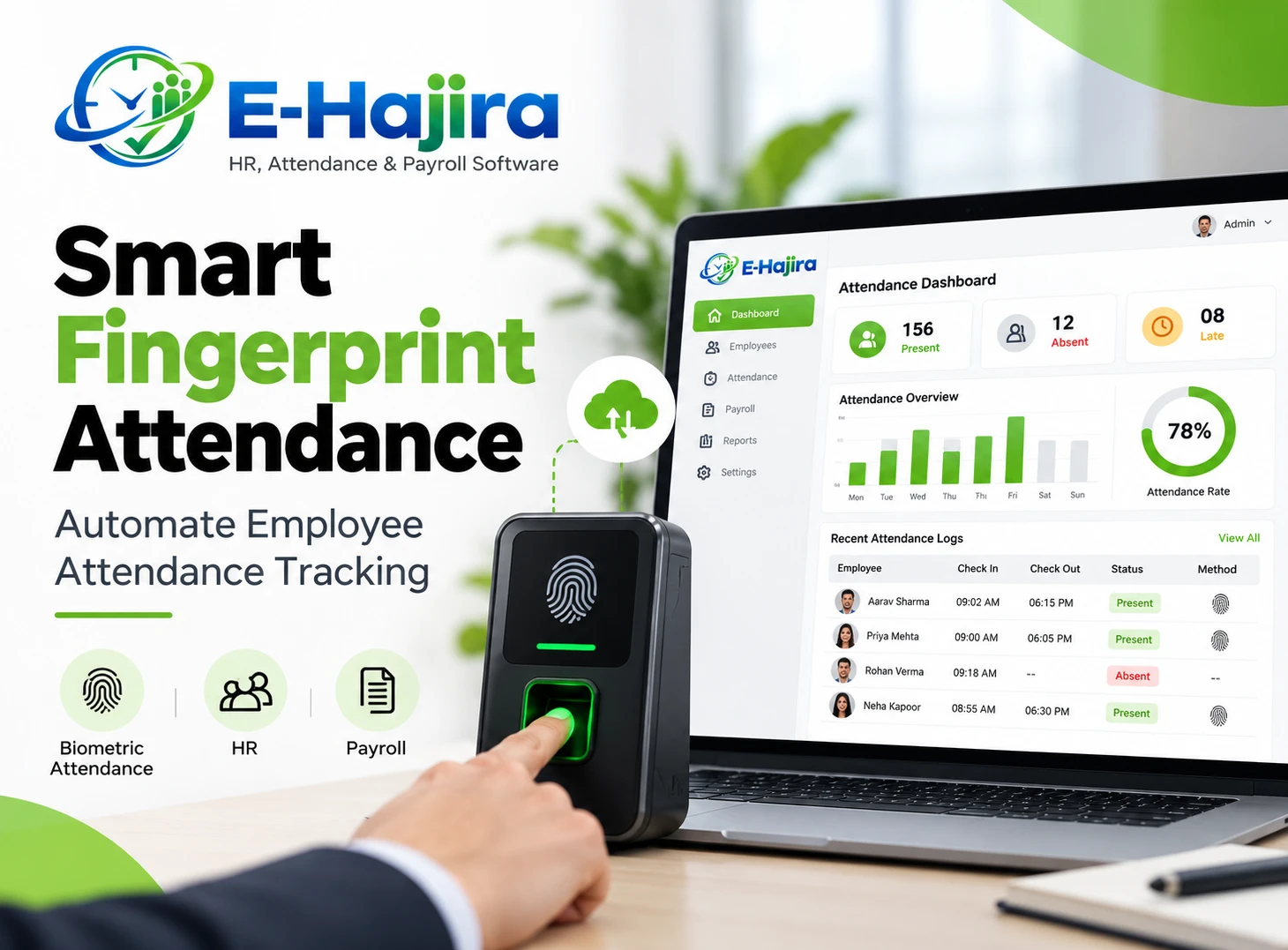
Smart Fingerprint Attendance Management: How eHajira Automates Employee Attendance Tracking
October 20, 2026
Smart Fingerprint Attendance Management: How eHajira Automates Employee Attendance Tracking
Introduction: Transforming Employee Attendance Management in Bangladesh
Employee attendance management is a fundamental part of successful business operations. From small offices to large manufacturing facilities, organizations need accurate records of employee working hours, punctuality, absences, and overtime.
In Bangladesh, many businesses still depend on attendance registers, spreadsheets, manually downloaded fingerprint logs, and disconnected payroll applications. Although these methods may work initially, they become increasingly difficult to manage as employee numbers and branch operations expand.
Manual attendance processing can cause duplicate records, delayed reporting, missing punches, payroll discrepancies, and unnecessary administrative work.
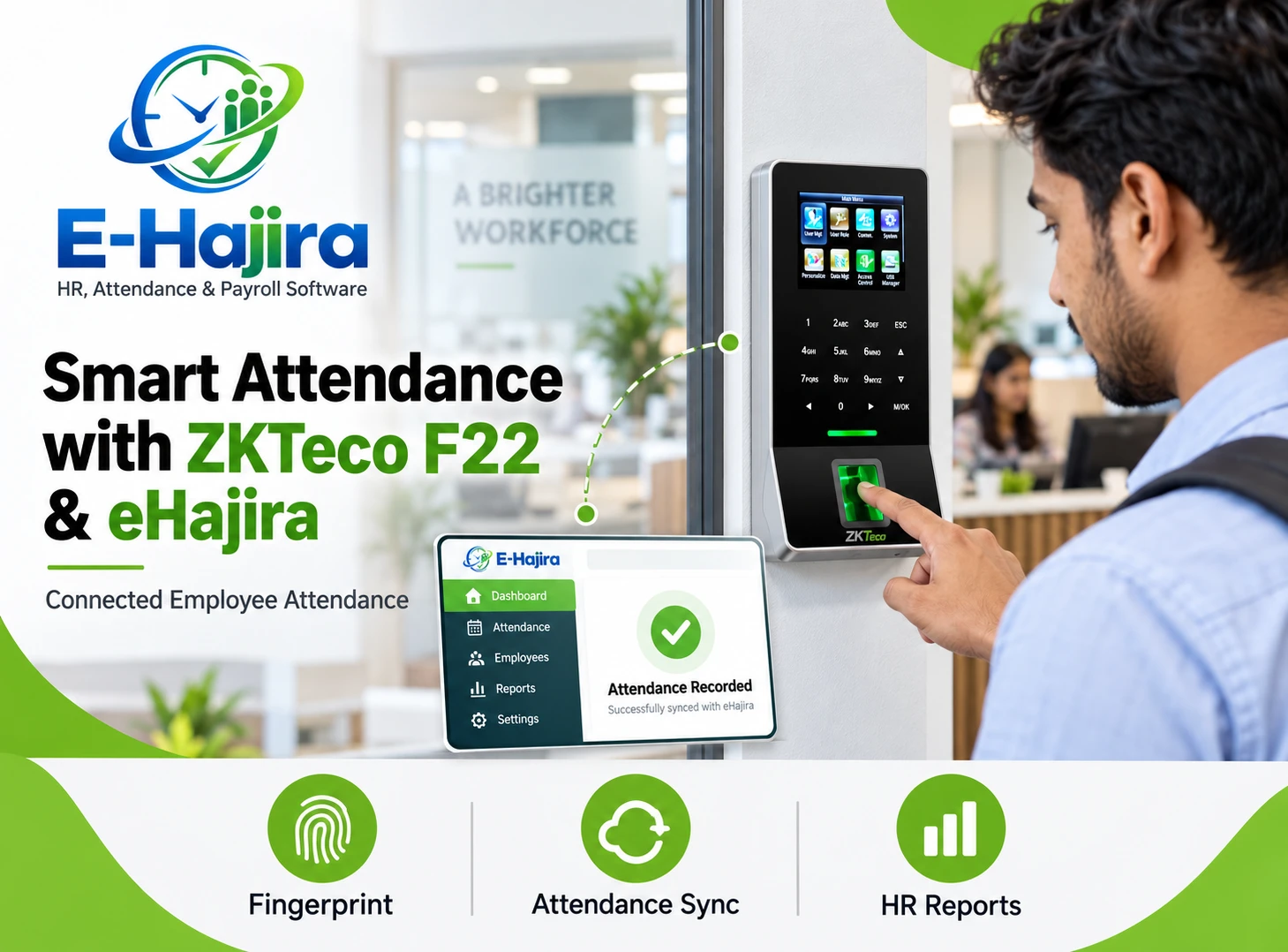
Smart Fingerprint Attendance Management Software helps address these challenges by connecting biometric attendance devices with digital Human Resource Management Systems.
eHajira HRMS is a web-based HR, Attendance, and Payroll Management Platform designed to bring employee information, biometric attendance records, shift scheduling, leave administration, and payroll operations into a coordinated management environment.
This comprehensive guide explains fingerprint attendance technology, integration requirements, business benefits, and practical applications for organizations operating in Bangladesh.
What Is Fingerprint Attendance Management?
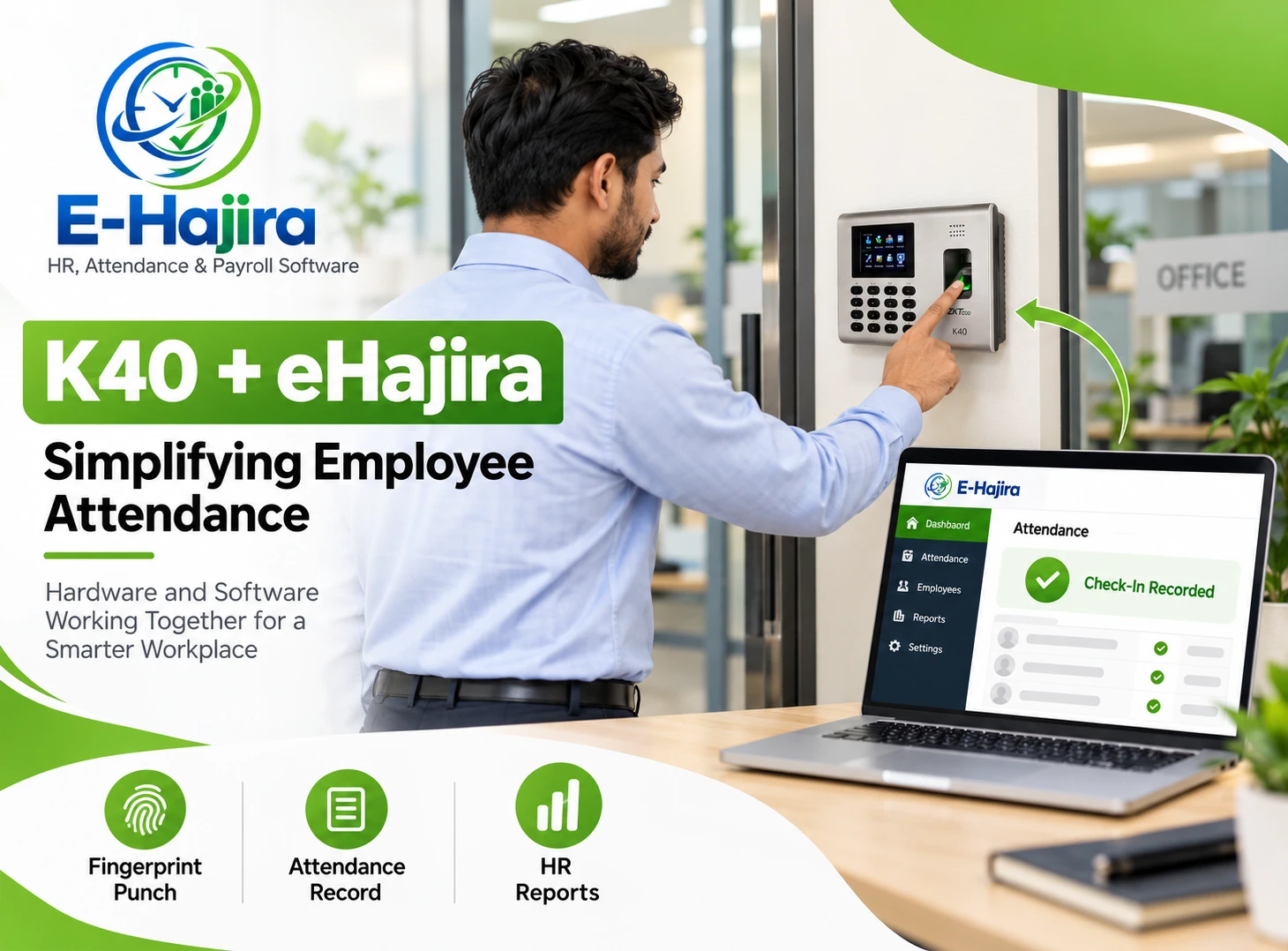
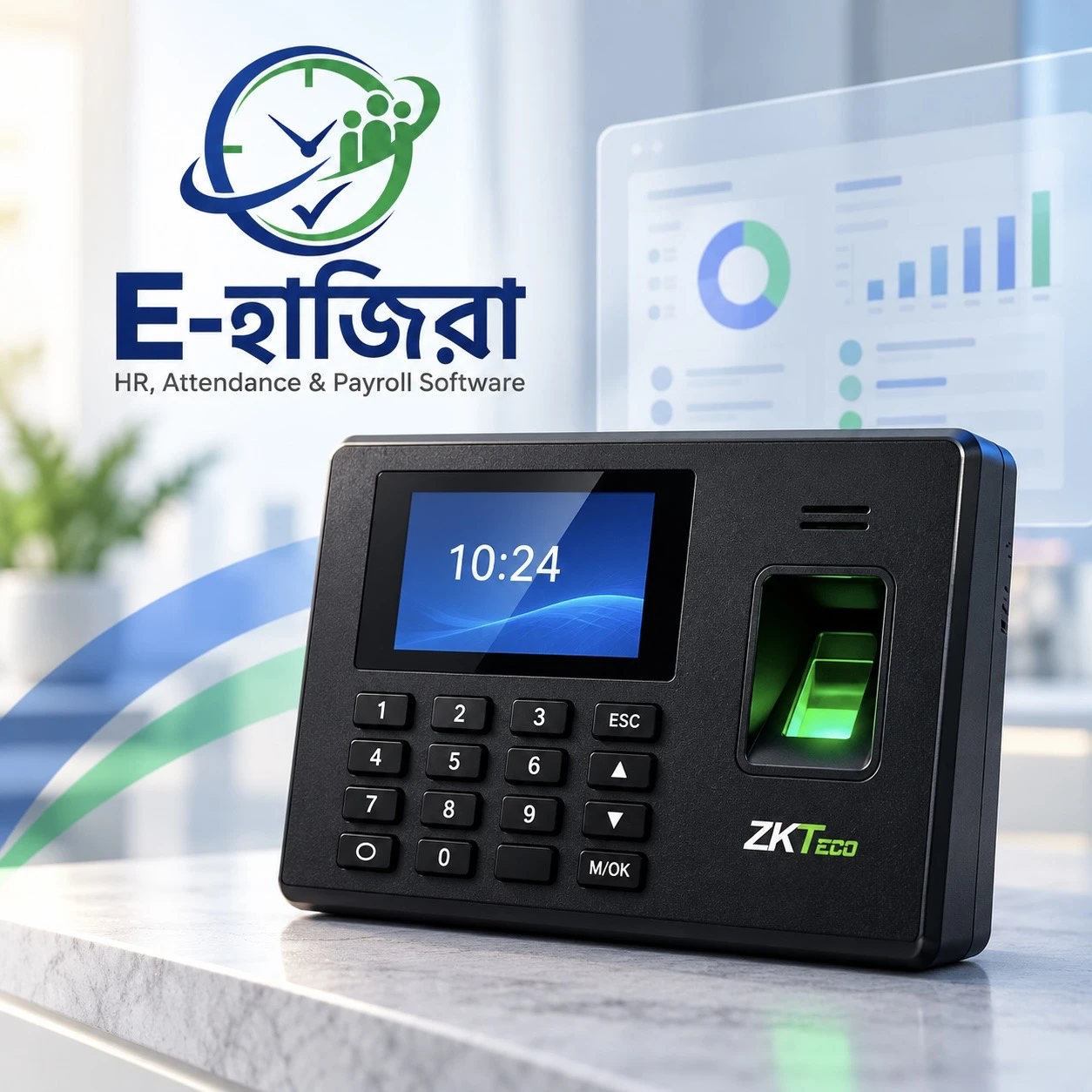
Fingerprint Attendance Management is a biometric time-tracking method that verifies an employee's identity through fingerprint recognition and records their attendance activity.
Instead of signing an attendance register or entering a traditional attendance card, employees place a registered finger on a compatible biometric device.
After successful identification, the device records an attendance event.
A typical attendance record contains:
Employee or biometric user identification
Date and time of the attendance event
Device identification
Check-in or check-out information, where supported
Verification or transaction status
The collected information can subsequently be processed by attendance software.
An important distinction is that an attendance transaction log is not the same as a fingerprint image or biometric template. Well-designed integrations should transfer only the information necessary for attendance processing.
Why Fingerprint Attendance Software Is Important in Bangladesh
Bangladesh has a large and diverse employment market, including garments, manufacturing, healthcare, retail, hospitality, security services, logistics, and corporate organizations.
These sectors frequently manage substantial workforces, multiple departments, and different shift schedules.
According to the Bangladesh Garment Manufacturers and Exporters Association (BGMEA), ready-made garment exports totaled approximately USD 38.70 billion during fiscal year 2025–26.
This significant industrial activity highlights the importance of efficient workforce administration, particularly for businesses with complex production schedules.
Fingerprint attendance technology is relevant because it helps organizations establish a more structured process for recording employee arrival and departure.
However, biometric identification alone does not guarantee correct payroll calculations, prevent every form of attendance fraud, or establish legal compliance.
The effectiveness of a digital attendance system depends on accurate employee registration, suitable devices, properly configured attendance rules, reliable synchronization, and appropriate administrative controls.
Common Problems with Manual Attendance Management
1. Manual Data Entry Errors
Human errors can occur when HR personnel transfer attendance information from registers or spreadsheets into payroll systems.
2. Attendance Proxy and Identity Verification
Traditional attendance methods may allow someone to record attendance on behalf of another employee.
Fingerprint verification makes this form of impersonation more difficult, although device quality and security controls remain important.
3. Missing Punch Records
Employees may forget to record their entry or exit time, creating incomplete attendance information.
4. Complex Shift Calculations
Night shifts, rotating schedules, and multiple duty periods require more than simple first-in, last-out calculations.
5. Delayed Payroll Preparation
HR teams may spend considerable time consolidating attendance information before preparing monthly salaries.
6. Limited Multi-Branch Visibility
Organizations with several locations may struggle to consolidate attendance records from different devices.
A centralized attendance management system can help reduce these challenges through structured data synchronization and consistent processing rules.
How Does a Fingerprint Attendance Device Work?
A fingerprint attendance system typically operates through several stages.
Step 1: Employee Enrollment
An authorized administrator enrolls an employee on the biometric device using the device's supported registration procedure.
Step 2: Biometric Identification
When the employee presents a finger, the device compares the captured characteristics against its registered biometric reference.
Step 3: Attendance Event Creation
After a successful match, the device records the employee identifier and transaction time.
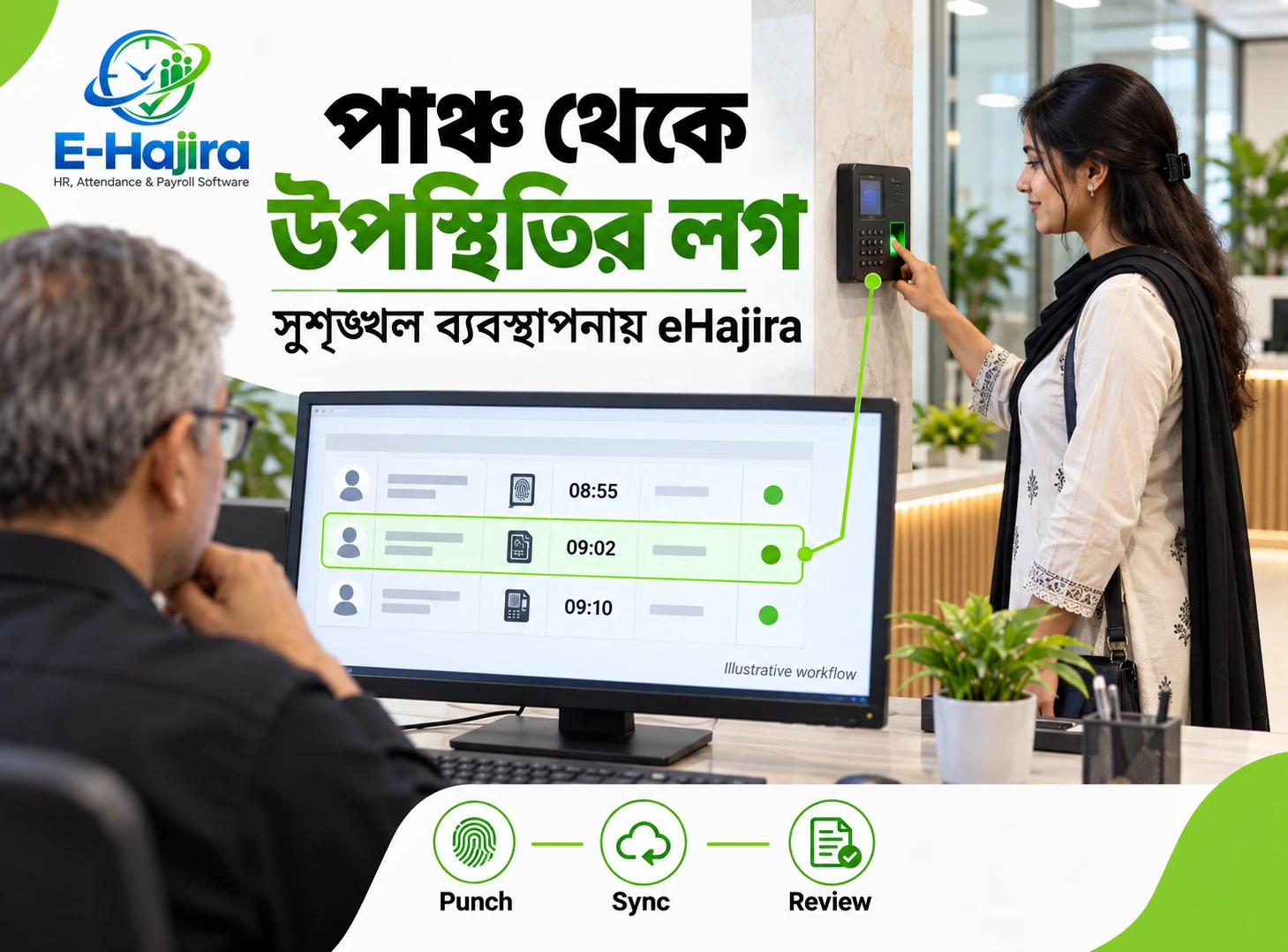
Step 4: Attendance Log Synchronization
The attendance transaction is transferred to the management system through a supported network connection, integration service, or approved data import.
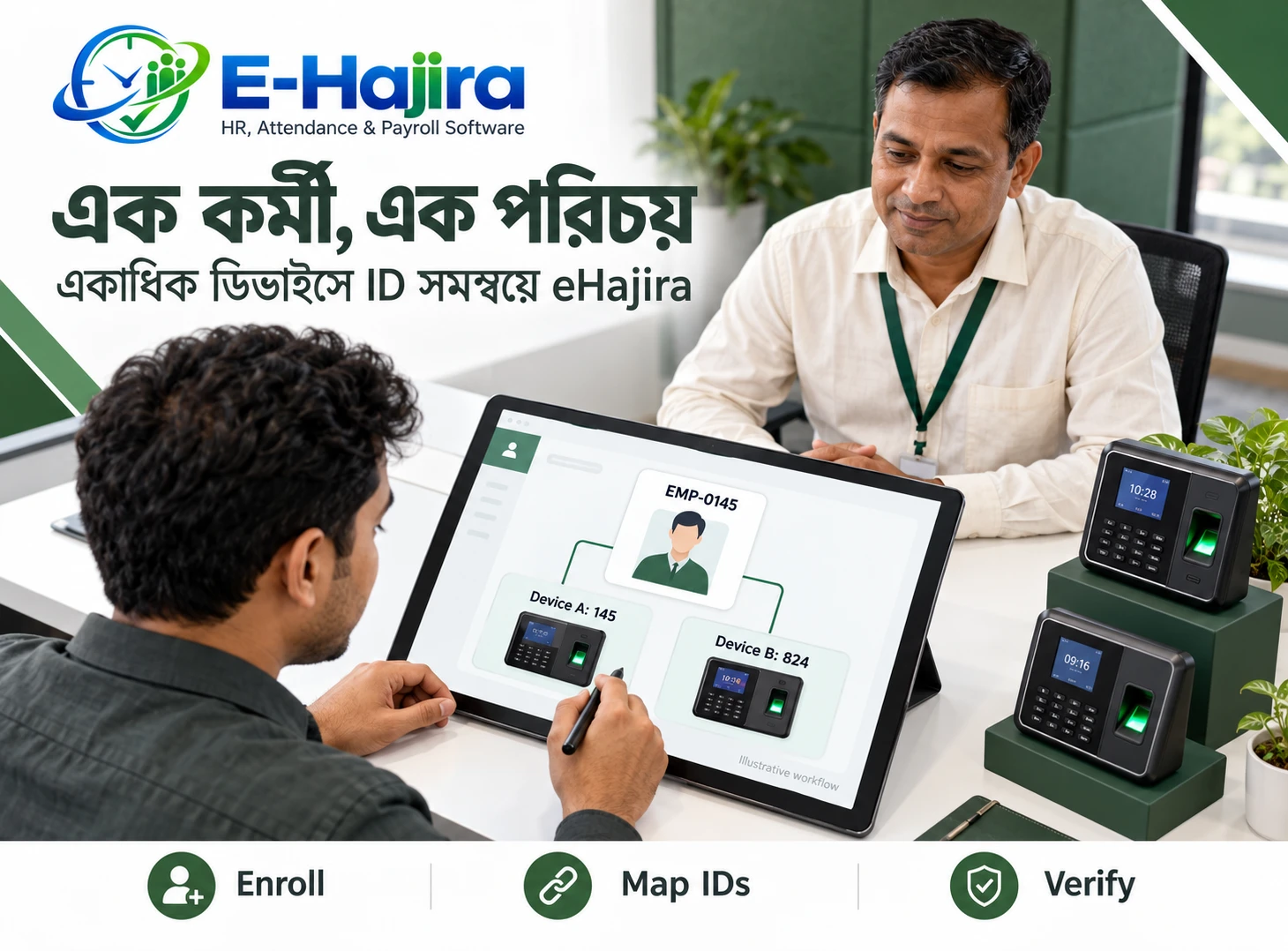
Step 5: Employee Identification Mapping
The management software associates the biometric device's user identifier with the corresponding HR employee profile.
Step 6: Attendance Processing
Configured shift schedules and attendance policies determine how the transaction should be interpreted.
This is the basic architecture behind fingerprint attendance integration with HRMS software.
Introducing eHajira Smart Attendance Management
eHajira HRMS provides an integrated management framework for Employee Information, Biometric Attendance, Shift Management, Leave Administration, and Payroll Processing.
The objective is to reduce the separation between attendance collection and routine HR administration.
Instead of handling employee information and attendance reports as unrelated datasets, organizations can use a consistent employee identification structure.
For example, an employee's assigned shift provides important context when analyzing their biometric punch times.
Likewise, approved leave information helps HR personnel interpret absences before finalizing monthly payroll.
eHajira's attendance integration scope is relevant to these processes.
However, supported biometric brands, specific device models, communication protocols, synchronization frequency, and available automation features should be verified during implementation.
Key Capabilities of Smart Fingerprint Attendance Management
1. Biometric Device Integration
A compatible attendance management system receives attendance transaction data from connected fingerprint devices.
Device integration may involve vendor APIs, communication SDKs, middleware, network services, or controlled file imports.
The supported method depends on the particular hardware and software configuration.
2. Centralized Attendance Database
Employee attendance information can be organized in a central database rather than maintained independently at each location.
This supports consistent records and consolidated attendance reporting.
3. Employee ID Mapping
Each biometric user identifier should be correctly associated with an employee profile.
Incorrect mapping can assign valid punch transactions to the wrong employee, so validation is essential.
4. Attendance Monitoring
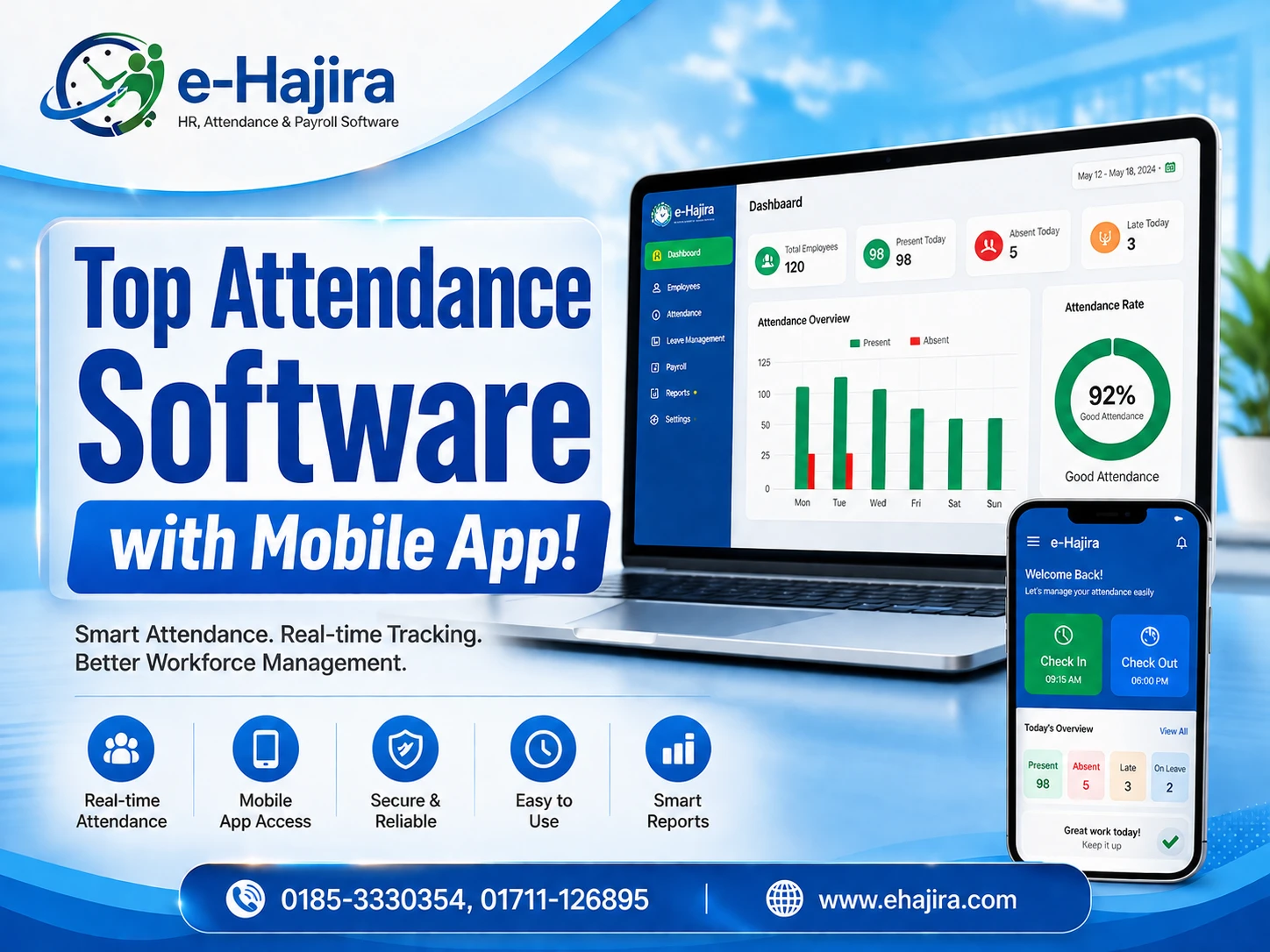
Organizations can monitor synchronized attendance transactions and review employee attendance status.
Real-time or near-real-time visibility requires appropriate device connectivity, synchronization configuration, and system availability.
5. Late Arrival and Early Departure
Attendance software can compare actual punch times against scheduled working hours.
A configurable grace period can help determine whether an arrival should be classified as late.
6. Missing Punch Detection
Incomplete entry or exit records can be identified for further review.
A missing punch should not automatically be treated as misconduct or unpaid absence without an appropriate investigation and correction process.
7. Shift-Based Attendance Calculation
Employees working morning, evening, or night shifts require accurate schedule-based attendance processing.
The system must distinguish between scheduled working periods and actual attendance transactions.
8. Attendance Reports
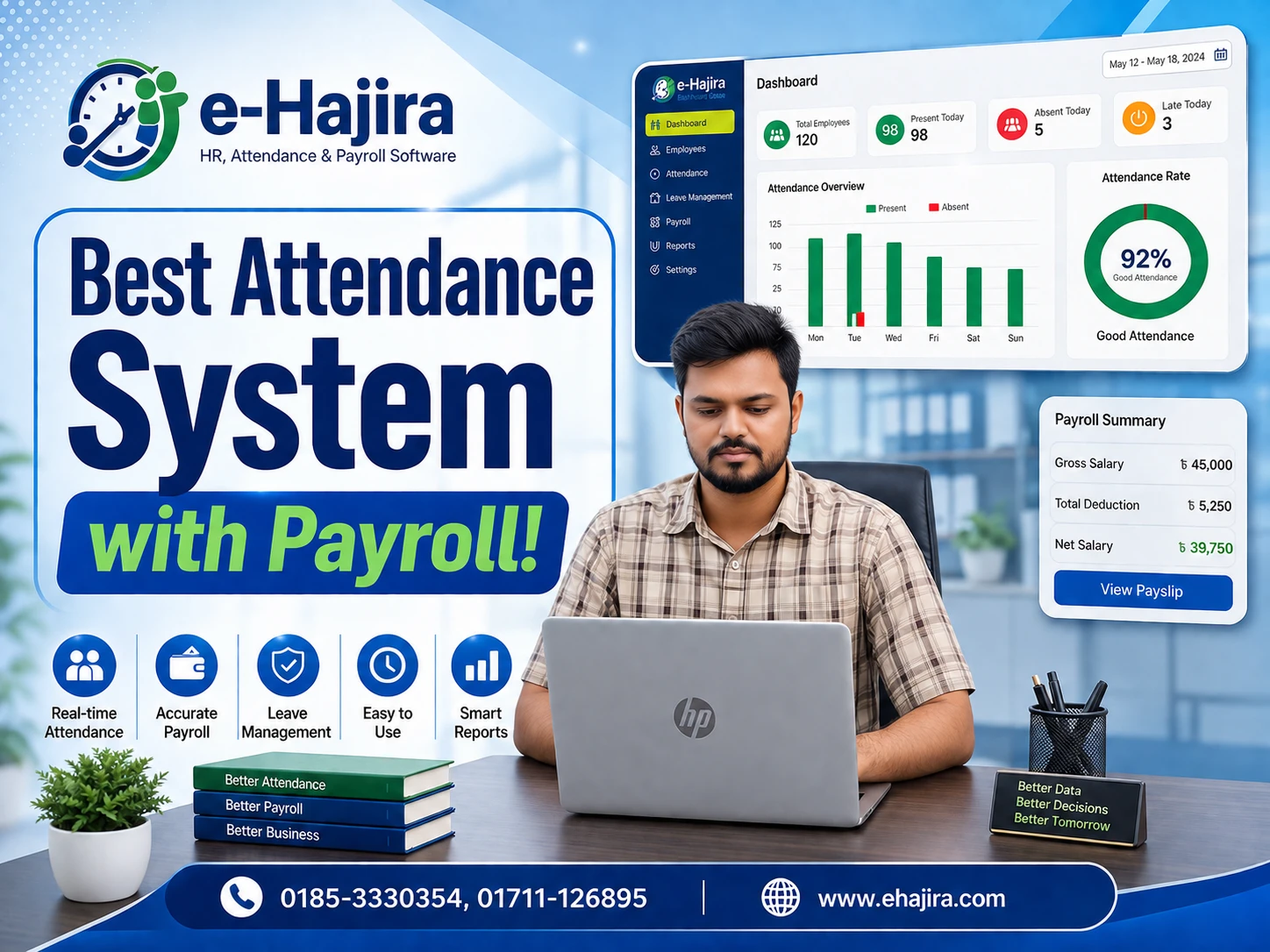
Structured reports can help HR teams review present, absent, late, and other attendance categories.
Export formats, filtering options, and report customization depend on the implemented software configuration.
Integrating Fingerprint Attendance with Shift Management
Shift Management plays a critical role in determining whether an attendance transaction represents an on-time arrival, late entry, or another attendance event.
Consider two employees arriving at 9:00 AM.
One employee is scheduled to begin at 9:00 AM, while another is assigned to a 10:00 AM shift.
Identical punch times therefore have different meanings.
eHajira's broader Roster Management framework includes shift planning capabilities such as fixed scheduling, monthly roster arrangements, and more complex duty assignments.
Features such as split shifts, cross-midnight calculations, and multiple same-day assignments require careful verification against the currently deployed configuration.
Proper shift integration helps avoid incorrect attendance interpretation.
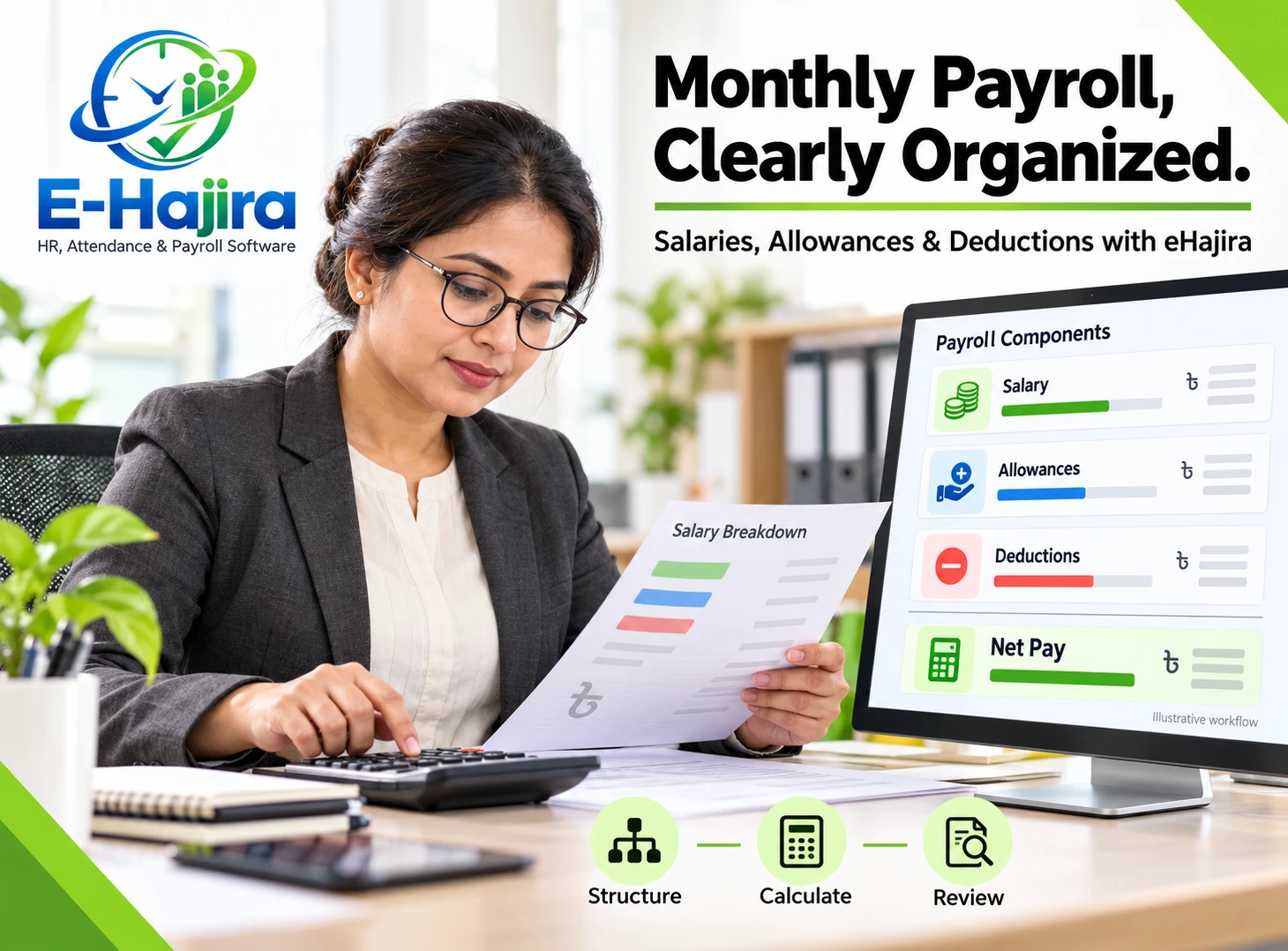
How Fingerprint Attendance Supports Payroll Management
Payroll accuracy depends on reliable employment information and correctly interpreted attendance records.
A biometric device collects attendance transactions, but payroll processing requires additional rules.
A typical attendance-to-payroll workflow includes:
Importing or synchronizing attendance logs.
Associating transactions with employee profiles.
Applying approved shift schedules.
Identifying missing punches and attendance exceptions.
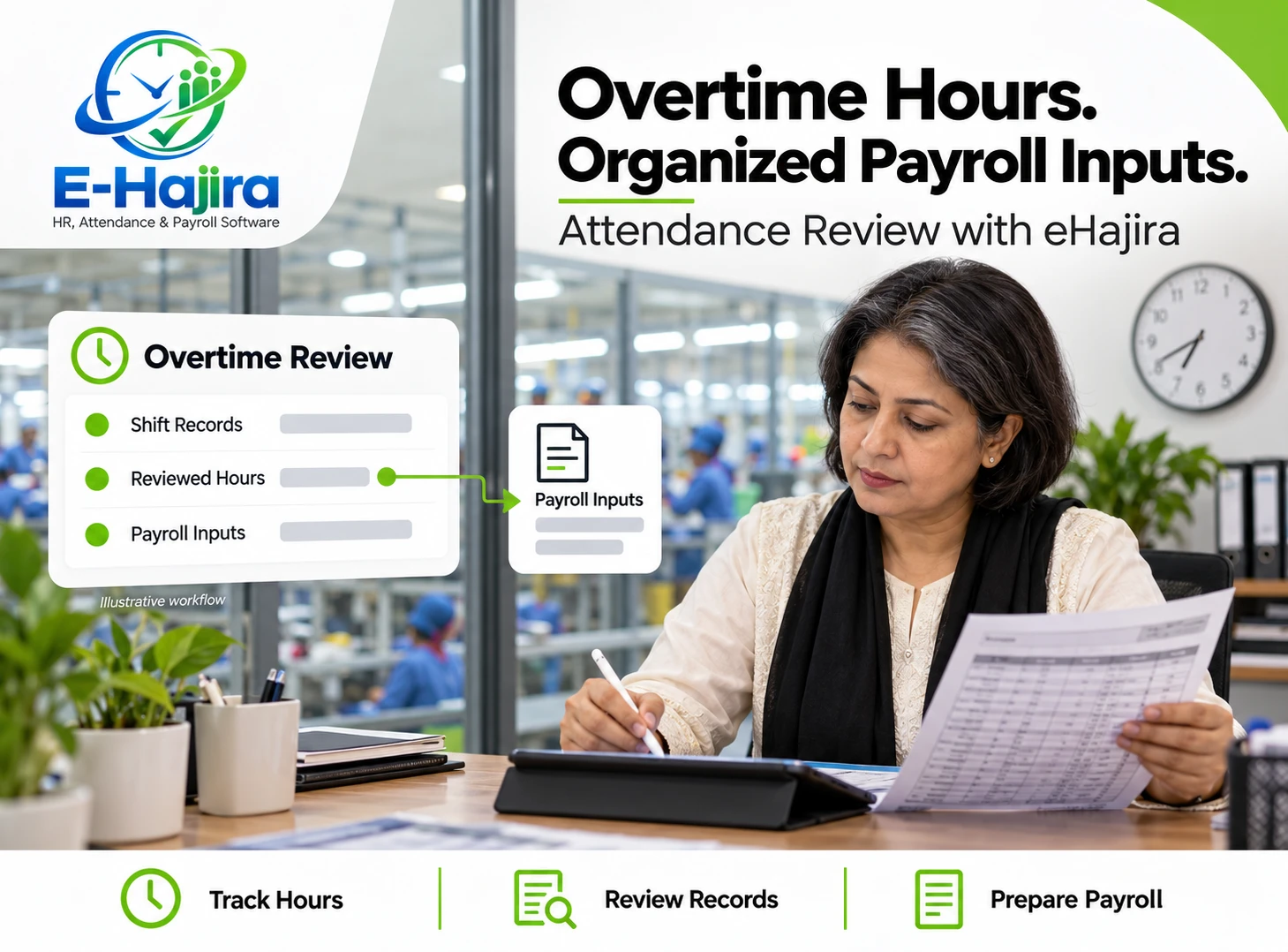
Reviewing leave and authorized overtime.
Applying the organization's lawful payroll policies.
Preparing payroll for approval.
Finalizing salary statements and payslips.
eHajira's HRMS and Payroll Management framework supports the objective of coordinating these activities.
However, final salary calculations should be reviewed by authorized personnel, particularly where payroll deductions, shift allowances, and overtime entitlements are involved.
Fingerprint Attendance and Bangladesh Labour Law
Organizations using attendance management software must consider Bangladesh's applicable labour legislation.
Under the Bangladesh Labour Act, 2006, Section 100 generally establishes an eight-hour normal working day for adult workers, subject to applicable overtime provisions.
Section 102 generally establishes a 48-hour ordinary working week, with statutory limits and conditions for additional work.
Section 108 addresses overtime remuneration, while Section 111 requires prescribed notices of working periods.
Section 9 also addresses worker register information, including working periods and relevant employment details.
The Bangladesh Labour (Amendment) Act, 2026 introduced further changes to the labour law framework.
Accordingly, HR teams should regularly review the latest requirements and applicable sector-specific rules.
Fingerprint attendance software can provide useful evidence for attendance verification and working-time administration.
Nevertheless, a biometric punch is not automatically proof of every minute worked, and the software does not independently guarantee compliance with overtime, rest, leave, or recordkeeping requirements.
Biometric Data Protection and Employee Privacy
Fingerprint information is sensitive because it is connected to an individual's physical identity.
Bangladesh's Personal Data Protection Act, 2026 expressly includes biometric information within the definition of sensitive personal data.
Organizations should therefore establish appropriate controls before collecting or processing employee fingerprints.
Recommended measures include clear employee notices, a valid legal basis for processing, restricted enrollment authority, protected biometric templates, secure device administration, and defined retention procedures.
Businesses should also establish a reasonable alternative attendance process for employees whose fingerprints cannot be reliably captured.
The specific obligations and commencement provisions of applicable laws should be assessed with qualified legal and security professionals.
Importantly, a central HRMS does not always need access to raw fingerprint images or biometric templates. Where appropriate, it can process only verified attendance transaction records.
Industry Applications in Bangladesh
Garments and Textile Factories
Factories manage production workers, quality-control personnel, maintenance teams, and administrative employees across different shifts.
Biometric attendance integration can support workforce reporting and attendance verification.
Manufacturing Industries
Manufacturing organizations often operate multiple production shifts and facilities.
Connecting attendance devices with structured shift information helps improve attendance interpretation.
Corporate Offices
Corporate businesses can use attendance information to organize punctuality records, review attendance exceptions, and support monthly HR administration.
Hospitals and Healthcare Facilities
Hospitals operate around the clock, making night shifts and changing duty schedules common.
Attendance systems should be coordinated with approved staffing rosters.
Retail Chains and Supermarkets
Retail businesses with multiple outlets can benefit from standardized employee identification and centrally organized attendance records.
Security and Facility Management
Security service companies often deploy employees across different client locations.
Centralized attendance information can help authorized managers review location-based workforce records.
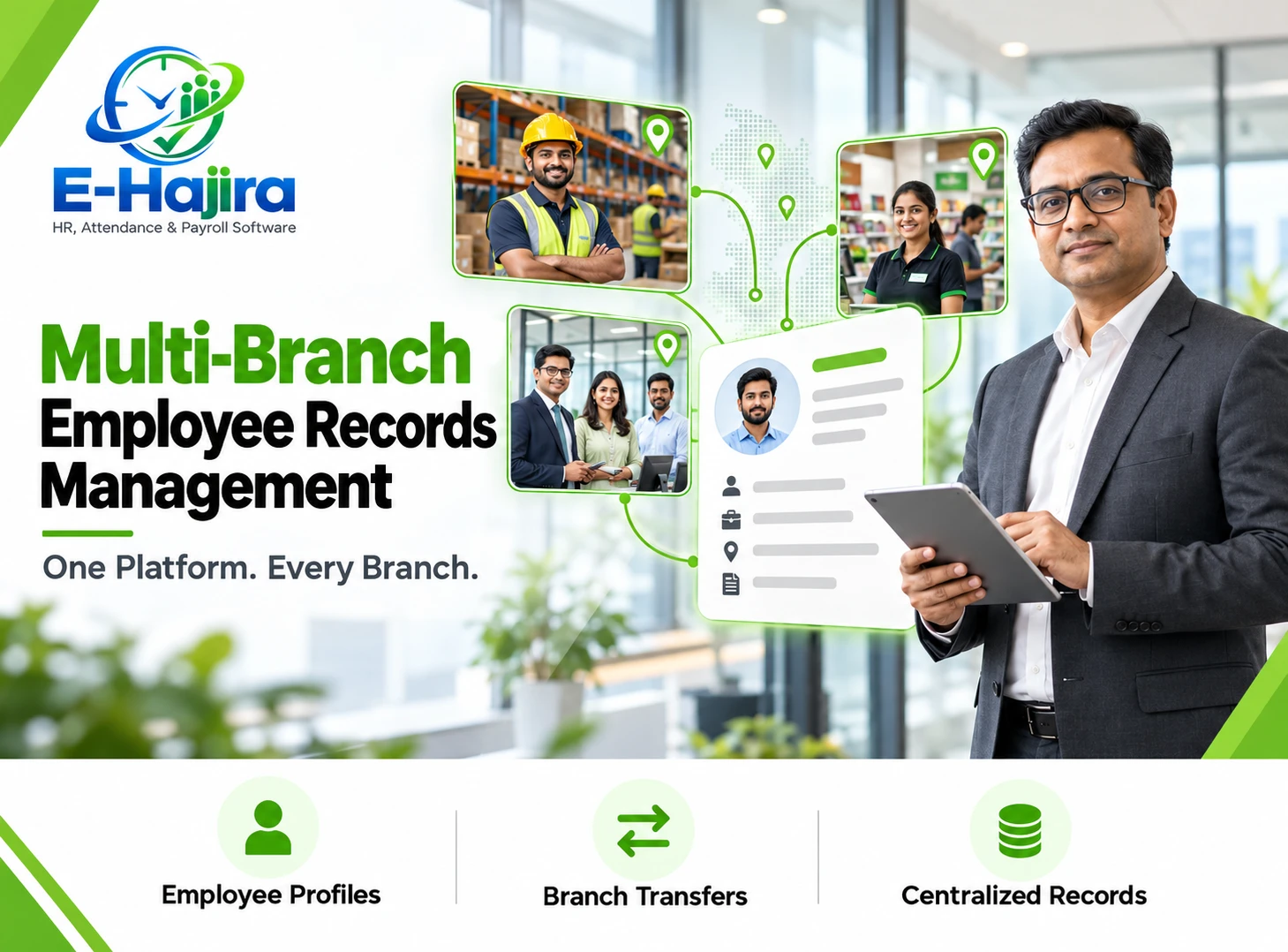
Multi-Branch Fingerprint Attendance Integration
Consider a hypothetical Bangladeshi company operating three branches in Dhaka, Gazipur, and Chattogram.
Each branch employs 200 workers, creating a workforce of 600 employees.
If every branch independently downloads attendance records into spreadsheets, the central HR department must consolidate those files before payroll processing.
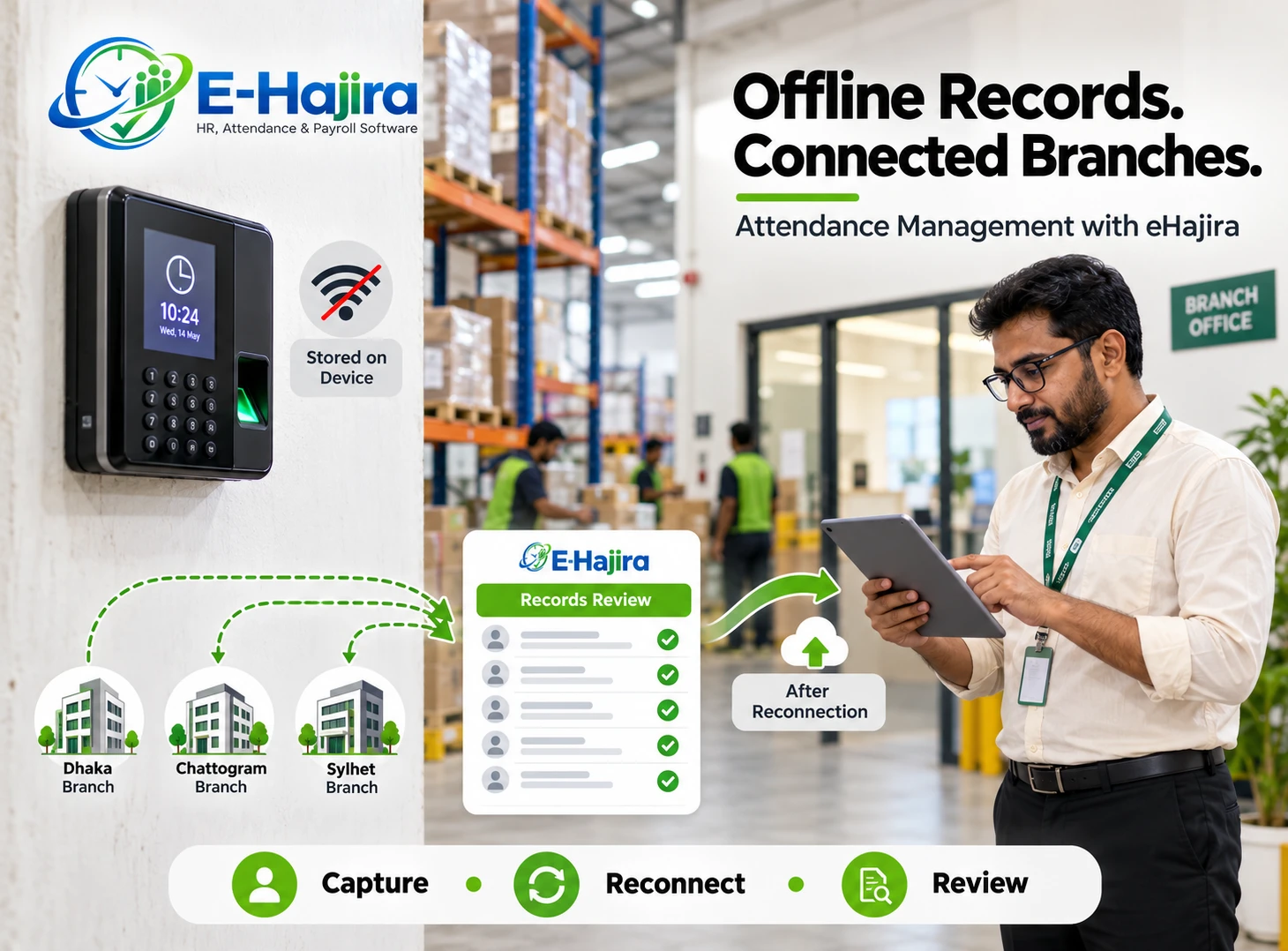
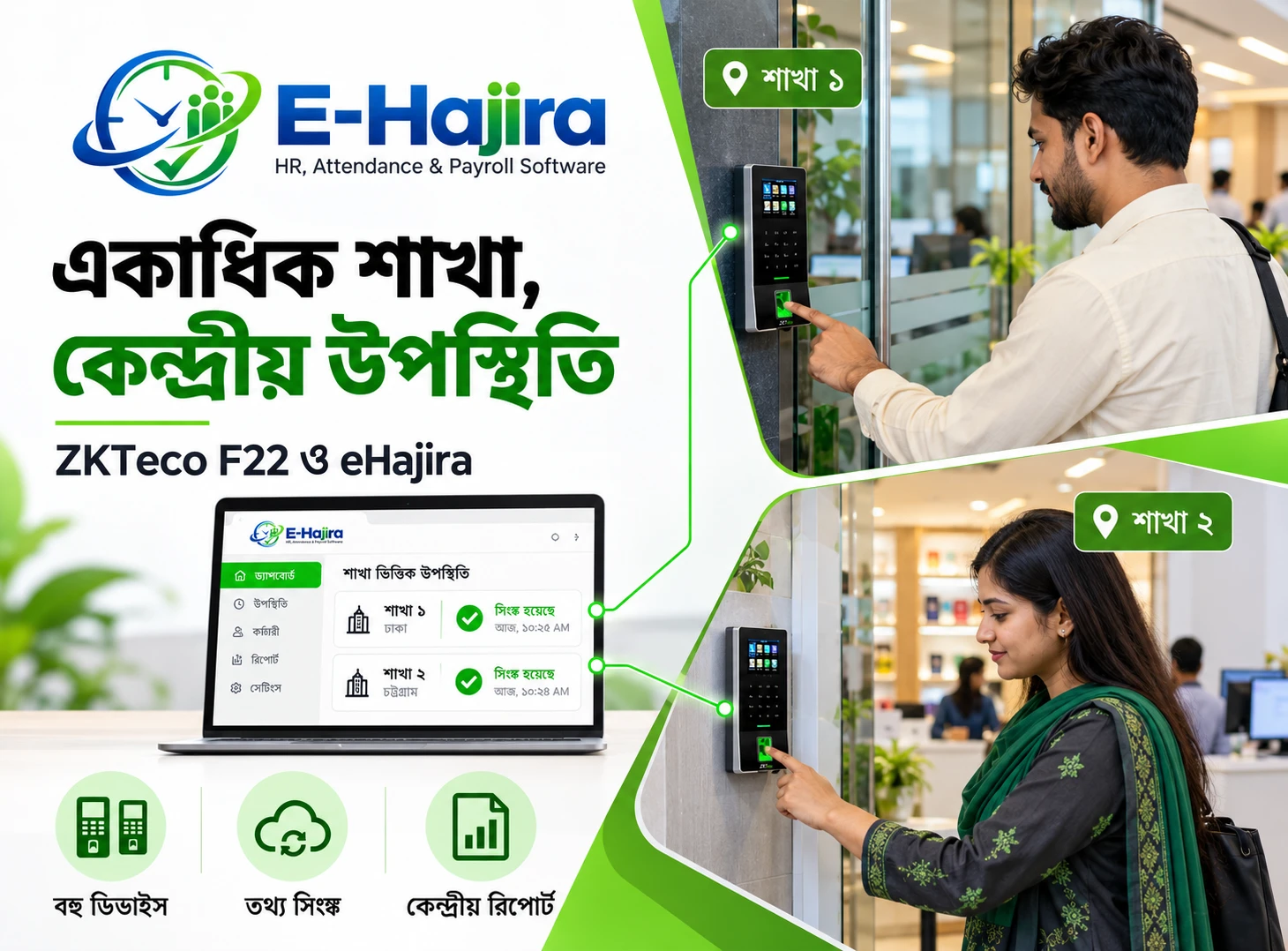
With a compatible centralized attendance system, each branch can synchronize its attendance transactions into a shared management environment.
Authorized HR personnel can then review employee and branch-specific attendance information.
This example illustrates a potential operational workflow rather than a verified eHajira customer deployment.
Manual Attendance vs. Smart Fingerprint Attendance
| Feature | Manual Attendance | Integrated Fingerprint System |
|---|---|---|
| Employee Identification | Register or ID Card | Biometric Verification |
| Attendance Recording | Manual Entry | Digital Punch Transactions |
| Data Consolidation | Spreadsheet Processing | Centralized Synchronization |
| Late Attendance | Manual Review | Configurable Calculation |
| Missing Punches | Difficult to Identify | Structured Exception Review |
| Multi-Branch Records | Separate Reports | Coordinated Database |
| Payroll Preparation | Manual Consolidation | Integrated Processing Framework |
| Auditability | Paper Records | Digital Logs and Controls |
A successful integrated system still requires human supervision, functioning hardware, and accurate configuration.
Implementation Guide: Connecting Fingerprint Devices with eHajira
A phased implementation is usually more reliable than immediately deploying devices throughout an organization.
Phase 1 — Requirement Assessment: Review employee numbers, locations, shift structures, existing devices, and reporting needs.
Phase 2 — Hardware Compatibility: Confirm exact fingerprint device models, firmware versions, connectivity options, APIs, and integration methods.
Phase 3 — Employee Data Preparation: Standardize Employee IDs and verify biometric-user mappings.
Phase 4 — Network Configuration: Establish secure and reliable connectivity between approved devices and integration services.
Phase 5 — Attendance Policy Setup: Define shift timings, grace periods, weekly holidays, missing-punch procedures, and overtime approval rules.
Phase 6 — Pilot Testing: Test a selected employee group against actual attendance records.
Phase 7 — Payroll Validation: Compare attendance calculations and payroll outputs against approved manual calculations.
Phase 8 — Full Deployment: Expand integration gradually while training HR, IT, and branch-level administrators.
Organizations should also document their recovery procedures for power failures, network outages, and device replacement.
Common Fingerprint Attendance Integration Problems
Successful biometric attendance management depends on reliable operations after installation.
Device Offline: Check power, network connectivity, and device status before treating unsynchronized transactions as absent attendance.
Incorrect Employee Mapping: Verify that the device user ID matches the correct employee record.
Duplicate Punches: Apply documented rules for repeated transactions without deleting important original evidence.
Incorrect Device Time: Synchronize device clocks to the appropriate Bangladesh Standard Time configuration.
Poor Fingerprint Recognition: Maintain clean scanners, verify enrollment quality, and provide an approved alternative.
Wrong Shift Assignment: Correct the authorized roster before interpreting attendance records.
Delayed Synchronization: Confirm whether the integration operates continuously, periodically, or through manual import.
Resolving these issues systematically helps maintain trustworthy attendance records.
Business Benefits of eHajira-Based Attendance Automation
Integrating fingerprint attendance with HRMS software can offer several organizational advantages.
Reduced Administrative Work: Less repeated attendance entry and manual consolidation.
Improved Record Consistency: Standard employee identifiers and structured attendance transactions.
Better Workforce Visibility: Easier analysis of attendance information across authorized departments and branches.
More Reliable Shift Tracking: Attendance interpreted against appropriate duty schedules.
Better Payroll Preparation: Consistent attendance information for payroll verification.
Improved Exception Handling: Missing punches and inconsistencies can be reviewed through documented procedures.
Scalable Administration: A coordinated approach can support workforce growth and additional locations.
The actual financial and productivity benefits depend on implementation quality. No fixed percentage of savings or accuracy improvement should be assumed without organizational measurement.
How to Choose Fingerprint Attendance Management Software in Bangladesh
Before selecting a solution, organizations should evaluate hardware compatibility, attendance calculation rules, shift management, payroll integration, security, reporting, training, and vendor support.
Buyers should request a live demonstration using their existing device models and realistic attendance scenarios.
They should also test offline recovery, employee transfers, night-shift calculations, missing punches, and data exports.
Pricing evaluation should consider software subscriptions, integration fees, biometric hardware, network infrastructure, maintenance, and ongoing technical support.
Why Consider eHajira HRMS?
eHajira combines employee information management with biometric attendance, shift scheduling, leave administration, and payroll-related workflows.
This coordinated approach is relevant to Bangladeshi businesses seeking to reduce dependence on disconnected attendance records and manual payroll preparation.
For organizations with multiple branches or complex shifts, structured attendance integration can provide an important foundation for workforce administration.
Device compatibility, specific reporting features, real-time synchronization, and payroll configuration should be confirmed through a practical eHajira product demonstration.
Conclusion
Smart Fingerprint Attendance Management is an important development in modern workforce administration.
When implemented responsibly, biometric attendance technology can help organizations maintain structured attendance transactions and reduce repetitive administrative tasks.
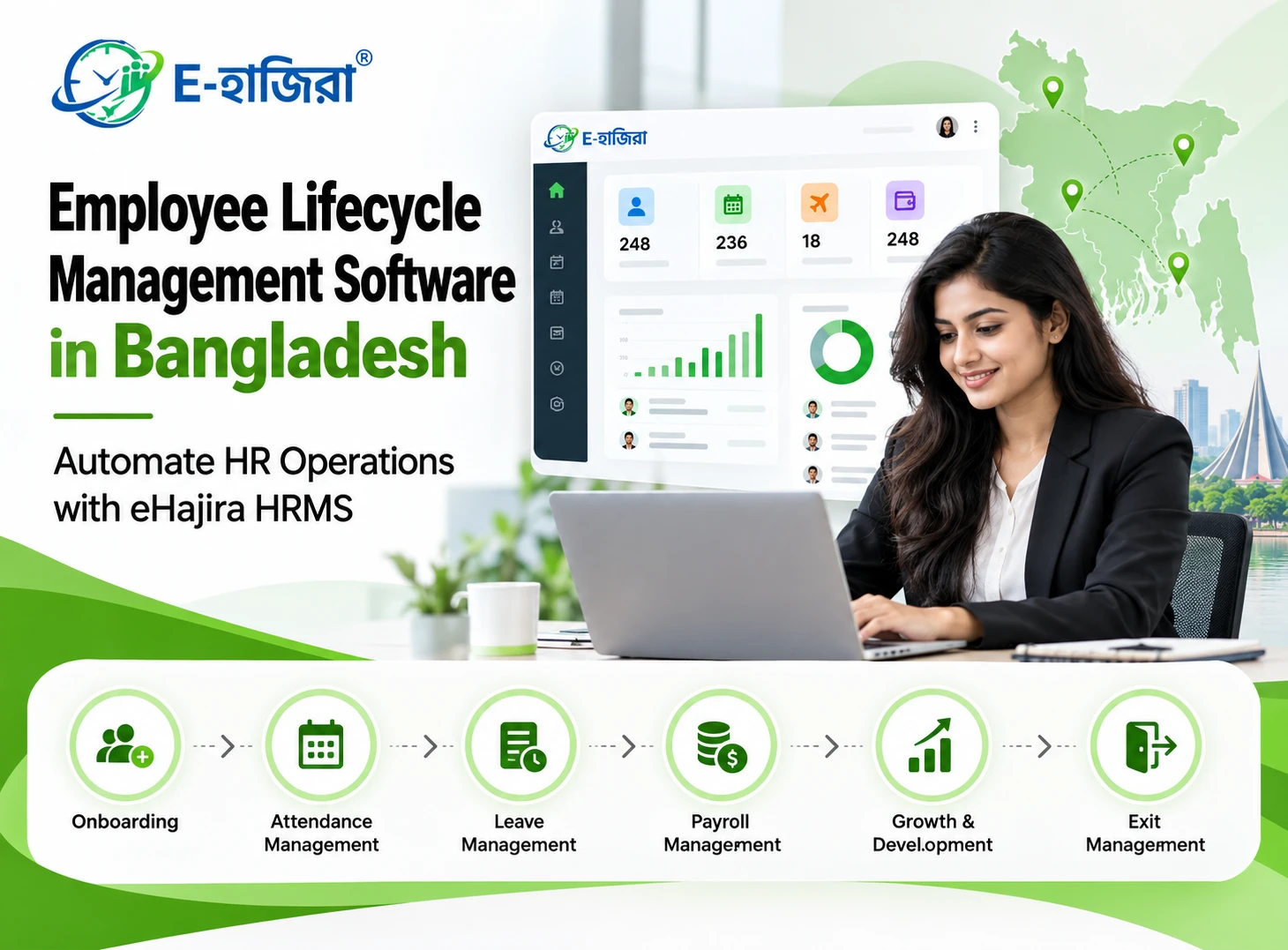
For businesses in Bangladesh, connecting attendance devices with employee profiles, shift schedules, leave records, and payroll workflows offers a more coordinated approach to daily HR operations.
eHajira HRMS provides a relevant platform for integrating attendance management with broader HR administration.
Businesses should prioritize accurate device integration, appropriate privacy safeguards, lawful attendance policies, and reliable ongoing support.
Simplify Employee Attendance Tracking with eHajira HRMS — Smart HR, Attendance and Payroll Management for Bangladesh.
Frequently Asked Questions (FAQ)
1. What is fingerprint attendance management software?
It is software that organizes biometric attendance transactions and helps businesses monitor employee working-time records.
2. How does fingerprint attendance integration work?
Compatible devices capture attendance events and transfer transaction logs to management software through supported integration methods.
3. What is eHajira HRMS?
eHajira is a web-based HR management platform covering employee information, attendance, shift scheduling, leave, and payroll administration.
4. Does eHajira support biometric attendance devices?
Biometric attendance integration is within eHajira's functional scope. Compatibility with specific hardware must be verified.
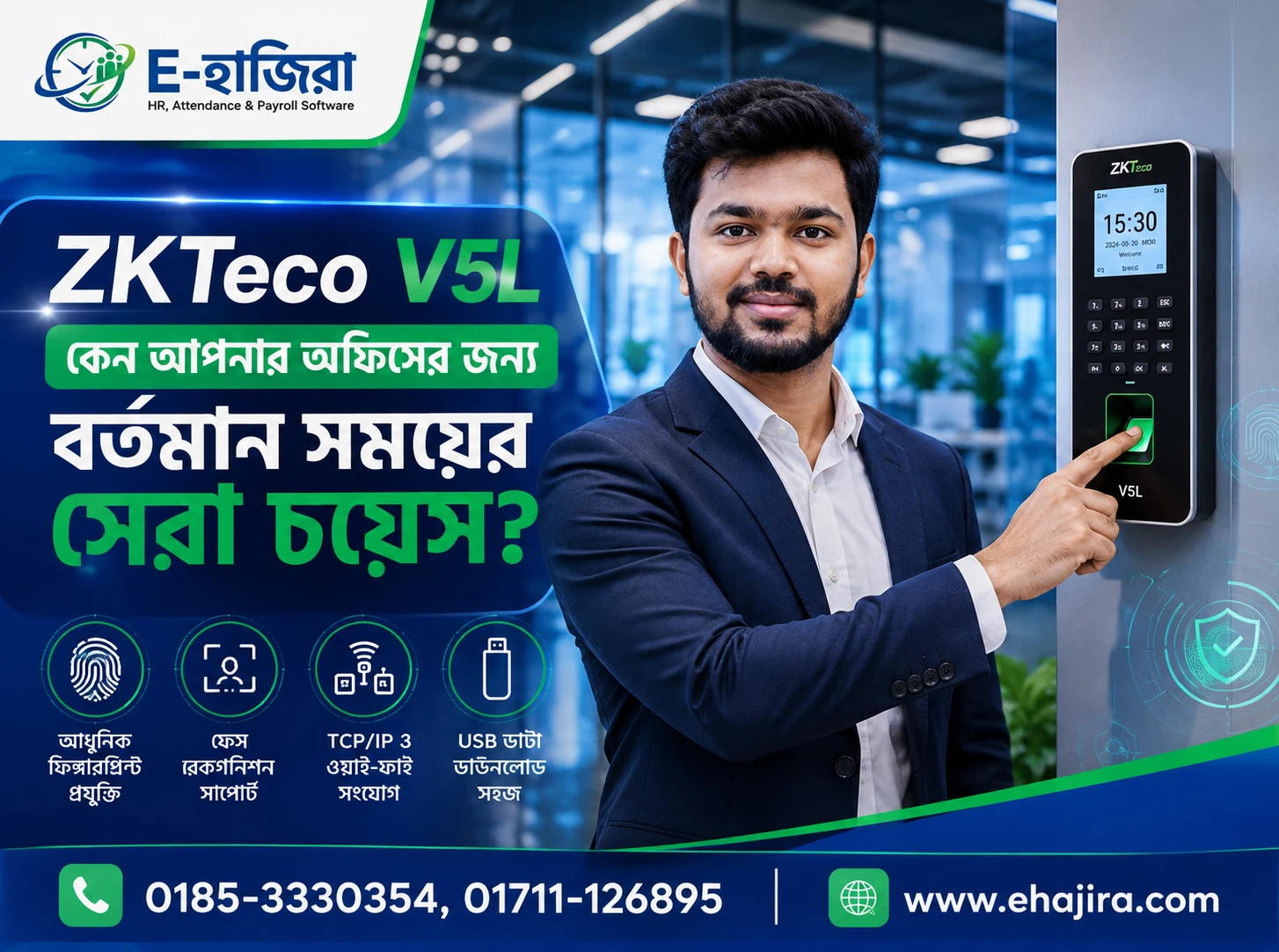
5. Can eHajira connect to ZKTeco fingerprint devices?
Compatibility depends on the exact ZKTeco model, firmware, protocol, and integration support. It should be confirmed through testing.
6. Can fingerprint attendance automatically calculate working hours?
It can support configured calculations using attendance transactions, shift schedules, break rules, and approved policies.
7. Does fingerprint attendance prevent proxy attendance?
Biometric verification makes proxy attendance more difficult, but no device provides an absolute guarantee against misuse.
8. Can fingerprint attendance integrate with payroll?
Yes, when the software supports appropriate attendance-to-payroll processing and the organization's payroll rules are configured.
9. Can eHajira manage night-shift attendance?
Its shift-management scope is relevant to night operations, but cross-midnight calculation behavior should be demonstrated.
10. Is real-time attendance monitoring possible?
Yes, when supported devices, communication services, network connectivity, and synchronization settings allow timely data transfer.
11. What happens when the internet connection fails?
Some devices store transactions locally for later synchronization. Offline capacity and recovery behavior vary by model.
12. Can multiple fingerprint devices connect to one HRMS?
Many HRMS architectures support multiple devices. Actual capacity and compatibility depend on implementation.
13. Can attendance software detect late employees?
Yes, by comparing attendance transactions with approved shift start times and applicable grace periods.
14. How are missing fingerprint punches handled?
Missing transactions should follow a documented review and correction process requiring authorized approval.
15. Is fingerprint attendance suitable for garments factories?
It can be useful for factories managing large workforces and multiple shifts, subject to suitable deployment and privacy safeguards.
16. Can hospitals use fingerprint attendance systems?
Yes, provided the configuration supports the hospital's rotating shifts, staffing arrangements, and exception-handling requirements.
17. Are fingerprint attendance records legally sufficient in Bangladesh?
Digital records can support administration, but compliance depends on applicable labour laws, prescribed registers, and recordkeeping requirements.
18. Is employee fingerprint information sensitive personal data?
Yes. Bangladesh's Personal Data Protection Act, 2026 explicitly classifies biometric data as sensitive personal information.
19. Can employees use alternative attendance methods?
Organizations should provide appropriate alternatives when biometric enrollment or verification is impractical, consistent with applicable requirements.
20. Can eHajira support multi-branch attendance management?
Its centralized HR and attendance framework is relevant to multi-branch operations. Specific access and integration arrangements require verification.
21. Does a fingerprint attendance system need continuous internet?
Not necessarily. Some devices operate offline and synchronize later, depending on their supported architecture.
22. Can biometric attendance calculate overtime?
Attendance data can contribute to overtime calculations, but entitlement and payment require approved policies and legal compliance.
23. What devices should businesses purchase for eHajira?
They should select devices only after confirming the supported models, APIs, communication protocols, and integration requirements.
24. How long does fingerprint attendance integration take?
Deployment time depends on hardware compatibility, employee numbers, network readiness, shift complexity, and testing requirements.
25. Why choose eHajira for employee attendance management?
eHajira offers a coordinated HRMS framework connecting employee information, attendance records, shift planning, leave administration, and payroll-related processes.
Get Started with eHajira HRMS
Track Attendance Smarter. Simplify HR Operations. Improve Payroll Preparation.
Modernize your organization's employee attendance management with a structured HRMS integration strategy.
Request an eHajira Demo Today to evaluate fingerprint device compatibility, attendance workflows, shift configurations, and payroll integration for your business.