Attendance System
 Access Control
 Door Security
 Turnstile & Entrance Control
 Security Inspection
 Parking Management
 Safety Products
 Software
 Other
Missing Punch and Attendance Correction Workflow
October 28, 2026

Missing Punch and Attendance Correction Workflow with eHajira: A Guide for Businesses in Bangladesh
An employee arrives on time, completes the working day and leaves the office. The next morning, the attendance record shows a missing check-out. In another department, a supervisor discovers that an employee’s morning punch has not appeared in the system. Neither situation automatically means the employee was absent, but both require attention before the attendance record can be finalized.
These exceptions are a familiar administrative challenge for businesses in Bangladesh. Employees may forget to punch, devices may experience connectivity problems, or an incorrect shift assignment may affect how attendance is interpreted. Without a clear correction process, HR teams can spend considerable time collecting explanations and updating records.
eHajira supports a more organized approach. Its published product information describes a Corrections module through which employees or HR can submit requests concerning incorrect or missing punch entries. Businesses should confirm the submission channels, approval arrangements and permissions included in their selected package.
This guide explains how missing punches should be investigated, how an attendance correction workflow can be organized around eHajira, and how employers can maintain fair, reliable attendance records.
What Is a Missing Punch?
A missing punch occurs when an expected attendance event is not available in the relevant record. This may involve a missing check-in, a missing check-out or an incomplete sequence of attendance events.
For example, an employee may have a recorded arrival time but no departure time. Another employee may have a check-out without a corresponding check-in. The situation needs investigation because the record does not provide the information normally required to interpret that working period.
A missing punch is different from a confirmed absence. It indicates an information gap, not a complete explanation of what happened. The employer should establish the circumstances before deciding how the day is classified.
This distinction protects record accuracy and gives employees a reasonable opportunity to explain a discrepancy.
What Is Attendance Correction?
Attendance correction is the controlled process of reviewing and resolving an inaccurate or incomplete attendance record. It can involve a missing event, an incorrect time or an attendance outcome affected by another issue.
A correction should be based on a clear reason and appropriate verification. It should not become an unrestricted way to replace attendance information whenever an employee or manager prefers a different result.
For instance, an employee who forgot to check out may report the date, the missing event and the claimed departure time. A supervisor can then review the circumstances before an authorized person takes action.
The objective is to make the record accurately reflect the approved working situation. Correction is therefore an administrative process involving responsibility and evidence, rather than a simple edit to a time field.
Why This Matters for Bangladesh Businesses
Businesses in Bangladesh operate across different work settings, including corporate offices, shops, factories, educational institutions and field service locations. Each environment can generate attendance exceptions for different reasons.
A retail employee may forget to punch during a busy closing period. A technician may begin work at an approved customer location. A factory employee may complete a shift that ends after midnight.
When these situations are handled through scattered messages and verbal instructions, HR may struggle to identify which records are still unresolved. Employees may also receive different answers depending on whom they contact.
A consistent workflow gives everyone a shared process. Employees know how to report a problem, supervisors understand what they must review, and HR can establish which records are ready for monthly attendance preparation.
How eHajira Fits into the Workflow
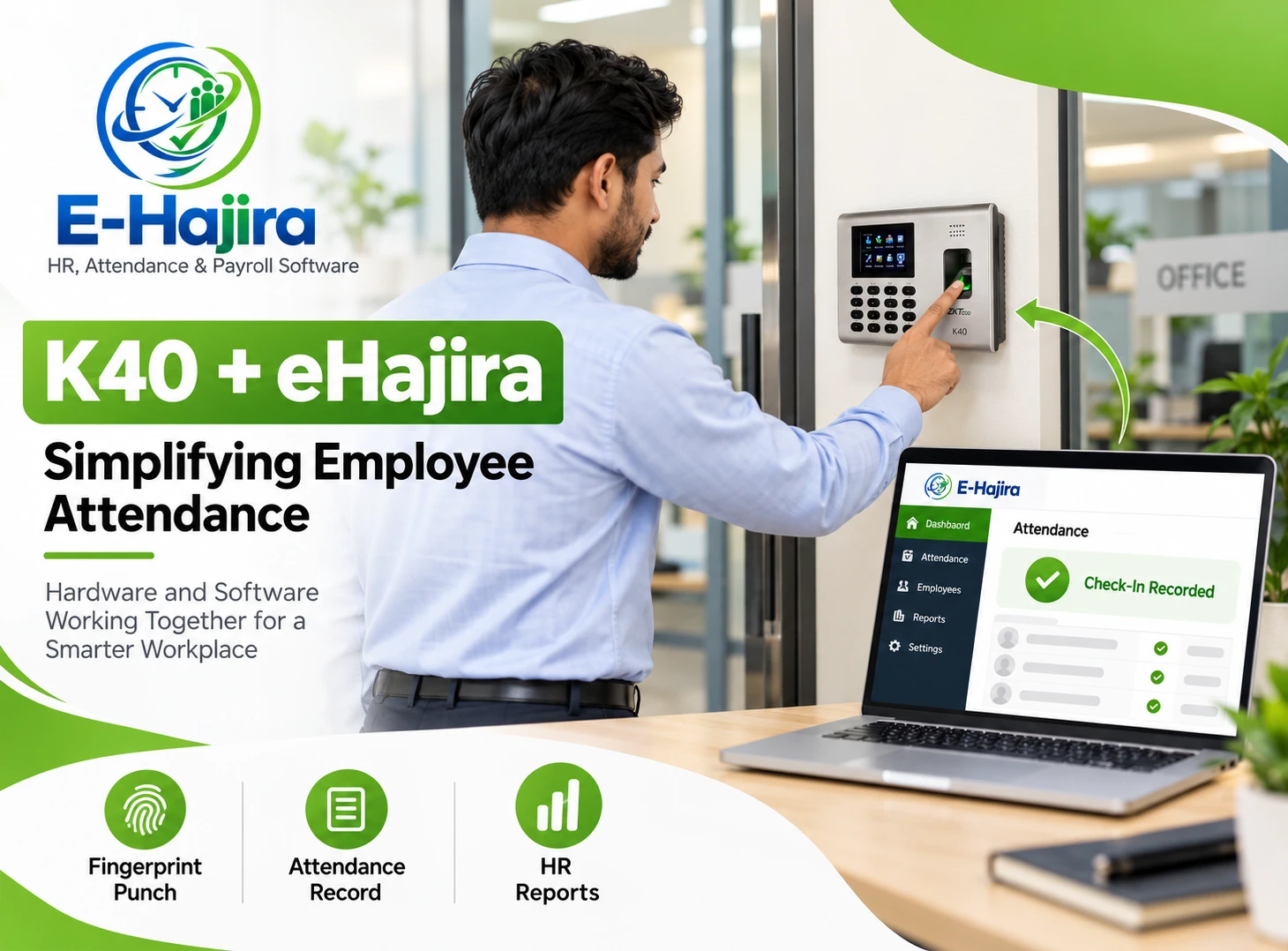
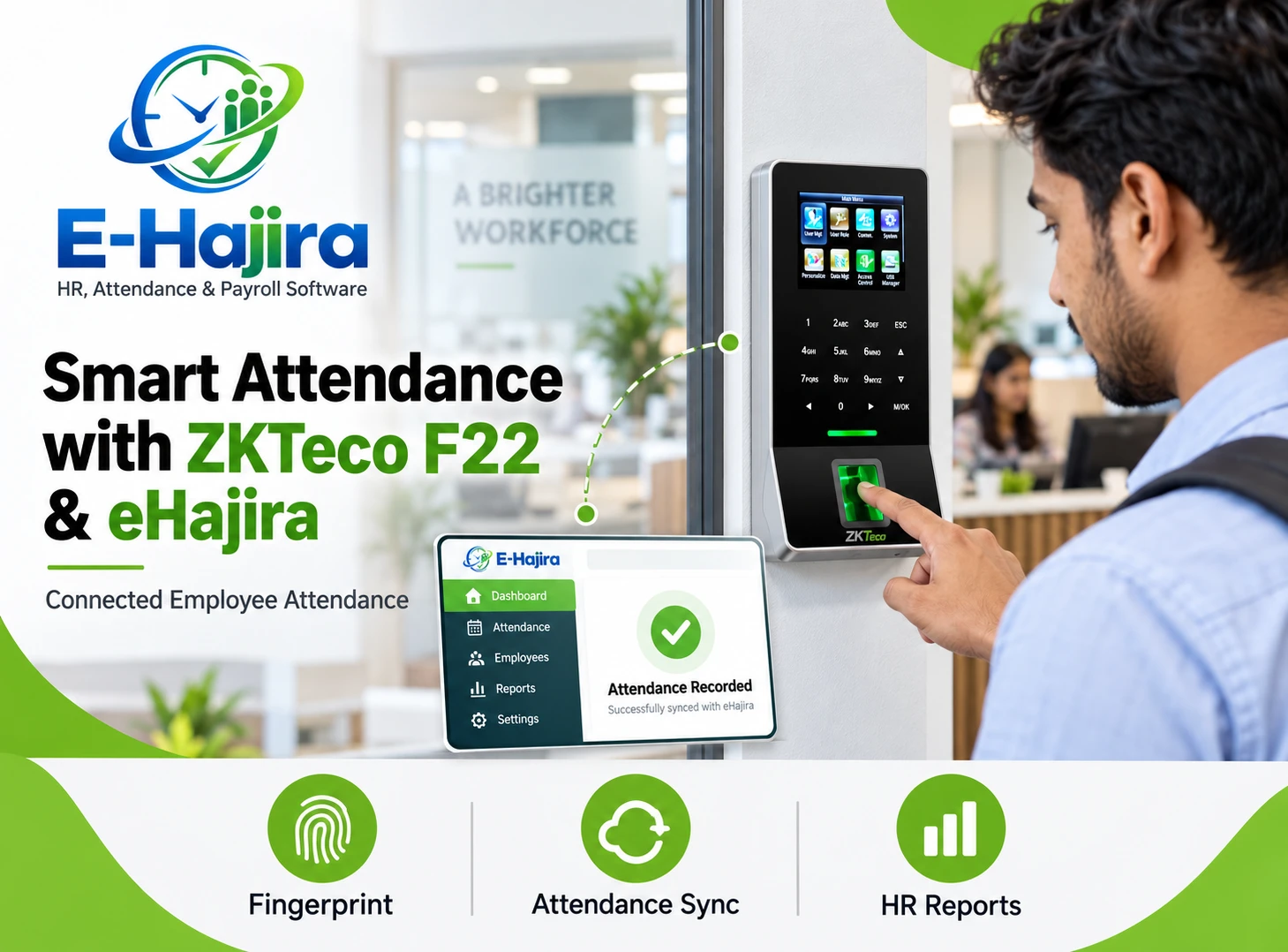
eHajira combines attendance administration with broader HR and payroll activities. Its published information describes attendance data collection from compatible biometric and card-based devices, alongside a correction request function.
The Corrections module provides a product-based starting point for organizing exception handling. Instead of treating every discrepancy as an informal conversation, the organization can discuss how correction requests are submitted and processed in its eHajira setup.
The workflow described below is a recommended operating approach. It does not establish that every package includes multiple approval levels, attachments, payroll locking or a detailed change history.
Before rollout, the employer should ask the eHajira team to demonstrate a complete example from request submission to the resulting attendance record. This connects product capability with the organization’s actual responsibilities.
Common Reasons for Missing Punches
An employee may forget to record attendance, but that is only one possible cause. A missing entry can also result from an unsuccessful scan, a device issue or information that has not yet reached the central system.
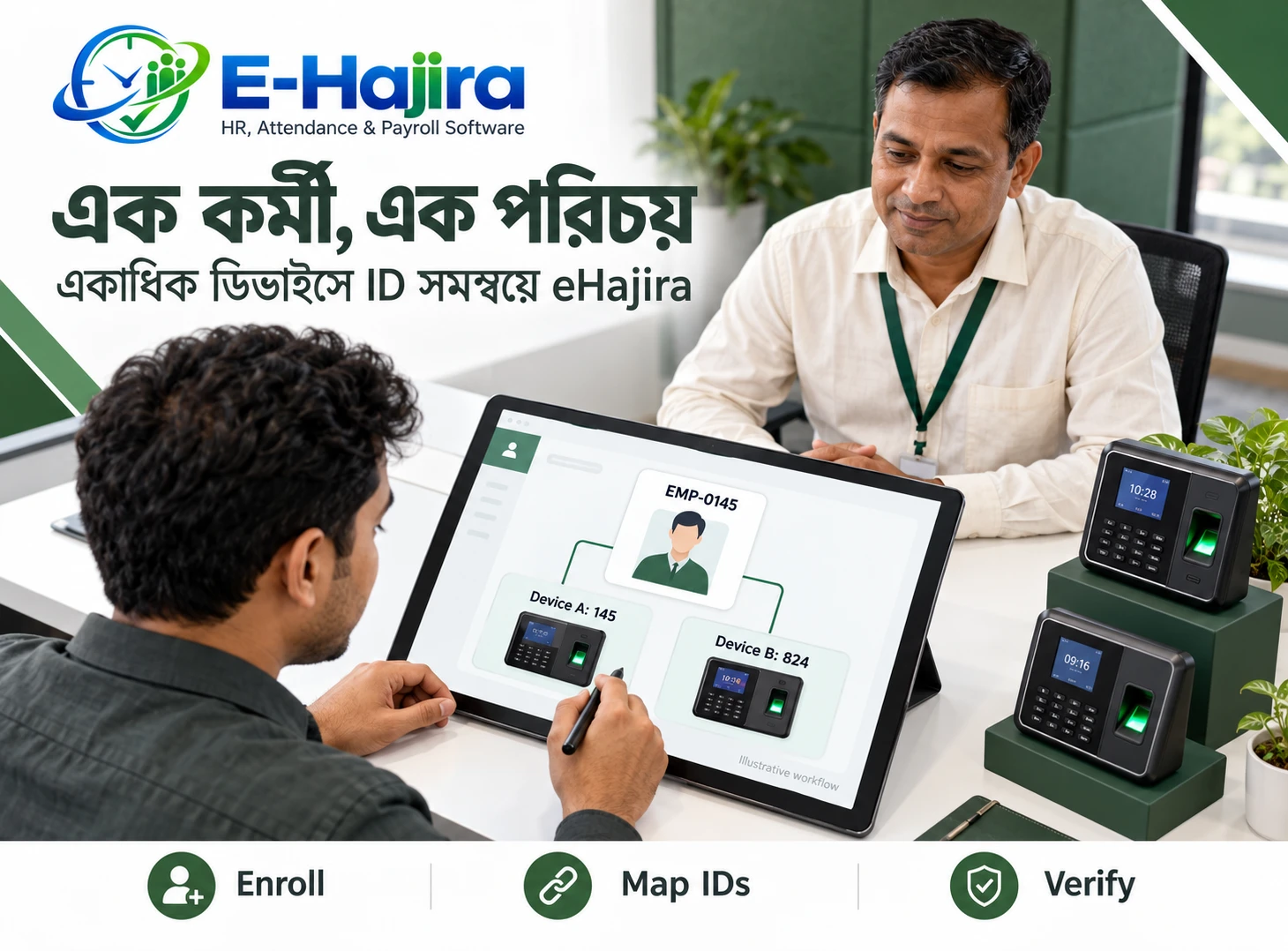
Incorrect employee mapping can create another problem: a punch may exist but may not be associated with the expected employee record. An unsuitable shift configuration can also make an attendance sequence appear incomplete.
For example, a check-out recorded early in the morning may belong to the previous night’s duty. Reviewing it only within the new calendar date can create confusion.
Investigating the cause matters because the appropriate solution differs. A forgotten check-out requires a different response from delayed device synchronization or an incorrect roster assignment.
Start by Checking the Original Information
Before creating a manual correction, the responsible person should determine whether the attendance event already exists. This helps avoid adding a second entry when the original is simply delayed or being interpreted incorrectly.
The review may include available device records, synchronization status, employee identification and the assigned shift. The person investigating should also check the relevant date range, especially for overnight work.
Suppose several employees from one branch appear to have missing punches on the same morning. That pattern may justify checking the branch’s device connection before asking every employee to submit a separate explanation.
Businesses should confirm which diagnostic information eHajira makes available and which issues require technical assistance. A clear separation between data collection problems and genuine correction requests improves efficiency.
Confirm the Correct Shift and Roster
Attendance should be reviewed against the employee’s actual assigned schedule. An incorrect roster can cause a valid punch to be classified unexpectedly.
For example, an employee moved from an early shift to an afternoon shift may appear late if the system still uses the original assignment. Adding or changing punches would not address the underlying scheduling problem.
The eHajira roster management guidance emphasizes reviewing attendance against the correct shift and resolving exceptions before payroll preparation.
The reviewer should therefore establish whether the employee’s approved schedule was entered correctly. If the schedule is the problem, the employer should follow its authorized scheduling correction procedure rather than inventing an attendance event.
Employee Identification of a Discrepancy
Employees should be encouraged to review their available attendance information regularly. Reporting a discrepancy soon after it occurs makes the circumstances easier to verify.
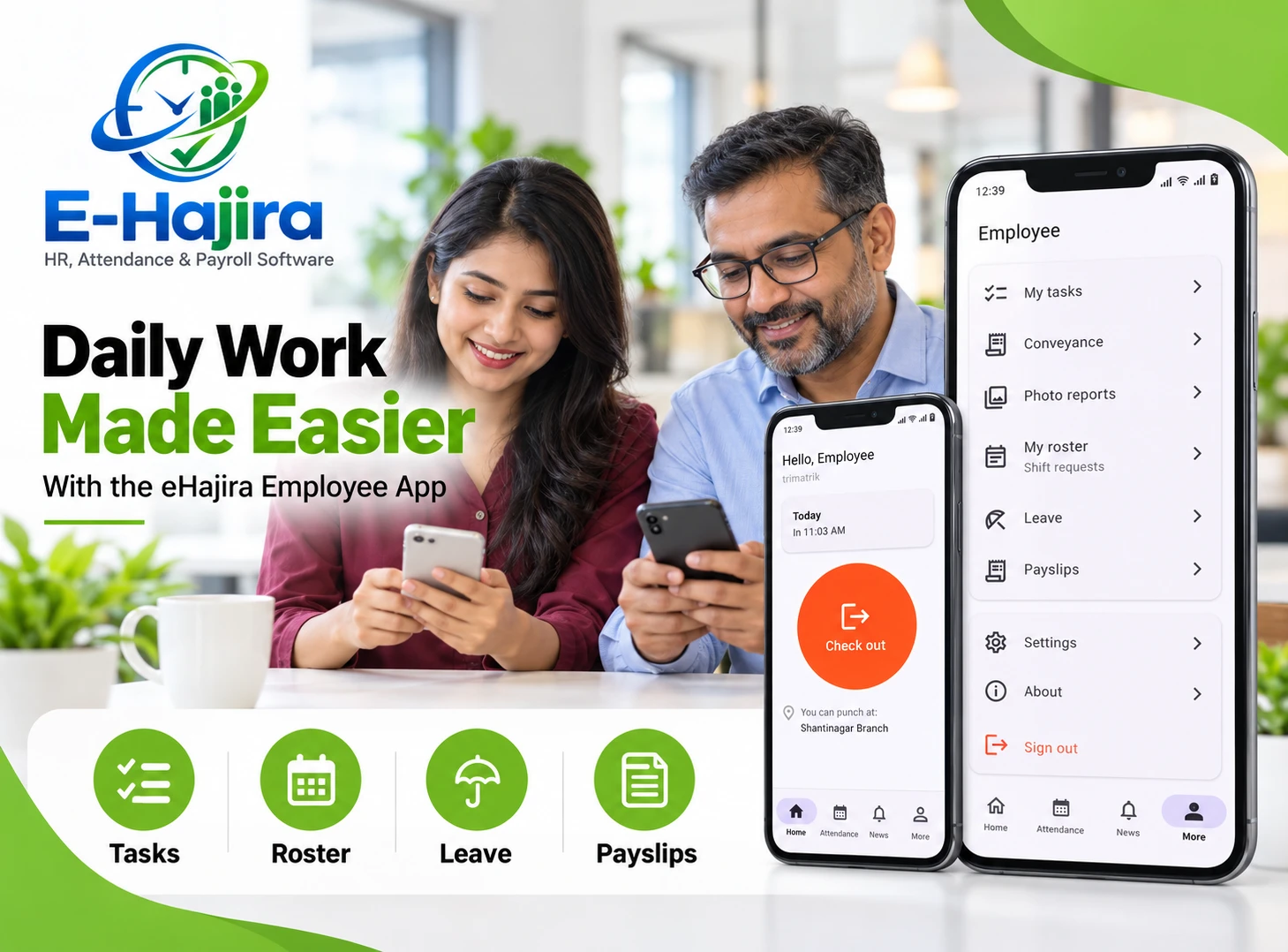
The employer should explain what employees can see in their account and how to raise a concern. If direct employee access is unavailable for a particular group, the organization should provide another approved reporting method.
For example, an employee notices that the previous day shows a check-in but no check-out. The employee should report that specific issue rather than submit a general request to “fix attendance.”
A useful explanation identifies the working date, the missing event and the reason for the request. Employees should provide accurate information and avoid guessing a time merely to complete the form.
Submitting an Attendance Correction Request
A correction request should contain enough information for an authorized reviewer to understand the issue. The exact fields depend on the organization’s process and the available eHajira configuration.
Typically, the reviewer needs to know the employee, the relevant date, the disputed or missing event and the explanation. The requested time should be clearly distinguished from an automatically captured punch.
Consider an employee who forgot to check out after completing an assignment. The request can explain the circumstances and identify the departure time the employee believes is accurate.
The provider confirms correction request submission as an eHajira capability, but the employer should verify where employees submit it and whether the selected package supports supporting documents, comments or other required details.
Supervisor Review and Verification
Supervisors can provide operational context that may not be visible to HR. They may know whether the employee attended a meeting, worked at a customer site or completed an assigned shift.
Review should be proportionate to the issue. A routine forgotten punch may require a straightforward confirmation, while conflicting information may require further clarification.
For example, a supervisor might confirm that an employee attended a scheduled service visit. That confirmation helps establish the work arrangement, but it should not automatically justify any departure time the employee requests.
The organization should define who can review a request and what authority that person has. If supervisor approval is required in eHajira, the routing and permissions should be demonstrated before the workflow is adopted.
HR Review and Consistent Treatment
HR helps ensure that similar requests are handled consistently. It can review whether the explanation is sufficient, the correct schedule applies and the proposed action follows company policy.
A clear process reduces the risk of one department approving requests informally while another requires detailed documentation. Employees should understand the same basic expectations wherever they work.
For instance, two employees reporting the same type of missed check-out should generally follow the same reporting procedure, while their individual circumstances are still considered.
HR should also distinguish between a correction request and a request for leave or permission to leave early. These processes may be related, but they do not represent the same administrative decision.
Recording the Outcome
Once a request has been reviewed, its outcome should be clear. The organization may approve it, decline it or request additional information.
Employees should understand why further action is needed when a request cannot be completed. An unexplained rejection can lead to repeated requests and unnecessary disagreement.
Where a correction is approved, an authorized person should apply the action through the supported process and verify the resulting attendance record. Approval alone should not be assumed to have updated every report.
Businesses should confirm how eHajira displays request outcomes and whether notifications are available. They should also verify which details remain associated with the request after it is resolved.
Preserving Accountability for Changes
Attendance corrections should remain accountable. The organization needs to understand who requested a change, who reviewed it and what action was taken.
A useful history distinguishes the original information from the correction. This can be important when an employee later questions a record or HR needs to explain a monthly adjustment.
However, the availability of a detailed audit trail should be verified in the selected eHajira package. Employers should ask whether previous values, reasons, timestamps and reviewer details are retained.
If a required control is unavailable, the organization should agree on an appropriate supporting procedure. The principle is simple: correcting an error should improve accuracy without removing the ability to understand how the final record was reached.
Handling Overnight Shifts
Overnight work requires particular care because one duty period crosses two calendar dates. A late-night check-in and an early-morning check-out may belong to the same shift.
For example, an employee starts work at 10:00 PM and finishes at 6:00 AM the next day. The reviewer must consider the whole duty period before concluding that a punch is missing.
The employer should test overnight examples during implementation. This includes a complete shift, a missing morning check-out and a schedule change.
If eHajira is used for these employees, confirm how the system associates punches with the relevant shift. Otherwise, a correction may accidentally be applied to the wrong working period.
Field Employees and Mobile Attendance Exceptions
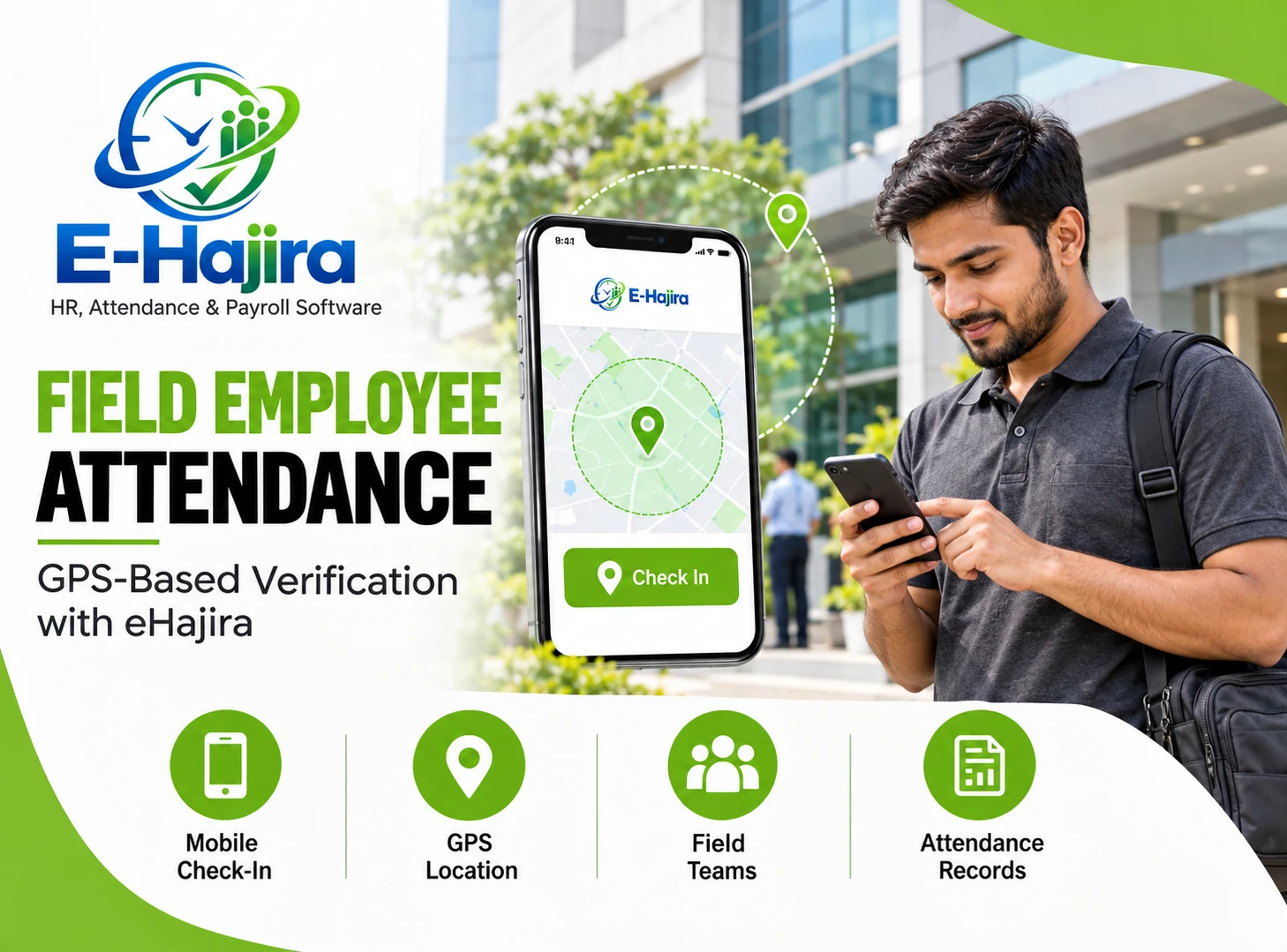
Field employees may encounter different problems from office staff. They can work at changing locations, experience weak connectivity or receive last-minute assignment changes.
An employee unable to complete a normal attendance action should follow an agreed reporting procedure. The explanation should identify the assignment and the difficulty encountered.
The employer should avoid treating a failed mobile punch as automatic proof of absence. Equally, a location-related explanation should be reviewed rather than accepted without consideration.
For eHajira, confirm the available mobile attendance features and how correction requests relate to those records. Offline capture, location history and supporting uploads are separate capabilities that should not be assumed.
Distinguishing Corrections from Leave and Early Departure
A correction is intended to resolve an inaccurate record. Leave and early departure approvals concern the employee’s authorized work arrangement.
For example, an employee who left early with permission should not request a later departure time simply to make the attendance record look complete. The appropriate action is to record or recognize the approved arrangement accurately.
Similarly, an employee absent on approved leave does not need a fictional check-in. The attendance process should consider the leave record under the company’s rules.
This distinction helps preserve the meaning of the information. HR should explain which process applies and confirm how eHajira represents each situation in the organization’s chosen setup.
Reviewing Corrections Before Payroll
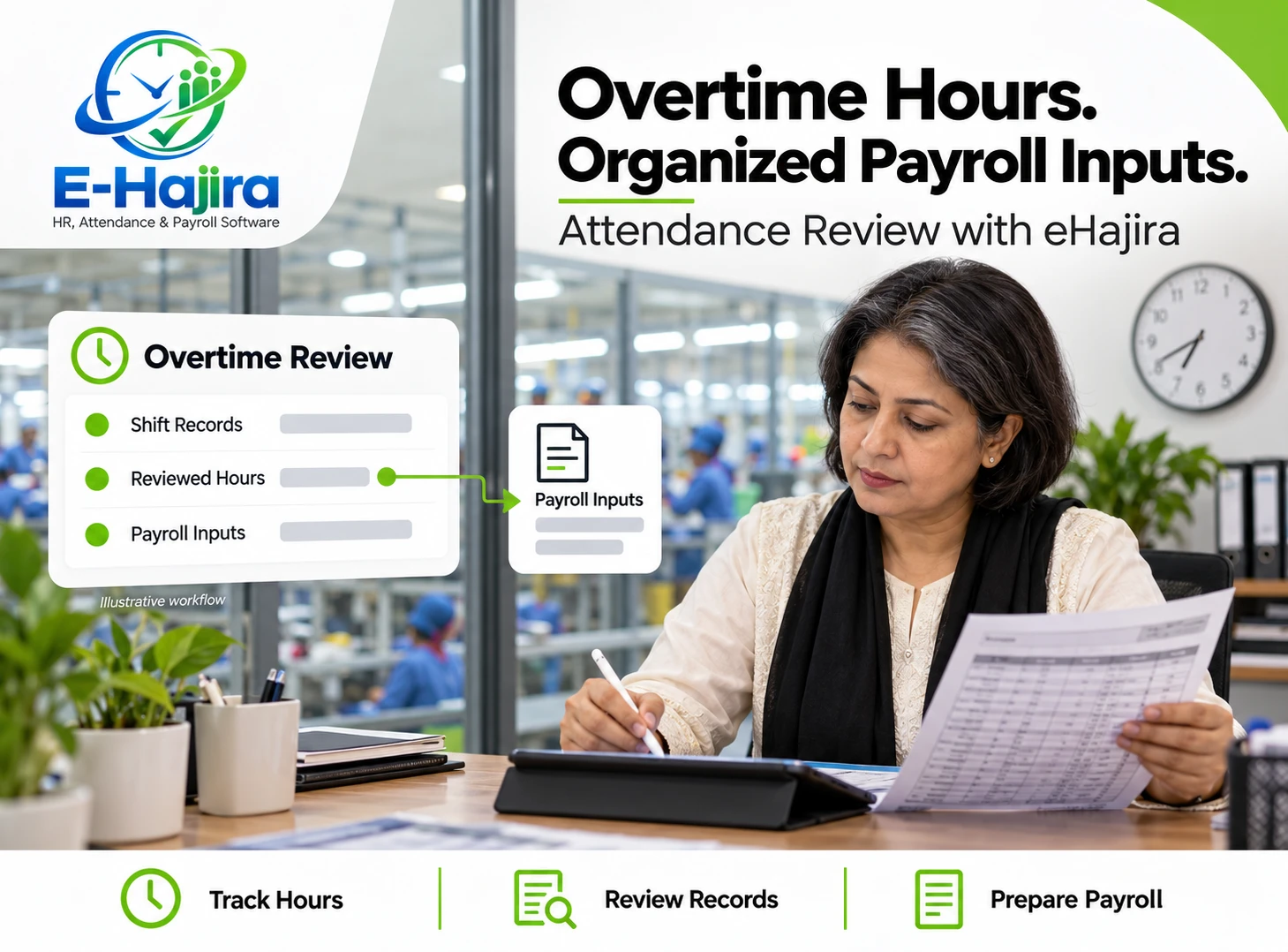
Unresolved attendance exceptions can create difficulties during payroll preparation. HR should establish a review period so employees and managers have time to address discrepancies.
A payroll cutoff is an internal administrative control, not a reason to ignore a legitimate issue. The organization should explain how late requests are reviewed and how any resulting adjustment is handled.
Before finalizing payroll, responsible staff should verify that approved corrections appear in the relevant attendance outputs. Any effect on leave, working time or other calculations should be checked.
Businesses using eHajira should demonstrate this connection with a sample case. They should confirm whether recalculation is required and how changes are handled after payroll has already been processed.
Setting a Clear Attendance Correction Policy
Employees need a policy that explains the process in straightforward language. It should identify when a request is required, who reviews it and how the employee learns the outcome.
The policy should also distinguish forgotten punches from technical issues and incorrect schedules. This prevents every attendance problem from being treated as the employee’s mistake.
For example, a branch-wide synchronization problem may require technical investigation, while an individual missed check-out may require employee clarification.
The organization should decide reasonable reporting expectations and apply them consistently. Any consequences or payroll treatment should be assessed under its applicable policies and requirements rather than inferred from a missing-punch label.
Improving the Process Over Time
Correction records can help businesses identify recurring problems. Frequent requests from one location may indicate a device issue, while repeated individual mistakes may suggest a training need.
The purpose of reviewing these patterns is to understand the cause. A high number of corrections should not automatically be treated as misconduct.
For example, employees may be unsure whether a lunch break requires a punch. Clarifying the policy can prevent repeated errors more effectively than processing the same correction every week.
Ask the eHajira team which reports or exports support this review. The organization can then evaluate whether requests are being resolved promptly and whether changes to training or configuration reduce avoidable exceptions.
Introducing the Workflow with eHajira
A practical rollout begins with a small set of realistic scenarios. Test a forgotten check-in, a missing check-out, a delayed device record and an incorrect shift.
For each scenario, identify the correct administrative response before testing the software. Then confirm who submits the request, who can review it and how the final attendance record changes.
Training should include employees, supervisors and HR because each group has a different responsibility. Technical support staff should also understand when they need to investigate device or synchronization problems.
After the pilot, review unresolved questions and document the agreed process. A clear workflow allows eHajira’s correction function to support accurate records without relying on informal arrangements.
Frequently Asked Questions
1. What is a missing punch?
A missing punch is an expected attendance event that is unavailable in the relevant record. It can involve check-in, check-out or another required attendance action.
2. Does a missing punch mean an employee was absent?
Not necessarily. The record may be incomplete because of a forgotten action, a technical problem or another issue requiring investigation.
3. What is attendance correction?
It is the controlled process of reviewing and resolving an inaccurate or incomplete attendance record using appropriate verification and authorization.
4. Does eHajira support correction requests?
Yes. Its published product information describes a Corrections module for incorrect or missing punch requests submitted by employees or HR.
5. Can employees submit requests from the mobile app?
The exact submission channel should be confirmed for the selected package. Do not assume that every interface offers identical functions.
6. What should a correction request explain?
It should identify the relevant date, attendance event and reason for the request. The employee should provide accurate details that help the reviewer understand the discrepancy.
7. Should HR check device data first?
Yes, where relevant information is available. An existing punch may be delayed or incorrectly associated, making a manual addition unnecessary.
8. Can an incorrect shift cause an attendance exception?
Yes. Attendance must be interpreted against the correct approved schedule before deciding whether a punch needs correction.
9. Who should approve a correction?
The organization should define an authorized reviewer. Supervisor and HR responsibilities should be reflected in the supported eHajira workflow.
10. Does eHajira include multiple approval levels?
That should be confirmed directly. The presence of a correction function does not establish that every package supports a particular approval structure.
11. Can supporting documents be attached?
Attachment availability and permitted file types should be verified with the provider. The employer should also decide what evidence is appropriate.
12. What happens if a request is declined?
The employee should receive a clear outcome and understand whether clarification or further review is possible under company policy.
13. Should the original record remain traceable?
Traceability is a useful control. Ask whether the selected setup preserves original information and details of approved changes.
14. Can overnight attendance be corrected?
It should be reviewed within the correct duty period. Test how the system handles shifts crossing midnight before applying changes.
15. How should field attendance problems be handled?
The employee should explain the assignment and the issue encountered. An authorized reviewer should assess the circumstances under the company’s procedure.
16. Is early departure permission an attendance correction?
Not automatically. Permission concerns the approved arrangement, while a correction resolves inaccurate information. The record should reflect what actually happened.
17. Should approved leave be replaced with punches?
No. Leave and attendance events have different meanings. The organization should use the appropriate process for the actual situation.
18. Can corrections affect payroll?
They may affect information used in payroll preparation. Any resulting calculation should be checked under the employer’s applicable rules and approval process.
19. What if payroll is already finalized?
The organization should follow its procedure for reviewing late requests and making any necessary adjustment. Confirm the supported eHajira process before changes are applied.
20. Can attendance corrections be edited by everyone?
Access should be restricted according to responsibility. Businesses should verify which users can request, review and apply changes.
21. Should employers set a reporting deadline?
A clear reporting expectation helps timely review. The policy should also explain how genuine issues discovered later are considered.
22. Can repeated corrections indicate a technical issue?
Yes. Patterns across a branch or device may justify investigation. Repeated requests should be assessed before drawing conclusions about employee conduct.
23. Should staff receive training?
Yes. Employees need to know how to report discrepancies, supervisors how to verify them, and HR how to finalize the outcome consistently.
24. How can a business start using eHajira for corrections?
Request a demonstration using actual missing-punch scenarios. Confirm submission, permissions, review steps and the effect on attendance reports before rollout.
Making Attendance Corrections Clear and Accountable
Missing punches are exceptions to investigate, not automatic conclusions about an employee’s working day. A reliable process identifies the cause, gives the employee a clear reporting route and ensures that authorized staff review the outcome.
For businesses in Bangladesh, eHajira’s Corrections module offers a foundation for organizing this work. Combine the verified product functions with a clear policy, suitable permissions and regular review to maintain attendance records that employees and HR can understand and trust.