Attendance System
 Access Control
 Door Security
 Turnstile & Entrance Control
 Security Inspection
 Parking Management
 Safety Products
 Software
 Other
Simplifying Field Employee Attendance Verification with eHajira
October 28, 2026
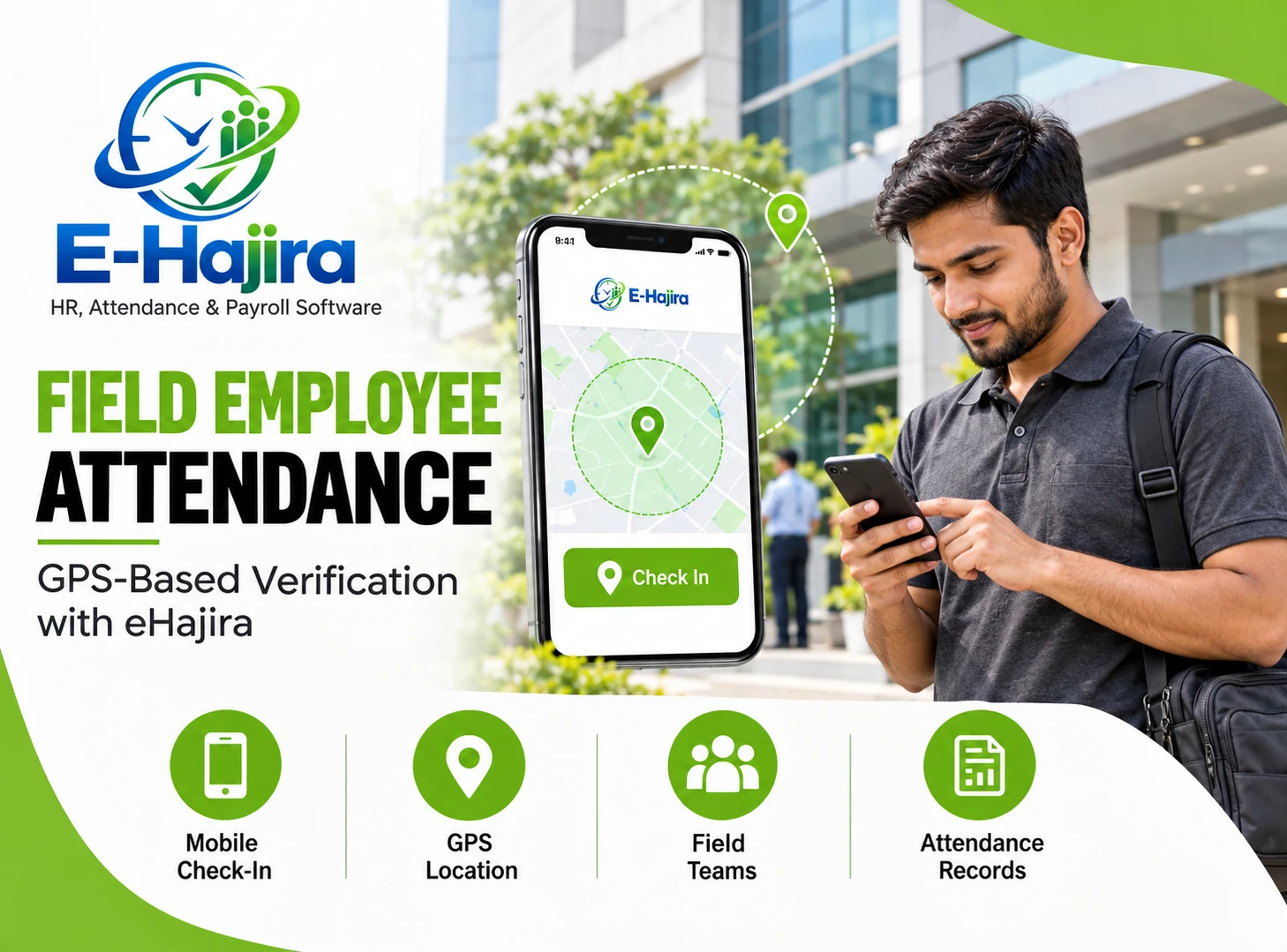
Simplifying Field Employee Attendance Verification with eHajira
Managing attendance becomes more complicated when employees work outside a fixed office. Sales representatives visit customers, service engineers travel between job sites, and project teams begin their working day at different locations. For these employees, signing a register at head office may not reflect how their work is actually performed.
Businesses in Bangladesh need an attendance process that accommodates these working arrangements while giving HR teams reliable information. Repeated telephone calls, messaging groups and separate spreadsheets can create additional work without providing a consistent record.
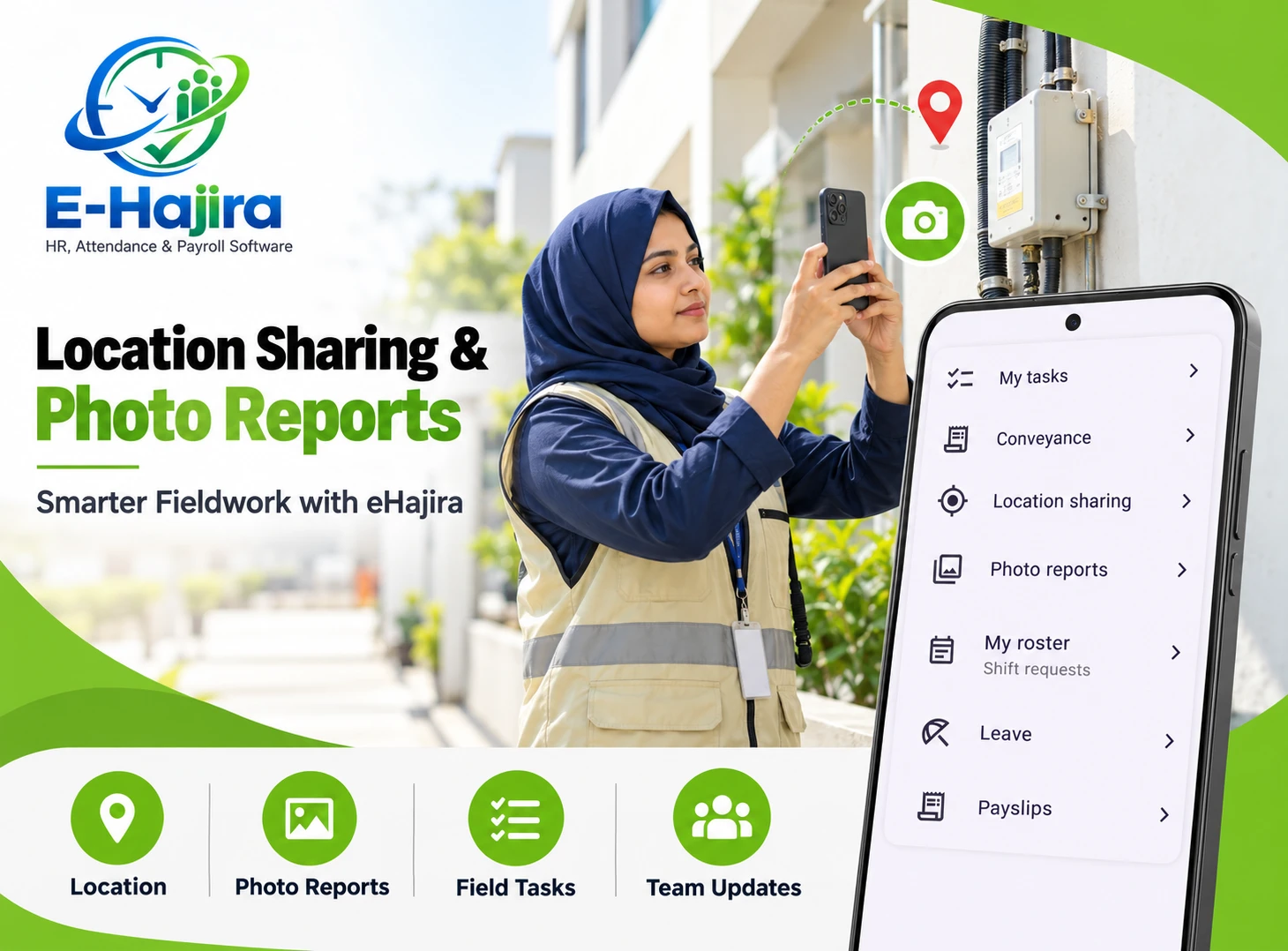
eHajira offers a digital approach through its HR, attendance and payroll platform. Its published product information includes mobile GPS and geo-fenced check-in in relevant packages. These capabilities provide a foundation for businesses seeking a more organized location-based attendance process. The exact rules available for field assignments, permitted locations and employee access should be confirmed during implementation.
This guide explains how GPS-based attendance verification can support field teams, how eHajira fits into daily operations, and what businesses should establish before introducing mobile attendance.
Understanding Field Employee Attendance Verification
Field employee attendance verification is the process of recording and reviewing whether an employee has reported for an approved assignment. Unlike office attendance, the relevant workplace may be a customer’s premises, a project site, a branch or another authorized location.
A useful attendance process connects the employee’s identity, attendance time and approved work arrangement. Location information can add context by indicating where the mobile device was when an attendance action occurred.
However, a location reading alone does not prove that an employee completed an assignment or remained productive throughout the day. Attendance verification and performance assessment serve different purposes. Employers should review attendance alongside schedules, assignments and appropriate supervisory information.
For example, a technician’s check-in can support the record that the person reported to a customer location. Confirmation that the repair was completed may require a separate service report or customer acknowledgment.
Why Field Attendance Is Challenging in Bangladesh
Bangladesh businesses operate across varied environments, including city offices, retail networks, industrial areas and rural service locations. Field employees may travel between several places during one working day.
A sales representative might begin with a customer meeting in Mirpur and later visit a distributor in Uttara. A maintenance engineer could travel directly from home to a customer’s site. Requiring these employees to report physically to head office first may create unnecessary travel.
Manual reporting also presents difficulties. Supervisors may receive attendance messages in different formats, while HR teams must interpret those messages later. A missing message can create uncertainty even when the employee performed the assigned work.
Mobile attendance gives businesses an opportunity to establish a consistent reporting method. The organization can define the relevant location and schedule, explain the process to employees, and review exceptions using an agreed procedure.
What eHajira Brings to Mobile Attendance
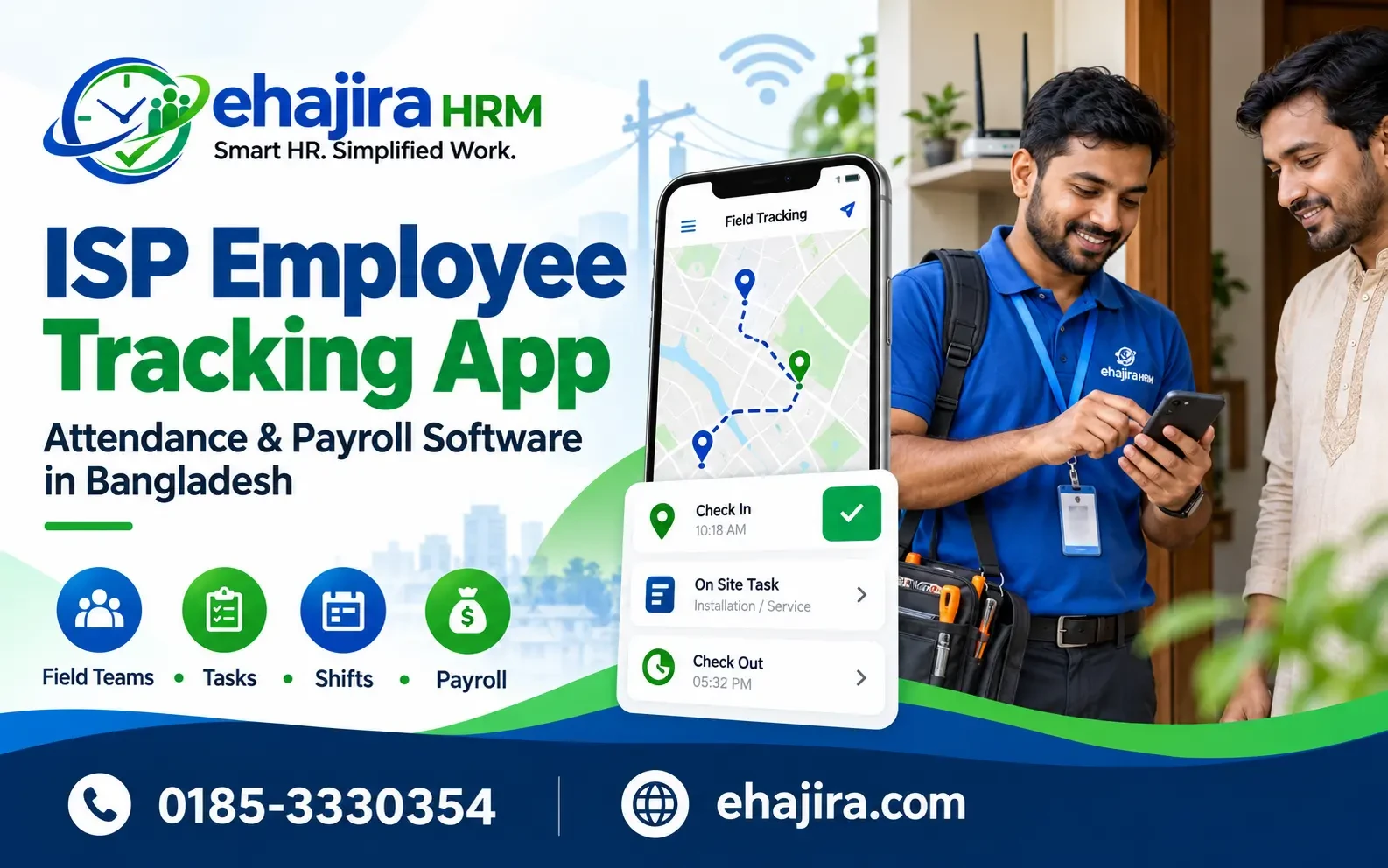
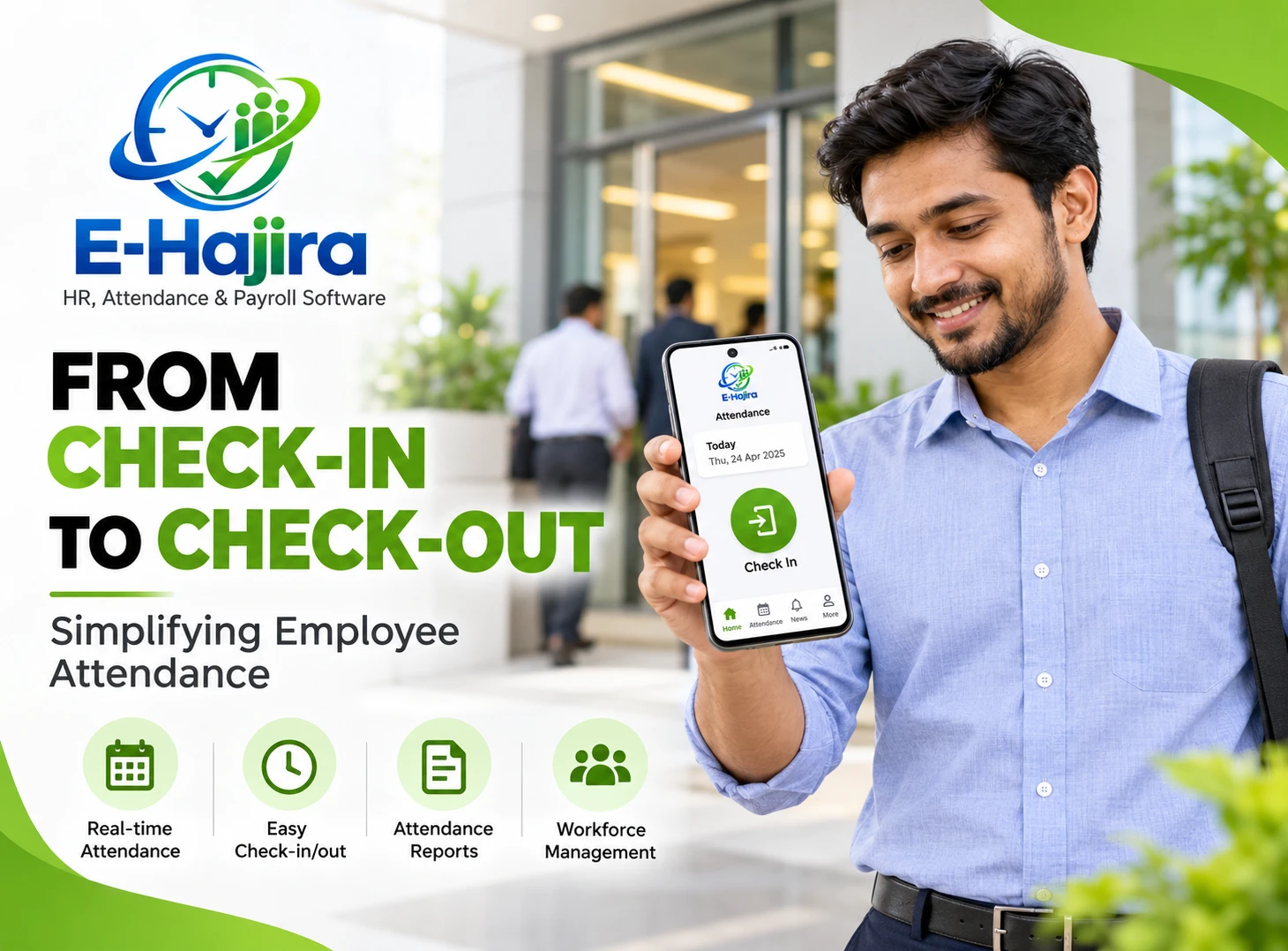
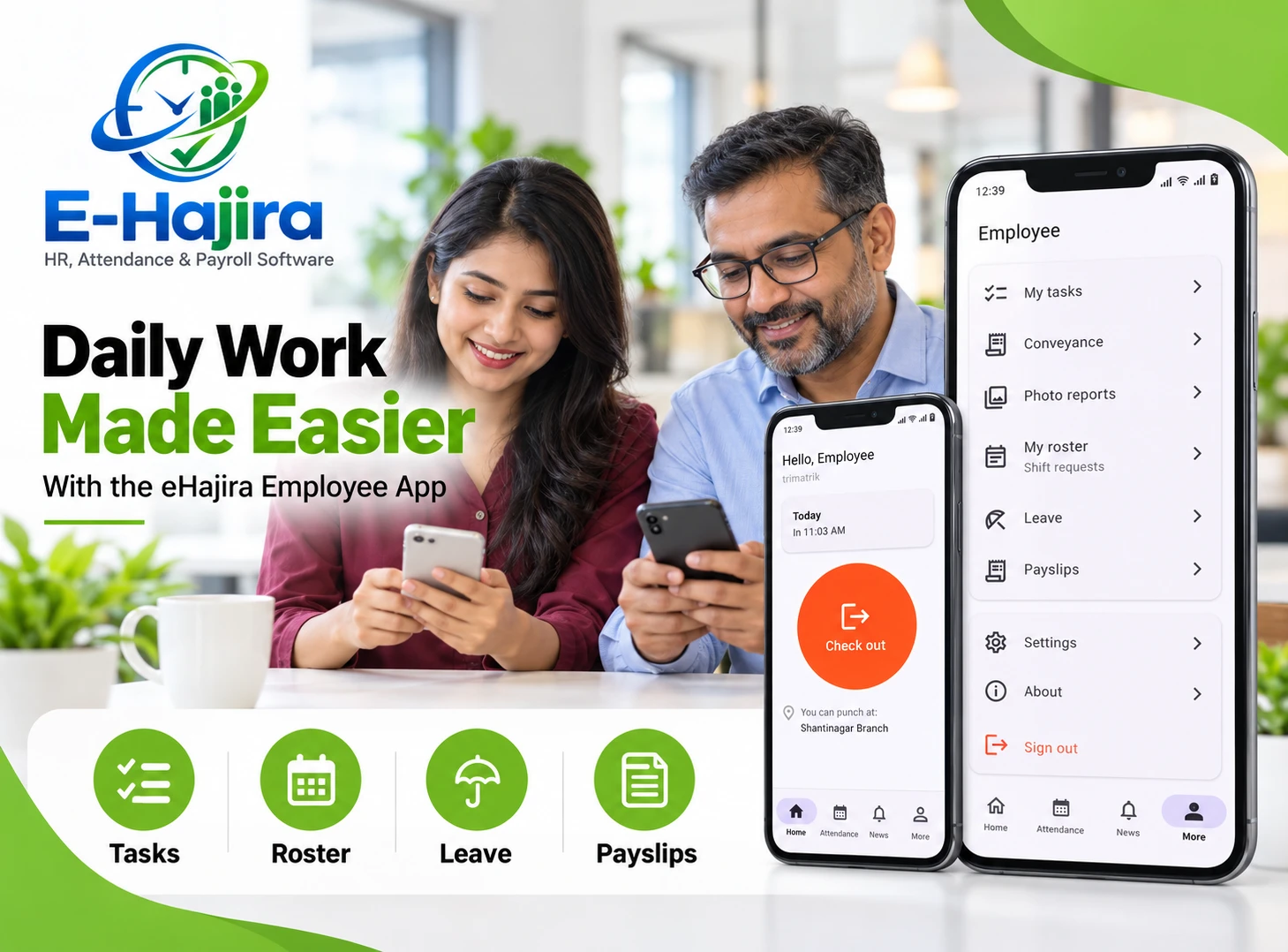
eHajira is an HR, attendance and payroll solution offered by TRIMATRIK MULTIMEDIA. Its published information describes mobile app access with GPS or geo-fenced check-in, alongside attendance options involving compatible biometric and RFID devices.
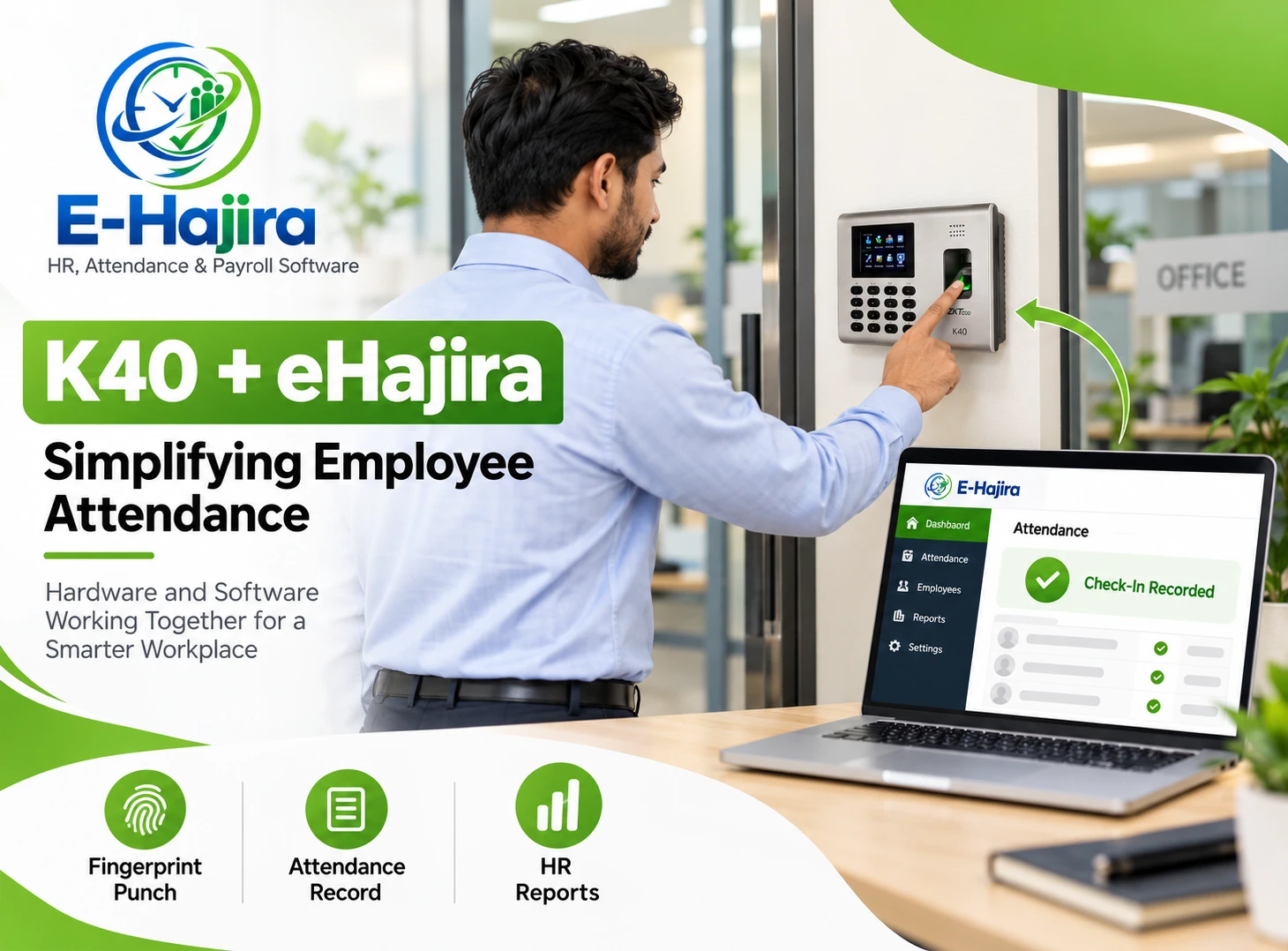
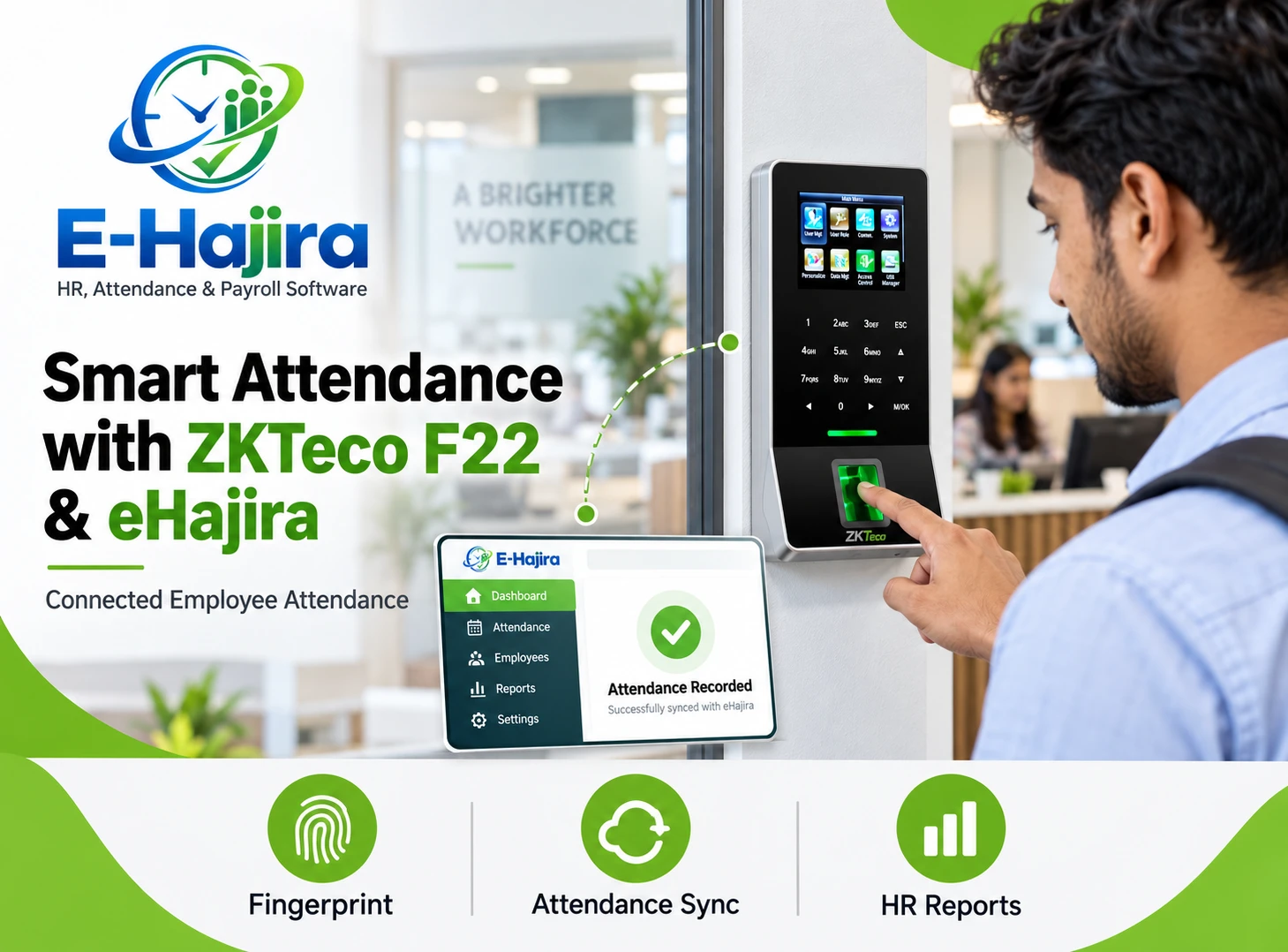
This combination can be useful for organizations with both office-based and field employees. A company may use a fixed attendance device at its main office while enabling mobile attendance for employees whose approved work takes them elsewhere.
For example, a service company could evaluate office attendance for administrative employees and mobile check-in for technicians. The company would need to confirm how these attendance sources are organized in its selected eHajira configuration.
The provider lists mobile GPS and geo-fenced check-in across several published business packages, including enterprise and manufacturing offerings. Businesses should review the package details rather than assuming that every plan has identical functionality.
How GPS-Based Attendance Verification Works
GPS helps a mobile device determine its location. In an attendance workflow, that location can be considered when an employee submits a check-in.
A typical process begins with the employer defining the employee’s account and attendance rules. The employee then opens the app at the approved workplace, follows the available attendance action and checks that the submission has been recorded.
The precise information stored, the method used to evaluate location and the conditions for accepting a punch depend on the software configuration. Businesses should ask eHajira to demonstrate these details using an actual work scenario.
For employees, the process should be straightforward. They should know where they may check in, when attendance should be recorded and whom to contact if the app cannot complete the action.
GPS Attendance and Geo-Fencing: Understanding the Difference
GPS attendance and geo-fenced attendance are related concepts, but they are not interchangeable. A GPS-supported attendance process can associate location information with an attendance event.
A geo-fence introduces a defined geographic boundary. An attendance system can use that boundary to determine whether a check-in is permitted at a designated location.
For example, a business might want check-in to be allowed around a branch office or project site. Before implementing this rule in eHajira, the business should confirm how boundaries are configured, which employees they apply to and how temporary assignments are handled.
This distinction matters for field teams. Employees visiting changing customer locations may require a different arrangement from employees assigned to the same project site every day. The attendance configuration should reflect the actual work.
A Practical Field Attendance Workflow
Consider a Bangladesh-based equipment service company with technicians working across Dhaka. One technician receives an approved assignment to visit a customer’s office in the morning.
Before the visit, the organization confirms which attendance process applies. If the location and workflow are supported by its eHajira setup, the technician can use the mobile attendance action at the assigned site.
The supervisor can then review the attendance information available under the organization’s permissions. The technician’s service documentation remains part of the separate process for confirming the work performed.
If the customer changes the meeting location, the technician follows the company’s exception procedure. The business should not expect employees to solve location-rule conflicts without guidance. A clear escalation path keeps attendance administration aligned with real assignments.
Supporting Sales Representatives
Sales employees often visit multiple customers and distributors. Their schedules may change during the day, making fixed office attendance an incomplete reflection of their working arrangements.
A mobile attendance process can give these employees a consistent way to report the start of an approved working day. Managers can review the attendance record together with the employee’s planned activities.
For instance, a sales representative assigned to a distributor visit in Chattogram may begin work there rather than at a branch office. The employer should decide whether that location is permitted and confirm how the arrangement works in eHajira.
Attendance should remain separate from sales performance. A recorded check-in provides context about reporting for work; it does not establish the number of customer visits, the quality of the meetings or the value of sales achieved.
Helping Service Engineers and Project Teams
Service engineers, installation teams and project employees often work at locations controlled by customers. Access restrictions, changing appointments and site conditions can affect when they arrive and where they can use a phone.
A suitable attendance policy should account for these circumstances. Employees need to know whether they should check in at the site entrance, another authorized point or through an alternative reporting process.
Project teams working at the same location for an extended period may benefit from a consistent site-based rule. Teams moving between locations may need more flexible arrangements, subject to the capabilities available in their selected eHajira package.
Before deployment, the business should test the process at representative sites. This helps identify practical problems before attendance data is used in monthly reporting.
Managing Employees Across Branches
Organizations with multiple branches need consistent attendance administration without ignoring local work arrangements. A head-office employee, a branch employee and a travelling employee may all require different rules.
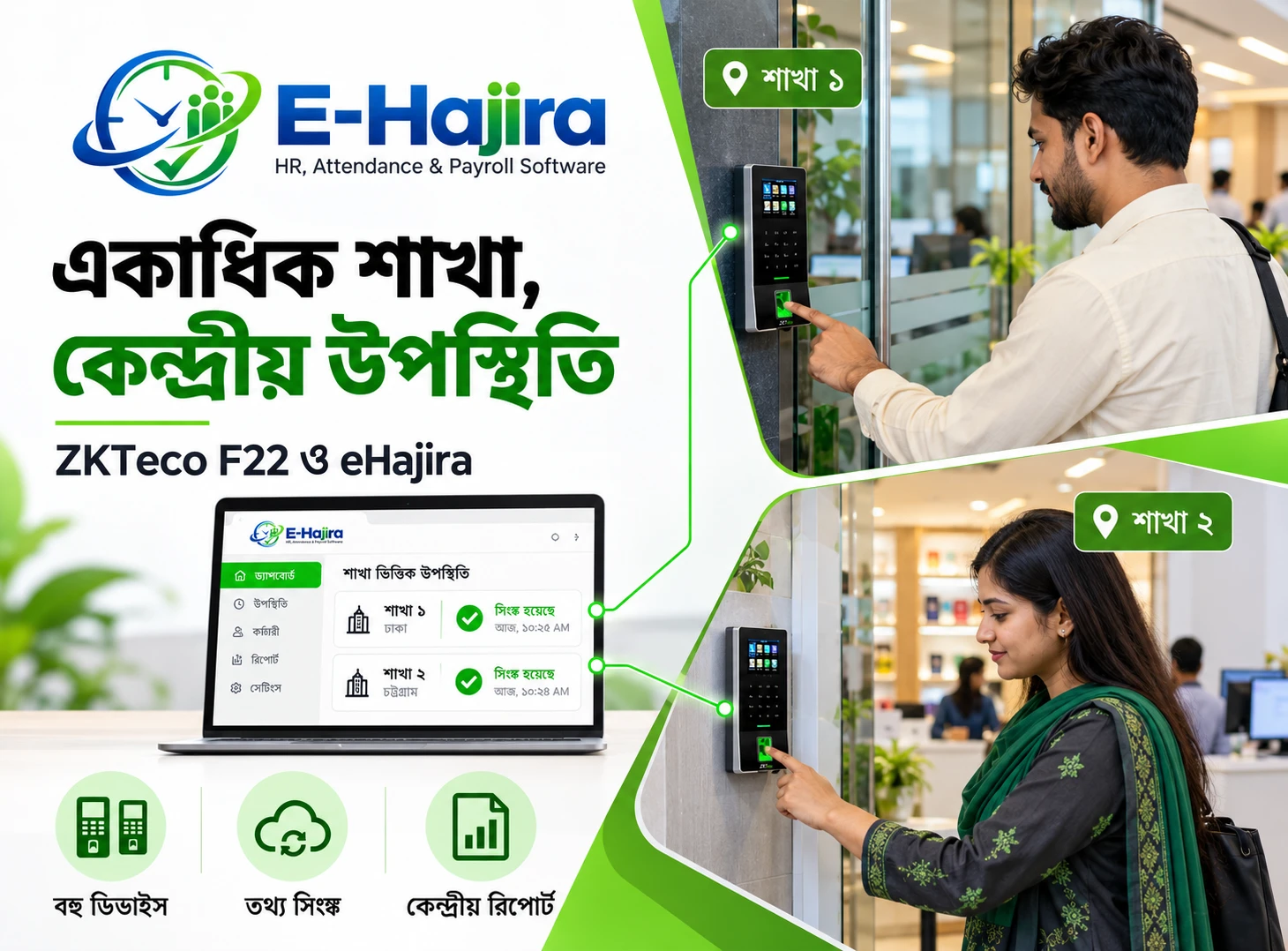
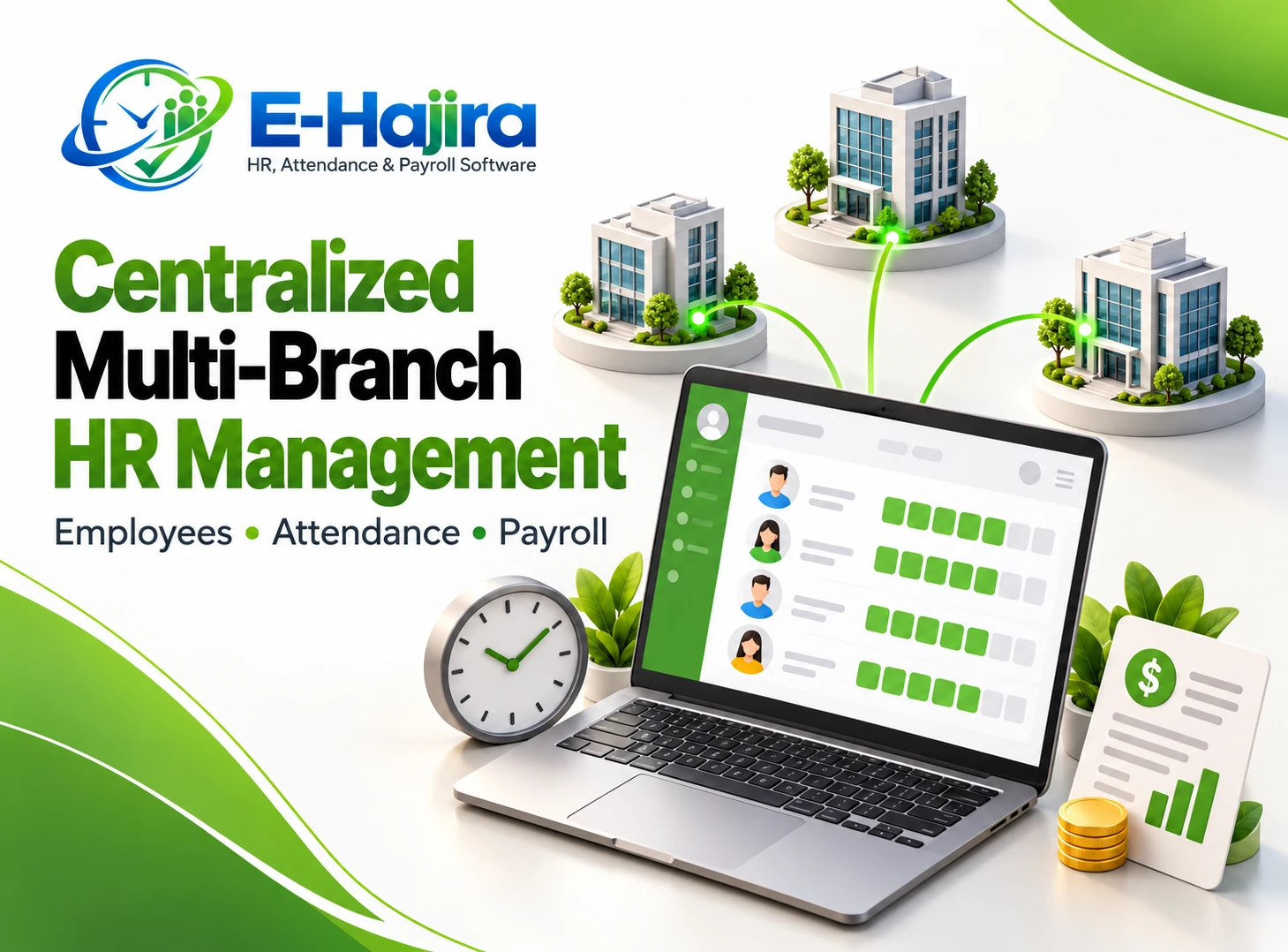
eHajira can be evaluated as part of a shared attendance process in which employee details and attendance methods are configured around organizational needs. Businesses should confirm the branch settings, reporting options and permissions included in their plan.
For example, a company operating in Dhaka, Sylhet and Khulna may want local managers to review attendance for their own teams. HR may require a broader view for monthly administration.
These access requirements should be discussed during implementation. A business should establish who reviews attendance, who handles exceptions and how temporary work at another branch is approved.
Connecting Attendance with Employee Identity and Schedules
Location information becomes useful only when it is connected to the correct employee and schedule. Employee profiles should therefore be checked before mobile attendance begins.
Names, employee identifiers and work assignments should be accurate. Employees with similar names must not be confused, and a person transferred to another team should follow the updated attendance process.
Schedules are equally important. An employee assigned to an early customer visit should not be assessed against an unrelated office schedule. Likewise, a planned late shift requires an appropriate attendance rule.
The eHajira configuration should be tested with the organization’s real scheduling requirements. Employers should confirm how shift changes, overnight duties and special assignments are handled rather than assuming that all attendance patterns behave the same way.
Reviewing Attendance and Resolving Exceptions
A digital attendance process works best when records are reviewed regularly. Waiting until payroll preparation to identify missing punches can make problems harder to investigate.
Employees should be encouraged to check their available attendance information and report discrepancies promptly. Supervisors should review relevant exceptions while the circumstances are still clear.
For example, an employee may have arrived at a customer site but encountered a location error. The employee can report the issue, and the supervisor can verify the assignment through the company’s approved process.
Businesses should ask eHajira how corrections are handled, which users can make changes and whether change history is available in the selected package. Clear responsibilities help preserve confidence in the record.
Understanding GPS Accuracy
GPS-based attendance should be implemented with realistic expectations. Location readings are estimates, and accuracy can vary with the environment and the device.
GPS.gov explains that buildings can block or reflect signals, affecting positioning accuracy. This is relevant to employees working inside offices, warehouses or densely built areas. A phone’s displayed position may differ from its actual location.
An overly narrow attendance boundary can therefore cause practical difficulties. Employers should test proposed locations and discuss appropriate settings with the provider.
A failed location check should trigger investigation rather than an immediate assumption of misconduct. The supervisor may need to consider the employee’s assignment, site conditions and other relevant information before deciding how to treat the attendance event.
Managing Connectivity and Device Problems
Field employees may experience weak mobile connectivity, a depleted battery or a device problem. A dependable attendance policy should explain what happens in each situation.
For example, an employee unable to submit attendance should know whether to contact a supervisor, provide an explanation later or use another approved method. The procedure should be practical enough to follow while working in the field.
Businesses must confirm whether their eHajira package supports offline capture, delayed synchronization or other recovery options. These functions should not be assumed from the presence of GPS attendance.
The company should also establish phone compatibility requirements and provide support during onboarding. Employees need clear instructions for required permissions, account access and reporting technical difficulties.
Privacy and Responsible Location Use
Location-based attendance should have a defined purpose. Employees should understand why location is requested, when it is collected and which people can view it.
A check-in location and continuous movement tracking are different capabilities. Businesses should confirm what their eHajira configuration actually collects rather than describing attendance verification as continuous tracking.
The organization should also explain its retention and access policies. Employees deserve to know how attendance information is used and how they can question an incorrect record.
Sensitive information should be available only to authorized users with a work-related need. Before implementation, employers should discuss storage, backups, access controls and account removal with the provider, then document their own responsibilities for managing the data.
GPS Attendance and Attendance Integrity
Location-based attendance adds useful context, but it should not be presented as fraud-proof. A phone’s location does not independently establish who is holding it or whether the assigned task has been completed.
Businesses should ask about the controls available in eHajira, including any device restrictions or location-integrity protections relevant to their requirements. Such features should be demonstrated before being included in internal policy.
Attendance integrity also depends on clear expectations and consistent supervision. Employees should understand that accounts must be used appropriately and that attendance submissions must reflect their approved work arrangements.
When a record appears unusual, a proportionate review is better than an automatic conclusion. Technical errors and legitimate assignment changes should be considered alongside any concern about misuse.
Using Attendance Information in HR and Payroll
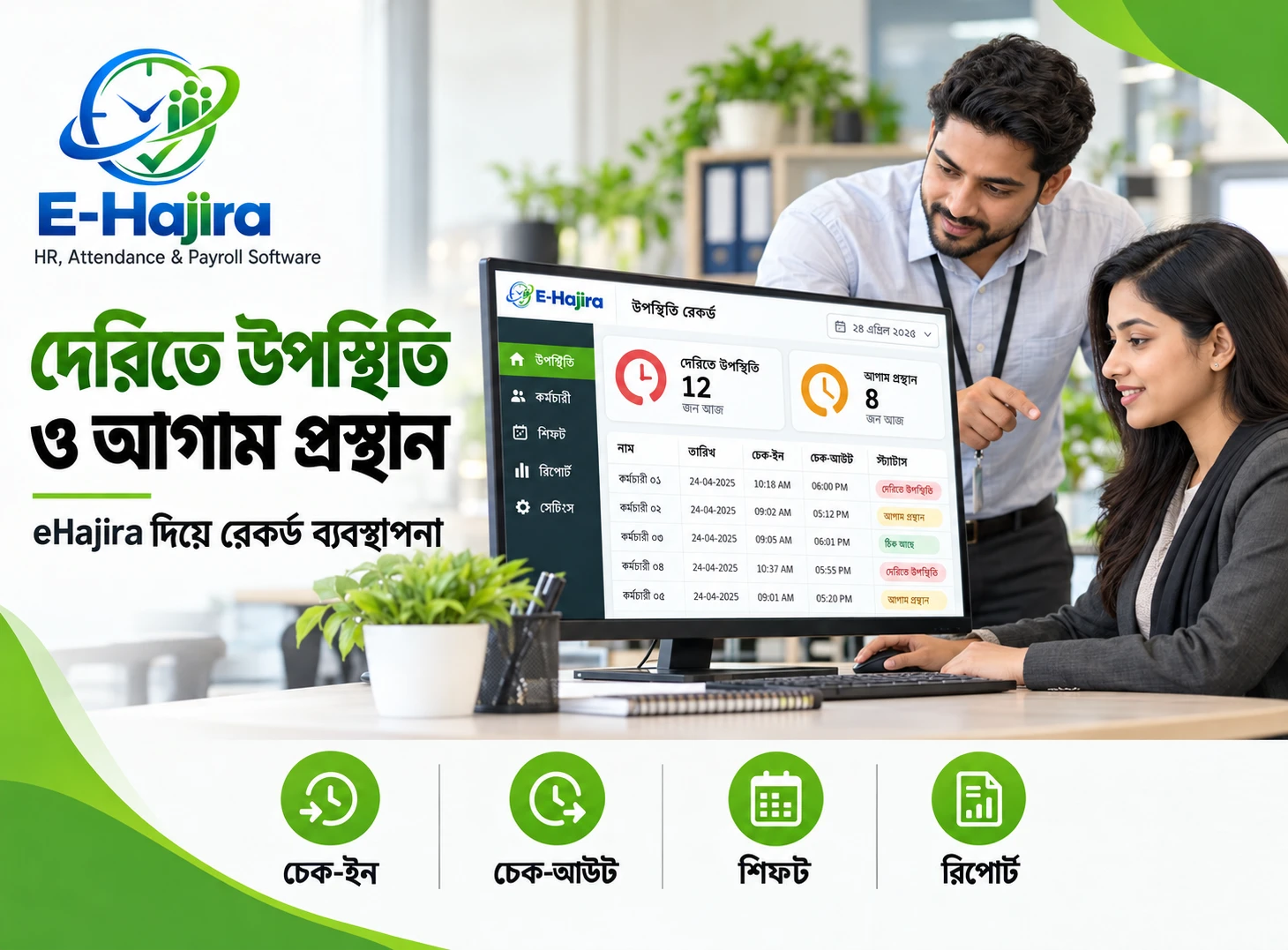
Field attendance records can support monthly HR administration by providing a more organized source of attendance information. HR can review recorded attendance alongside approved leave, schedules and relevant adjustments.
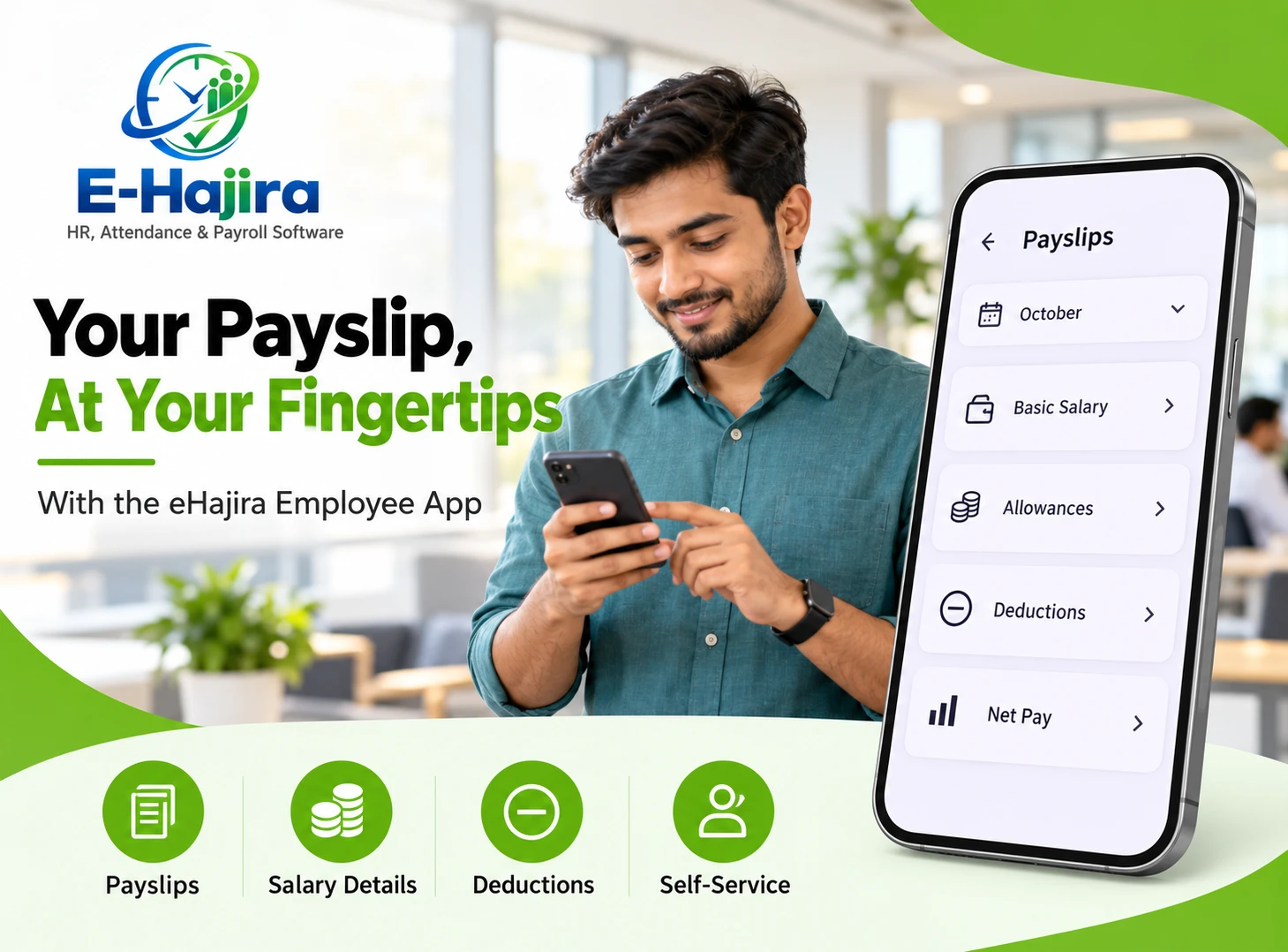
Because eHajira is positioned as an HR, attendance and payroll solution, businesses can discuss how these processes connect in their chosen setup. The exact calculations and approval stages should be confirmed before payroll use.
A check-in and check-out interval should not automatically be treated as payable working time. Breaks, approved overtime, travel arrangements and other factors may require separate assessment.
Before finalizing payroll, responsible staff should resolve missing punches and disputed entries. GPS attendance supplies information for review; it does not replace the employer’s responsibility to apply appropriate policies and requirements.
Introducing eHajira to a Field Team
A successful rollout begins with a realistic understanding of field work. HR and operational managers should agree on which employees need mobile attendance and which locations or assignments are relevant.
The next step is to confirm package capabilities with eHajira and run a pilot with a small group. The pilot should include normal check-ins, a changed assignment, a location error and a missed punch.
Employees should receive practical training that explains both the app and the company’s policy. Instructions should cover when to punch, how to confirm an entry and what to do when the normal process fails.
After reviewing the pilot, the organization can refine its rules and expand gradually. This approach helps avoid introducing attendance requirements that look reasonable in an office but create difficulties at customer sites.
Assessing the Business Value
The value of mobile field attendance is best measured against the organization’s previous process. Businesses can compare the time spent collecting records, the number of unresolved attendance questions and the effort required for monthly review.
For example, a company previously collecting attendance through several messaging groups may find a consistent app-based process easier to administer. The result should be assessed using actual experience rather than assumed savings.
Employee feedback is also useful. If staff repeatedly encounter location problems, the business may need to adjust its settings or policy.
A well-designed eHajira deployment should make attendance clearer for employees and administrators. The objective is a reliable process that supports field operations while maintaining fair and transparent recordkeeping.
Frequently Asked Questions
1. What is field employee attendance verification?
It is the process of recording and reviewing whether an employee reported for an approved field assignment. Relevant information may include identity, attendance time and work location.
2. Does eHajira offer GPS-based attendance?
The provider lists mobile GPS and geo-fenced check-in in relevant packages. Confirm availability and configuration for your organization before deployment.
3. What is a geo-fence?
A geo-fence is a defined geographic boundary. An attendance system can use it to determine whether a check-in is permitted at an authorized location.
4. Can employees check in from customer locations?
This depends on company policy and the available configuration. Businesses should demonstrate their customer-site workflow with the eHajira team before enabling it.
5. Can employees check in from anywhere?
That should not be assumed. The employer may restrict attendance to approved locations, and the selected configuration determines how those restrictions work.
6. Is GPS attendance suitable for sales representatives?
It can support attendance administration for mobile sales teams. It should be used alongside approved schedules and separate processes for reviewing sales activities.
7. Can service engineers use mobile attendance?
Mobile attendance can be useful for service teams if their job-site arrangements are supported. Location rules and exception procedures should reflect actual working conditions.
8. Does GPS attendance prove that a task was completed?
No. It provides location-related attendance information. Task completion may require separate documentation, supervisory review or customer confirmation.
9. Is GPS always accurate?
No. Buildings, signal conditions and device factors can affect accuracy. Employers should test locations and provide a fair process for reviewing errors.
10. What happens if an employee is inside the workplace but cannot check in?
The employee should follow the company’s support procedure. The supervisor can review the assignment and technical circumstances before deciding on a correction.
11. Does eHajira support offline attendance?
Offline capture and later synchronization should be confirmed with the provider. Employees should use the company’s approved alternative if they cannot submit attendance.
12. Does GPS check-in mean continuous tracking?
No. A location recorded at check-in is different from continuous tracking. Employers should verify and explain the exact data collected by their configuration.
13. Can GPS attendance prevent every type of misuse?
No. Location information alone cannot guarantee identity or task completion. Businesses should confirm available controls and maintain appropriate supervision.
14. Can eHajira support several branches?
Businesses can discuss branch-based attendance requirements with the provider. Branch assignments, reporting and permissions should be verified for the selected plan.
15. Can an employee work at a different branch temporarily?
The company should approve the arrangement and confirm how the attendance rules are adjusted. Employees should receive instructions before the temporary assignment begins.
16. Can attendance records be used for payroll?
Yes, as information reviewed alongside schedules, leave and other payroll inputs. Calculations and adjustments must follow the employer’s applicable policies and requirements.
17. Does time between punches always equal working time?
Not necessarily. Breaks, travel arrangements and other circumstances may affect the assessment. Recorded attendance should be reviewed before payroll decisions are made.
18. What should employees do after a missed punch?
They should inform the designated supervisor or HR contact promptly. The company should have an established process for verification and correction.
19. Who should access employee location information?
Access should be limited to authorized people who need it for their responsibilities. Employers should document access and retention arrangements.
20. Can office and field teams use different attendance methods?
The provider describes mobile and compatible device-based attendance options. Businesses should confirm how those methods work together in their selected eHajira setup.
21. Do employees need training?
Yes. Training should explain attendance actions, authorized locations, required permissions and the procedure for technical problems or changed assignments.
22. How should a company choose an eHajira package?
It should explain its employee numbers, locations, schedules and reporting requirements to the provider. A demonstration using realistic field scenarios can help confirm suitability.
23. Should businesses run a pilot before rollout?
A pilot is useful for testing location rules, employee usability and exception handling. It allows practical issues to be resolved before wider deployment.
24. How can a business get started?
Contact the eHajira team with your field attendance requirements and request a demonstration. Confirm supported workflows, pricing, training and ongoing assistance before implementation.
Conclusion
Field employee attendance requires a process that reflects where and how people work. Mobile GPS and geo-fenced check-in can help businesses organize attendance beyond the main office while giving supervisors additional context for reviewing records.
For businesses in Bangladesh, eHajira provides a solution worth evaluating for mobile attendance, HR and payroll administration. A successful implementation combines verified product capabilities with realistic location rules, employee training and a fair correction process.
Request an eHajira demonstration using your actual field assignments, branch locations and schedules to establish an attendance workflow that supports your team’s daily work.