Attendance System
 Access Control
 Door Security
 Turnstile & Entrance Control
 Security Inspection
 Parking Management
 Safety Products
 Software
 Other
From Resignation to Exit: Organizing Employee Records and Final Processes with eHajira
October 27, 2026
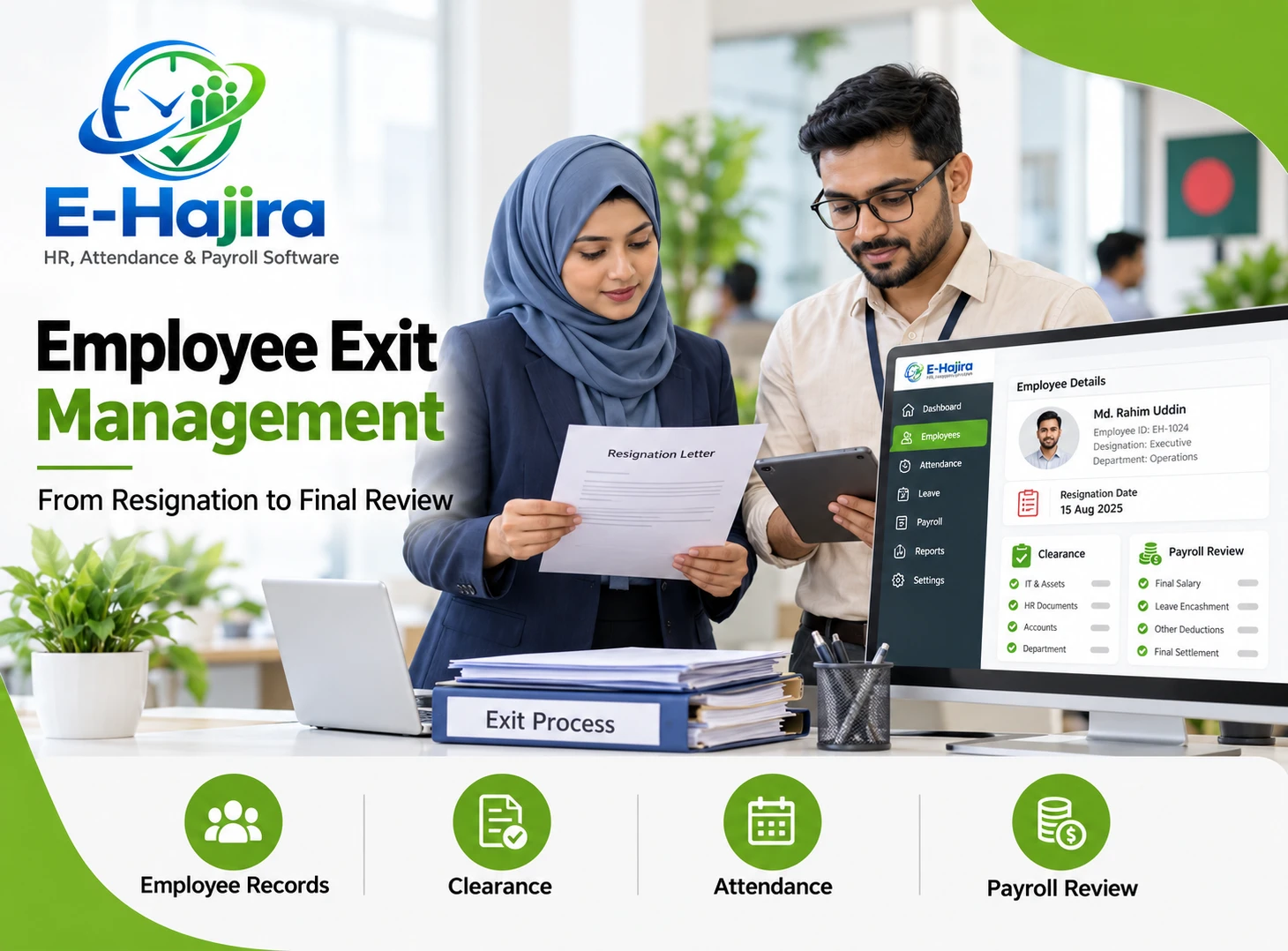
From Resignation to Exit: Organizing Employee Records and Final Processes with eHajira
An employee’s departure creates responsibilities across HR, management, finance, administration and IT. A resignation needs to be acknowledged, a final working date established, work handed over and attendance information reviewed. The organization may also need to prepare final payments and confirm the return of company property.
When those activities are handled through disconnected messages and spreadsheets, it becomes difficult to see which information is current and who is responsible for the next decision. An employee may leave one branch while payroll continues working from an outdated record. A manager may assume equipment has been returned while administration is still waiting for confirmation.
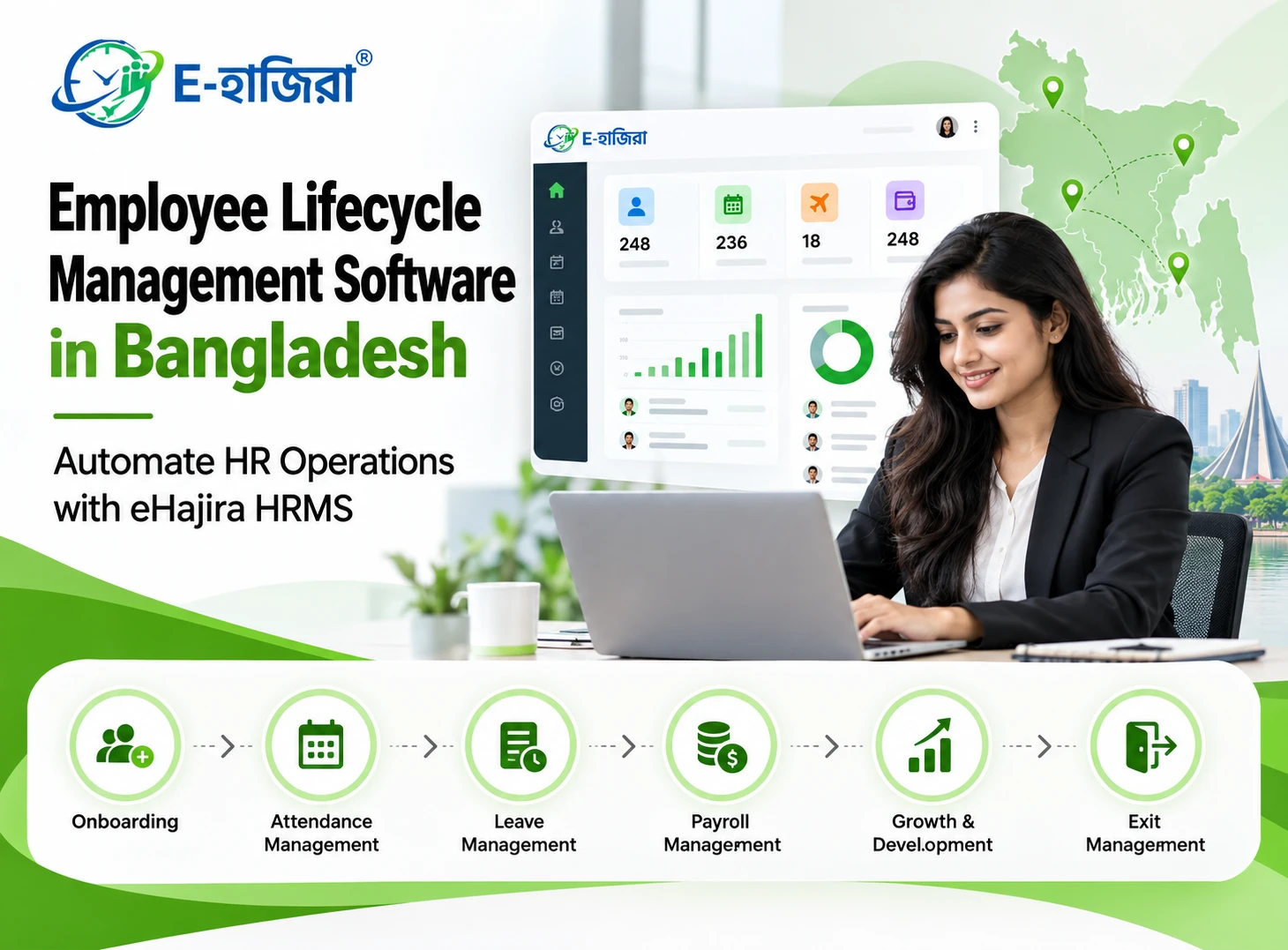
eHajira provides an HR, attendance and payroll environment that can support several parts of this process. Its published descriptions include employee profiles, document storage, employment status history, attendance, leave and payroll functions. These features give HR teams a foundation for organizing information throughout an employee’s working relationship.
This article explains how a Bangladesh-based organization can build an exit process around those capabilities. Dedicated resignation approvals, clearance routing and automatic full-and-final settlement are separate requirements that should be confirmed in the selected eHajira setup.
What Employee Exit Management Includes
Employee exit management is the coordinated process of closing an employment relationship while maintaining accurate records and completing the organization’s responsibilities.
Resignation is one possible starting point. The wider exit process may include a notice period, work handover, return of property, system-access changes, payroll review and communication with the departing employee.
These activities are connected, but they do not all belong to the same team. HR may maintain the employment record, a line manager may organize the handover, IT may manage access, and finance may review final payments.
A structured process makes those responsibilities visible. It also helps the employee understand what will happen and whom to contact about unresolved questions.
Why Organized Offboarding Matters in Bangladesh
Businesses in Bangladesh operate under different employment arrangements, internal policies and legal frameworks. A corporate office, retail chain and manufacturing employer may each have a different exit process.
The Ministry of Labour and Employment lists the Bangladesh Labour Act and subsequent amendments among its legislative materials, including the 2026 amendment. Employers need to assess which provisions apply to their workforce and keep their procedures current.
Accurate records support that work. HR needs reliable dates, attendance information and approved compensation details before it can assess an individual exit.
Software can organize information, but an organization must still determine the applicable legal and contractual treatment. Notice requirements, final dues and benefits should not be reduced to a single rule for every employee.
eHajira’s Role in an Exit Process
eHajira’s published HRM description includes an employee directory, profile documents and status history. The provider also describes attendance, leave and payroll capabilities in its package information.
The practical connection to offboarding is straightforward. HR can use the employee record to find relevant information, review status history and coordinate with teams responsible for attendance and payroll.
The public product information does not establish that every package includes a dedicated resignation submission form, departmental clearance module or final-settlement calculator. Businesses should distinguish those potential requirements from the confirmed employee-record and payroll functions.
An exit process can still be organized around eHajira, with any additional approvals and handover records managed through the organization’s approved procedures.
Starting with the Employee’s Resignation
A resignation should enter a defined process once the organization receives it. HR needs to establish the employee’s identity, the date the notice was received and the person responsible for reviewing it.
A clear acknowledgement helps prevent uncertainty. The employee should know that the communication has reached the appropriate team and understand when the next discussion will take place.
eHajira’s employee profile provides a useful reference point for reviewing the person’s current assignment and employment information. The organization should then follow its approved process for documenting and communicating the resignation.
A submitted resignation and an approved final working date are different pieces of information. Treating them separately helps HR avoid acting on a proposed date before the relevant decision has been made.
Confirming the Final Working Date
The final working date affects the employee’s handover, attendance review, access arrangements and payroll preparation. It should therefore be communicated consistently.
HR should confirm the date with the employee and relevant manager, taking account of the applicable employment terms and organizational decisions. If the date changes, finance, administration and IT need the revised information.
A practical record should distinguish the resignation date, the agreed last working day and the date employment ends where those dates differ. Using one label for all three can create avoidable misunderstandings.
Before updating any employment status in eHajira, HR should verify that the change reflects the approved event. The exact effective-date options available should be demonstrated in the organization’s configuration.
Maintaining a Clear Employee Status History
An employee record remains useful after departure for legitimate historical and administrative purposes. It may be needed to answer a payroll question, verify a prior assignment or review employment dates.
eHajira’s published Status History description refers to employment status changes over time, including active, terminated and rejoined states. Its Documents area is described as supporting employee-related file storage.
The organization should decide which status represents the actual employment event. A resignation should not be casually described as a dismissal merely because a software label is available.
HR should also test whether the configured status and date remain understandable in later reports. Preserving history is useful when the meaning of each entry is clear.
Organizing Exit-Related Documents
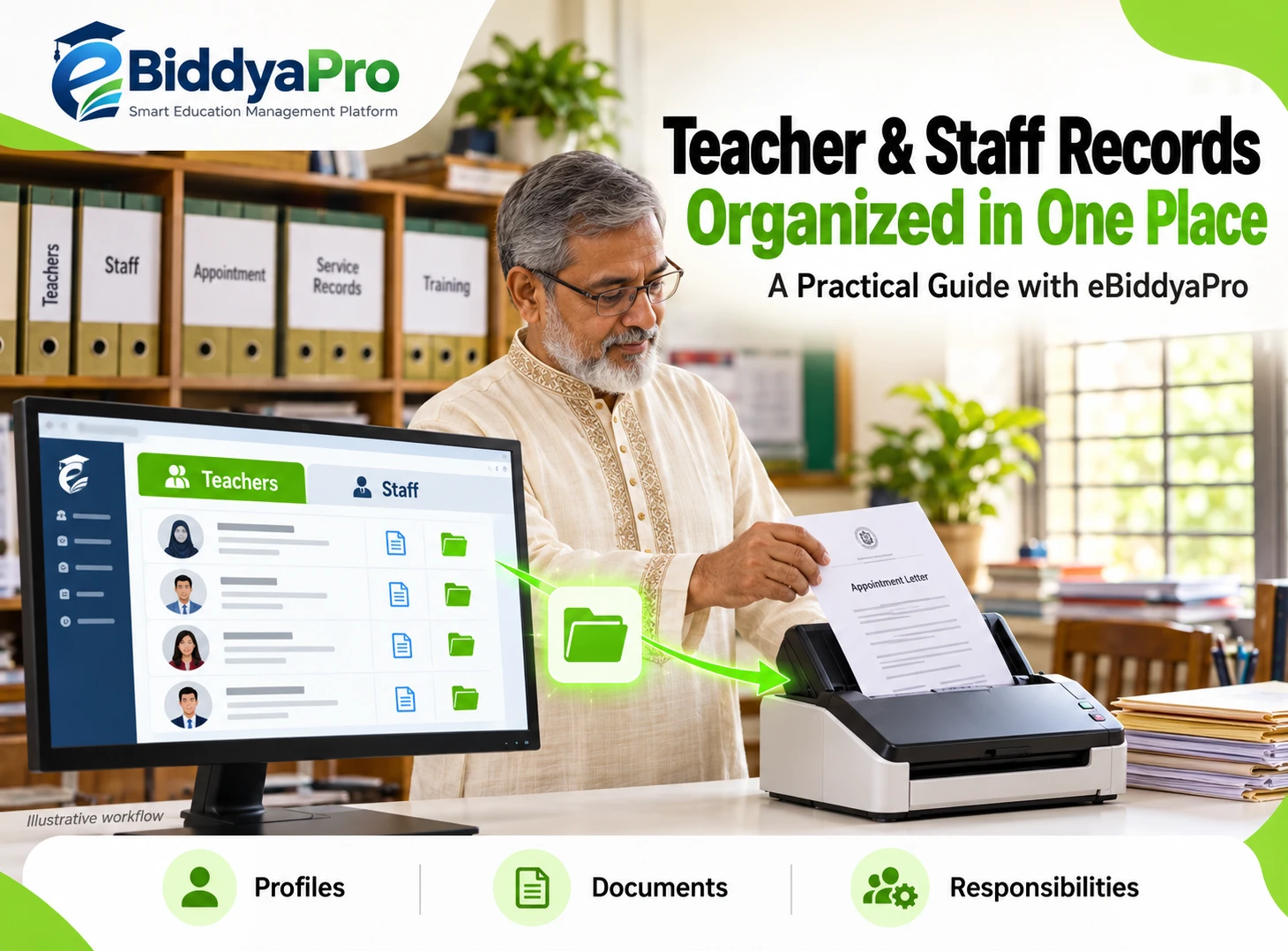
A departing employee may have a resignation letter, approved correspondence, employment documents and records related to the handover. Keeping relevant information associated with the correct employee helps HR find it later.
The published eHajira Documents description includes digital storage for employee records such as contracts and certificates. An organization can use the available document area as part of its approved recordkeeping process, subject to the selected configuration.
HR should verify that each file belongs to the correct person and that the copy is readable. Clear naming also helps distinguish a submitted document from an amended or approved version.
Document storage does not itself prove that the content has been approved, signed or independently verified. Those responsibilities remain part of the employer’s process.
Coordinating Work Handover
A manager needs to know what work the departing employee is responsible for and who will take it over. The details vary by role.
An office employee may need to explain ongoing client work. A store supervisor may need to transfer operational responsibilities. A field technician may need to brief colleagues on incomplete service visits.
The organization should agree on the scope of the handover and identify the receiving person. The manager should review whether enough information has been provided for work to continue.
eHajira can provide employment and assignment context for this coordination. The reviewed sources do not confirm a universal task-handover module, so the organization should use its established method for recording and approving the operational handover.
Managing Clearance Across Departments
Employee clearance commonly involves several teams confirming matters within their responsibility. Administration may review company property, finance may check authorized advances, and IT may coordinate access changes.
The key is to avoid treating clearance as one unexplained status. Each team needs to know what it is confirming, who receives the confirmation and how an unresolved issue will be handled.
For example, returning a laptop and resolving an outstanding business expense are different matters. One should not be assumed complete because the other has been reviewed.
A dedicated automated clearance workflow is not established by the reviewed eHajira sources. Organizations requiring departmental routing, reminders or approvals should demonstrate those capabilities or agree on a separate approved process.
Reviewing Attendance up to Departure
Attendance information can affect the final period of employment. HR should review the relevant records with the employee’s schedule and approved absences in mind.
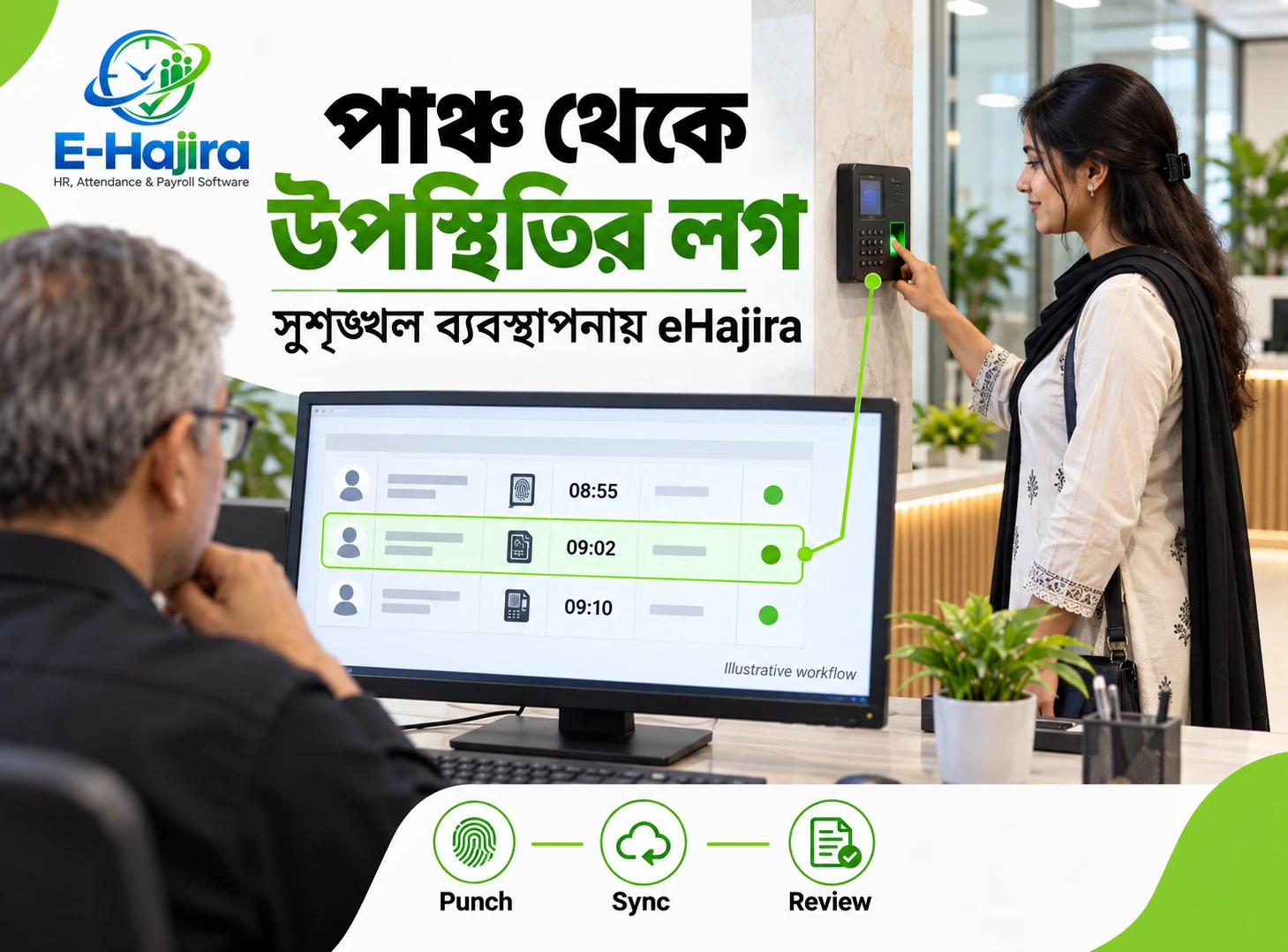
eHajira’s published package specifications include attendance synchronization and daily or monthly attendance reports. Those functions can support review of recorded working time where the required package and integration are active.
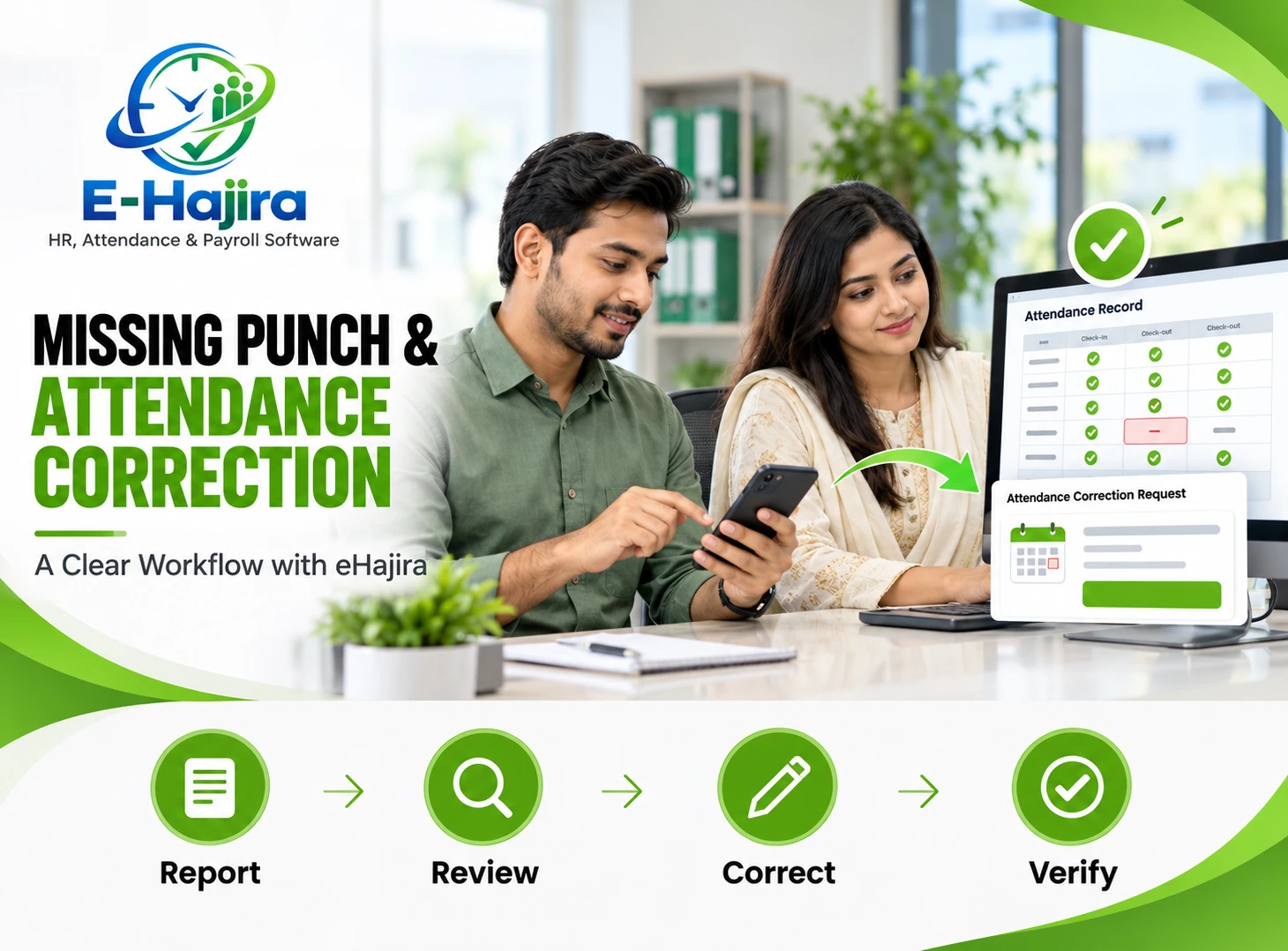
A missing punch should be investigated before it is treated as an unexplained absence. The employee or manager may be able to clarify what happened, and the organization should follow its established correction process.
The final working date and the attendance reporting period should also be consistent. A wrong date can create unnecessary payroll questions and make later reconciliation difficult.
Reviewing Leave and Outstanding Requests
A departing employee may have approved leave, a pending request or a balance requiring review. HR should establish the status of those records before final payroll preparation.
eHajira’s published offering includes leave application and approval workflows. The information can support an HR review, but the treatment of unused leave depends on applicable rules, the employee’s circumstances and the organization’s approved process.
HR should distinguish between a request that has been submitted and one that has been approved. If a request affects the final working period, the manager and payroll team need a consistent understanding of the decision.
Automatic leave encashment as part of a final settlement should not be assumed without a demonstration of the relevant configuration.
Preparing Final Payroll Information
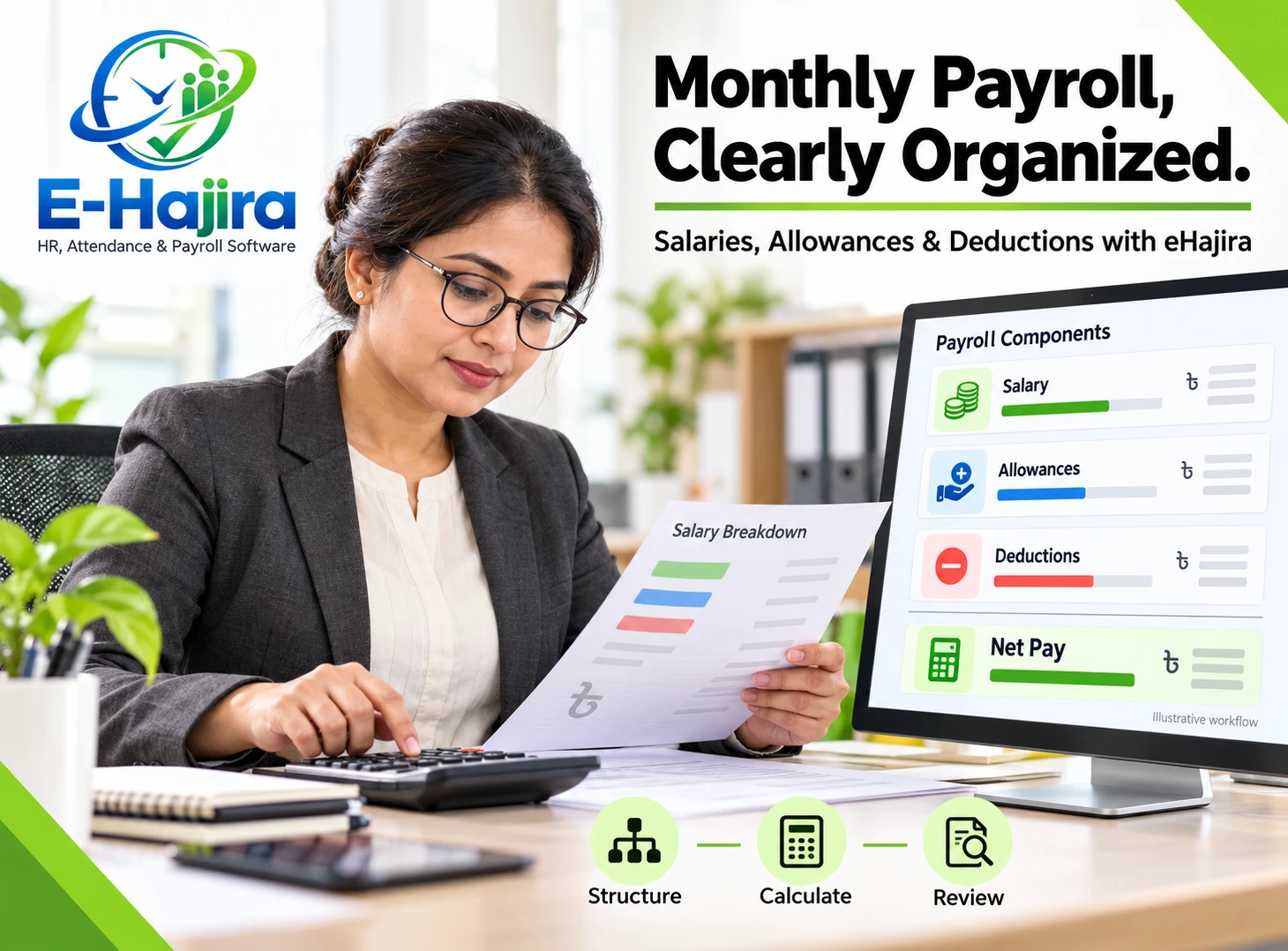
Final payroll may involve a partial working period, attendance adjustments, approved allowances or other amounts requiring review. The applicable treatment depends on the employee and the employment arrangement.
eHajira’s Enterprise Standard package explicitly lists automated payroll processing and payslip generation. Other packages have different scopes, so organizations should confirm what is included in their chosen solution.
Before payroll is authorized, HR and finance should agree on the confirmed employment end date and resolve attendance or leave discrepancies. Any adjustment should have a clear basis and an authorized reviewer.
A payroll function is valuable when it applies accurate inputs. It should not be described as automatically determining every legal entitlement or final settlement obligation.
Monthly Runs and Individual Payroll Review
Some departures coincide with the normal monthly payroll cycle. Others require separate attention because the employee leaves partway through the period or a correction is approved later.
The provider’s published description discusses monthly and single payroll runs, including a single run for selected employees. That can be relevant when finance needs to review an individual case, subject to package and configuration.
The organization should demonstrate how the intended run handles the employee’s dates and approved components. Finance should then review the output before payment.
The availability of a single payroll run does not establish an automatic full-and-final settlement module. Those are different requirements and should be evaluated separately.
Applying Bangladesh Requirements Carefully
Exit obligations can depend on whether the relevant law applies to the employee, the nature of employment and current amendments. Contracts and organizational policies may also be relevant.
For example, the Bangladesh Labour Act contains provisions addressing unused annual leave wages in applicable circumstances, while the 2026 amendment changed part of the Act concerning resignation compensation. These provisions should be assessed in their proper context rather than applied automatically to every employee.
HR and finance should maintain a review process for the current legal position. Where interpretation is needed, the organization should consult qualified local advisers.
eHajira can help organize the supporting records, but configuring software does not by itself guarantee legal compliance.
Reviewing Access and Company Property
Departure may require changes to several kinds of access. A person may have an eHajira account, an email account, a building credential or access to other systems.
The IT and administration teams should understand the approved timing and responsibilities. A change in employment status should not automatically be assumed to disable every external account or attendance device.
Similarly, the return of a laptop, access card or other property requires confirmation by the relevant team. An unresolved property issue should be recorded and reviewed under the organization’s approved process.
Employers should handle payroll obligations separately and according to applicable rules. An administrative clearance process should not be treated as a blanket authorization to withhold payment.
Supporting Multi-Branch Exit Coordination
When an employee works at a branch away from head office, different teams may hold different parts of the information. The local manager may know the handover status, while central HR maintains the employee record and finance prepares payroll.
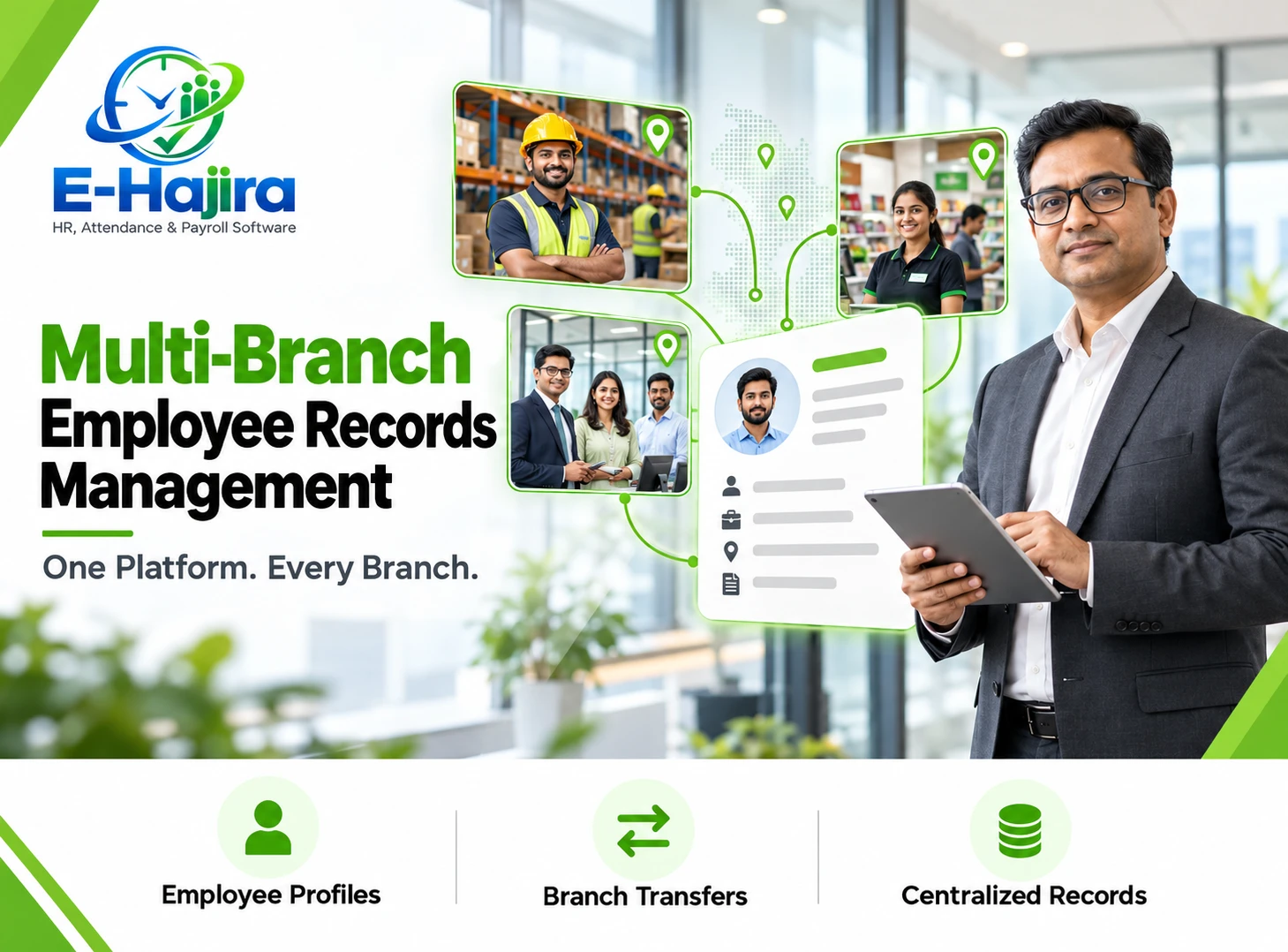
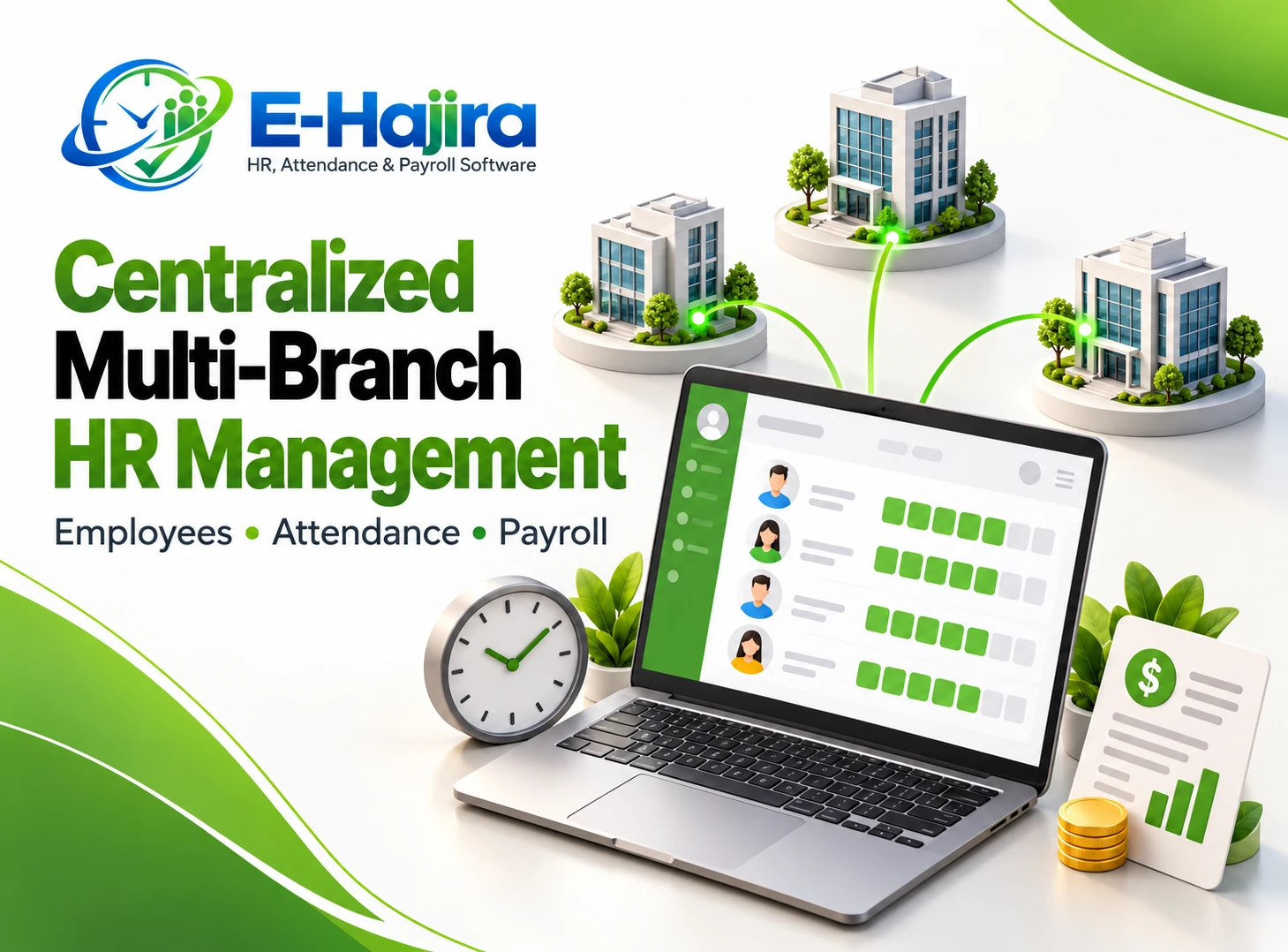
eHajira’s published information describes support for multiple branches under a workspace. A suitable configuration can provide a foundation for organizing branch-related employee information.
The organization should still define who confirms local events and who is authorized to update central records. A branch manager’s confirmation of a final working day should reach HR and finance through a reliable process.
Campus or branch visibility, access restrictions and exit-related reporting should be demonstrated in the actual deployment.
Handling Rejoining and Historical Records
A former employee may later return to the organization. Accurate history helps HR distinguish a rejoining from an entirely unrelated new record.
eHajira’s published Status History description includes rejoined status as an example. The practical handling of a return should be tested against the organization’s policies and reporting requirements.
HR should review the previous identity, new appointment details and any changes to branch or role. It should also establish how historical attendance and payroll records remain associated with the prior employment period.
A returning employee should not be assigned permissions solely because those permissions existed previously. Current responsibilities should determine current access.
A Practical Bangladesh-Based Example
Consider a hypothetical employee working at a Chattogram branch of a company headquartered in Dhaka. The employee submits a resignation and proposes a departure date.
HR acknowledges the notice and confirms the final working arrangement with the manager. The branch manager coordinates work handover, while administration reviews company property.
HR checks the employee’s attendance and leave records in the applicable eHajira configuration. Finance reviews the approved payroll information and resolves any discrepancies before authorizing payment.
After the employment status is updated, authorized staff retain access to the records needed for legitimate administration. This is an illustrative workflow, not a documented eHajira customer case.
Implementing and Improving the Process
A business can begin with one representative exit scenario. HR, the line manager, finance and IT should each understand what information they receive and what decision they must make.
During an eHajira demonstration, the team can follow the employee profile through status review, attendance, leave and payroll preparation. Any requirement for resignation forms, clearance approvals or settlement calculations should be documented separately.
After an exit, the organization can review how long reconciliation took, whether payroll needed correction and whether the employee received clear communication.
These observations help improve the process. The aim is a respectful and accurate departure supported by reliable records and clear responsibility.
Frequently Asked Questions
1. What is employee exit management?
Employee exit management coordinates the administrative and operational activities that occur when employment ends. It can include resignation records, handover, attendance review, access changes and payroll preparation. Different teams remain responsible for their own decisions and confirmations.
2. How can eHajira support an employee exit?
eHajira’s published capabilities include employee profiles, documents, status history, attendance, leave and payroll functions. These can provide information for HR and finance during an exit. The available functions depend on the organization’s selected package and configuration.
3. Does eHajira include a resignation approval module?
The reviewed public sources do not clearly establish a dedicated resignation submission and approval module for every package. Organizations requiring that workflow should request a demonstration and include the expected approval steps in their written implementation scope.
4. Can HR maintain an employee’s status history?
Yes. The provider describes a Status History area showing employment status changes. HR should confirm the labels and effective-date behaviour in its deployment and ensure the recorded status accurately reflects the actual employment event.
5. Can resignation documents be stored with employee records?
eHajira’s published Documents description covers digital employee-related records. Organizations should confirm the supported file types, permissions and package scope. Each document should be checked for correct employee identity and readability before it is relied upon.
6. Is employee clearance automatically completed in eHajira?
The reviewed documentation does not establish automatic departmental clearance for all deployments. Administration, IT, finance and managers should follow an approved coordination process. Any desired routing or reminder features should be demonstrated before they are promised.
7. Can eHajira help review attendance before departure?
Published packages include attendance management and reporting. HR can use available records to review the relevant period, subject to correct setup. Missing punches and approved corrections should be resolved through the organization’s established process.
8. How should pending leave be handled?
HR should distinguish submitted requests, approved leave and any remaining balance. The relevant manager and payroll team need a consistent understanding of decisions affecting the final period. Applicable treatment depends on the employee’s circumstances and current rules.
9. Can eHajira process final payroll?
Relevant packages list payroll processing and payslip generation. Whether a specific final payroll calculation can be completed as required should be tested with the organization’s rules. Payroll output should be reviewed and authorized before payment.
10. Does a single payroll run mean full-and-final settlement is automatic?
No. A single run can support processing for selected employees, while full-and-final settlement may involve additional legal and administrative decisions. Organizations should confirm the required components, calculations and approvals separately.
11. Does eHajira calculate unused leave encashment automatically?
The reviewed sources do not confirm a universal final-settlement leave-encashment calculation. Employers should demonstrate their requirements in the chosen configuration and verify the applicable treatment before relying on an automated amount.
12. Can the system determine legal notice periods?
The reviewed product information does not establish automatic legal determination of notice periods. HR should assess the applicable employment terms and current legal framework, then record and communicate the approved dates through its process.
13. Can a branch manager participate in an exit process?
Yes, organizationally a branch manager can confirm local matters such as handover and final attendance. The manager’s software access and any approval capabilities depend on the configured permissions and the institution’s operating process.
14. Does changing an employee’s status disable all external access?
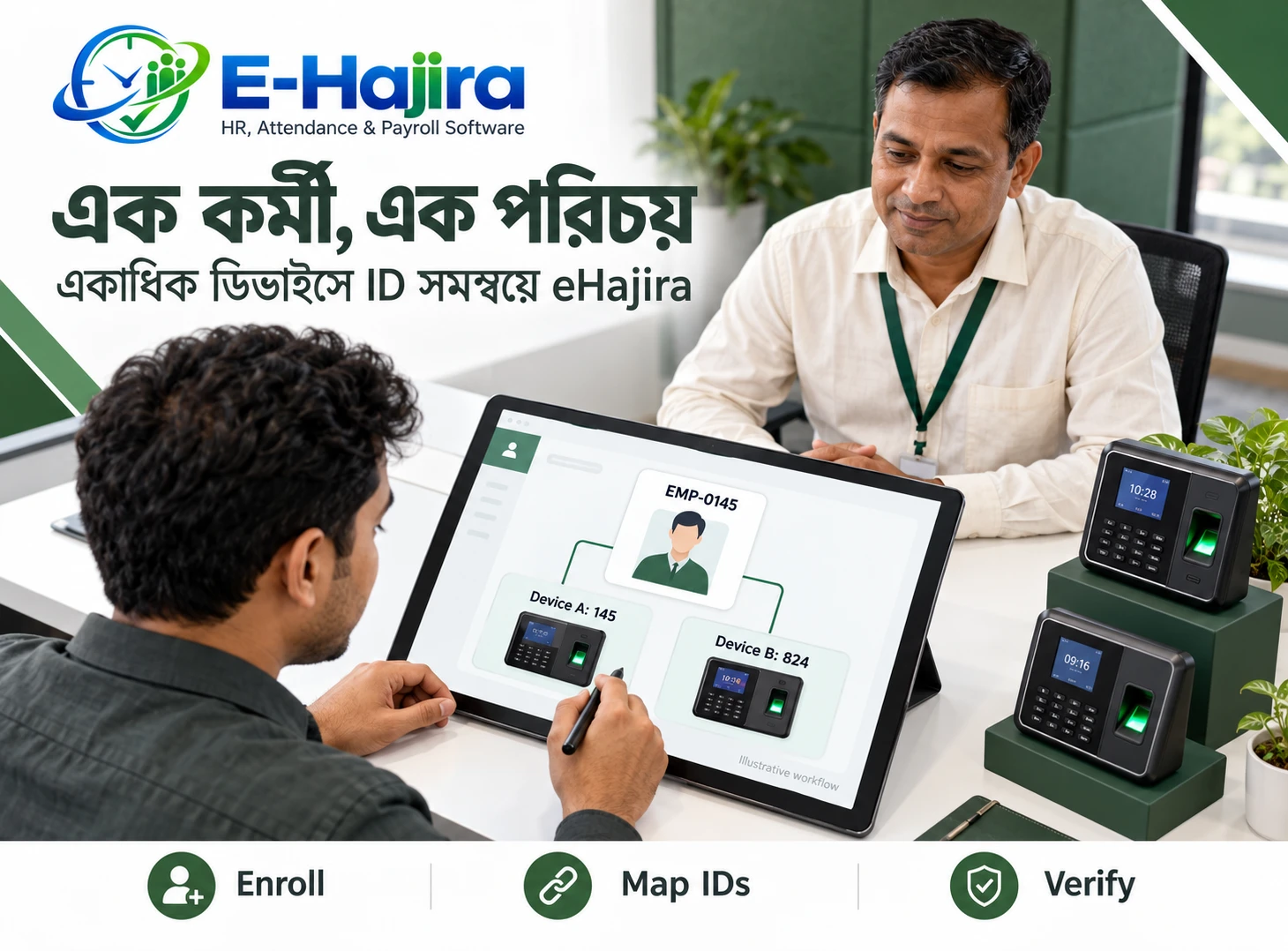
That should not be assumed. An eHajira status change, a biometric device credential, an email account and building access may be separate. IT and administration should confirm the approved timing and process for each relevant system.
15. Should an employee record be deleted after departure?
Historical records may be needed for legitimate administrative purposes. The organization should follow its applicable retention and access policies. Ending employment and deleting records are separate decisions that should be handled deliberately.
16. Can the organization record a later rejoining?
The published Status History description includes rejoined status as an example. HR should verify how a return is recorded in its deployment and how earlier attendance, payroll and employment-period information remains understandable.
17. How should company property clearance be managed?
The responsible department should confirm what was issued and what has been returned. Any unresolved matter needs a documented review. A software status alone should not be treated as proof that physical property has been received.
18. Does clearance automatically determine final payment?
No. Clearance information may be relevant to administrative review, but payment decisions must follow applicable law, employment terms and authorized procedures. Employers should not assume a general right to withhold all dues pending clearance.
19. What should HR test before using eHajira for exits?
Test an employee profile, status change, attendance review, leave information and the intended payroll output. Also demonstrate user permissions and required reports. If automated clearance or settlement is essential, include those scenarios explicitly in the test.
20. How can a business improve its exit process?
Review completed exits for delayed handovers, missing records, payroll corrections and unclear communication. Gather feedback from HR, managers, finance and departing employees. Use the findings to clarify responsibilities and improve the organization’s documented process.
Organize Employee Exits with Clear Records and Responsibilities
A well-managed exit respects the departing employee while helping the organization complete its responsibilities accurately. It depends on clear dates, a practical handover, reviewed attendance and leave information, and an authorized payroll process.
eHajira’s employee records, status history and available attendance and payroll functions provide a useful foundation. By combining those capabilities with a defined clearance process and current Bangladesh requirements, HR teams can create a more consistent approach from resignation through departure.
Begin with a realistic employee scenario and demonstrate each required step. Confirm the available features, document any separate procedures and ensure every team understands its role.