Attendance System
 Access Control
 Door Security
 Turnstile & Entrance Control
 Security Inspection
 Parking Management
 Safety Products
 Software
 Other
From Daily Punches to Monthly Reports: Simplifying Attendance Management with eHajira
October 28, 2026

From Daily Punches to Monthly Reports: Simplifying Attendance Management with eHajira
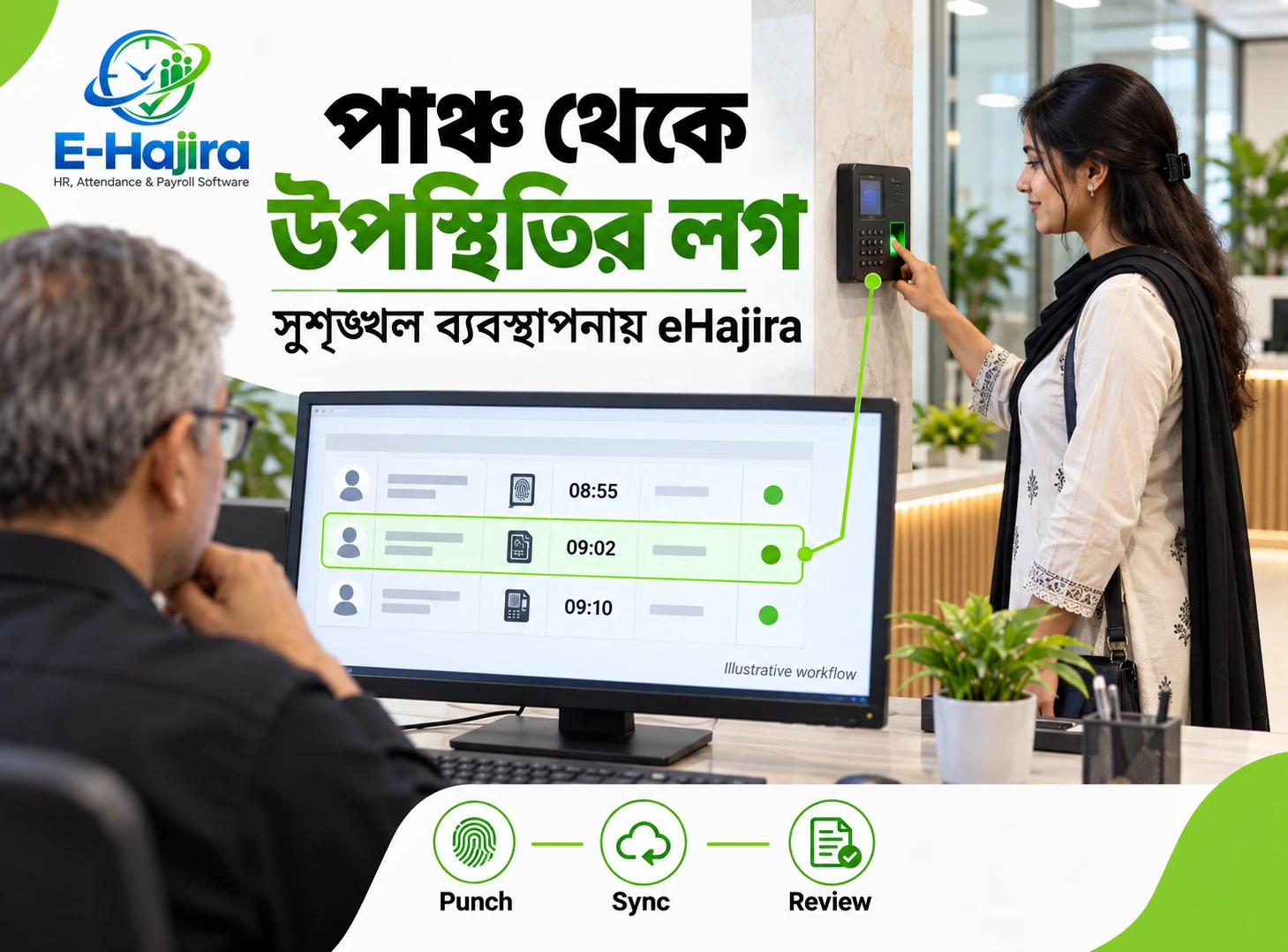
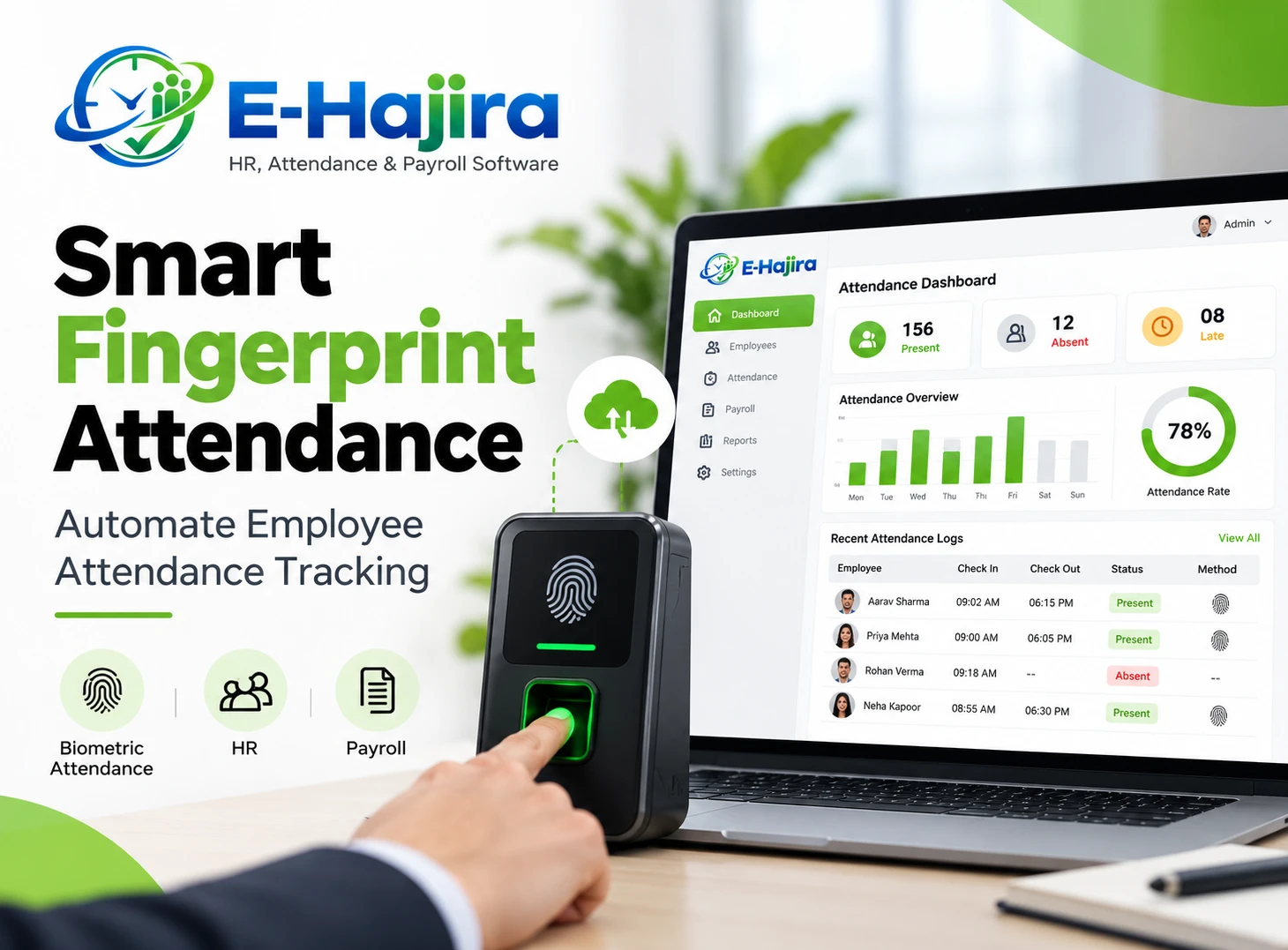
Employee attendance produces information every working day. A fingerprint scan, card entry or mobile check-in may take only a moment, but those individual events eventually become the records HR uses to review attendance and prepare monthly summaries.
For businesses in Bangladesh, the challenge is often connecting these stages reliably. Attendance may be collected at several locations, employees may follow different shifts, and some records may require correction. When HR teams handle everything through separate exports and spreadsheets, monthly reporting can become a lengthy reconciliation exercise.
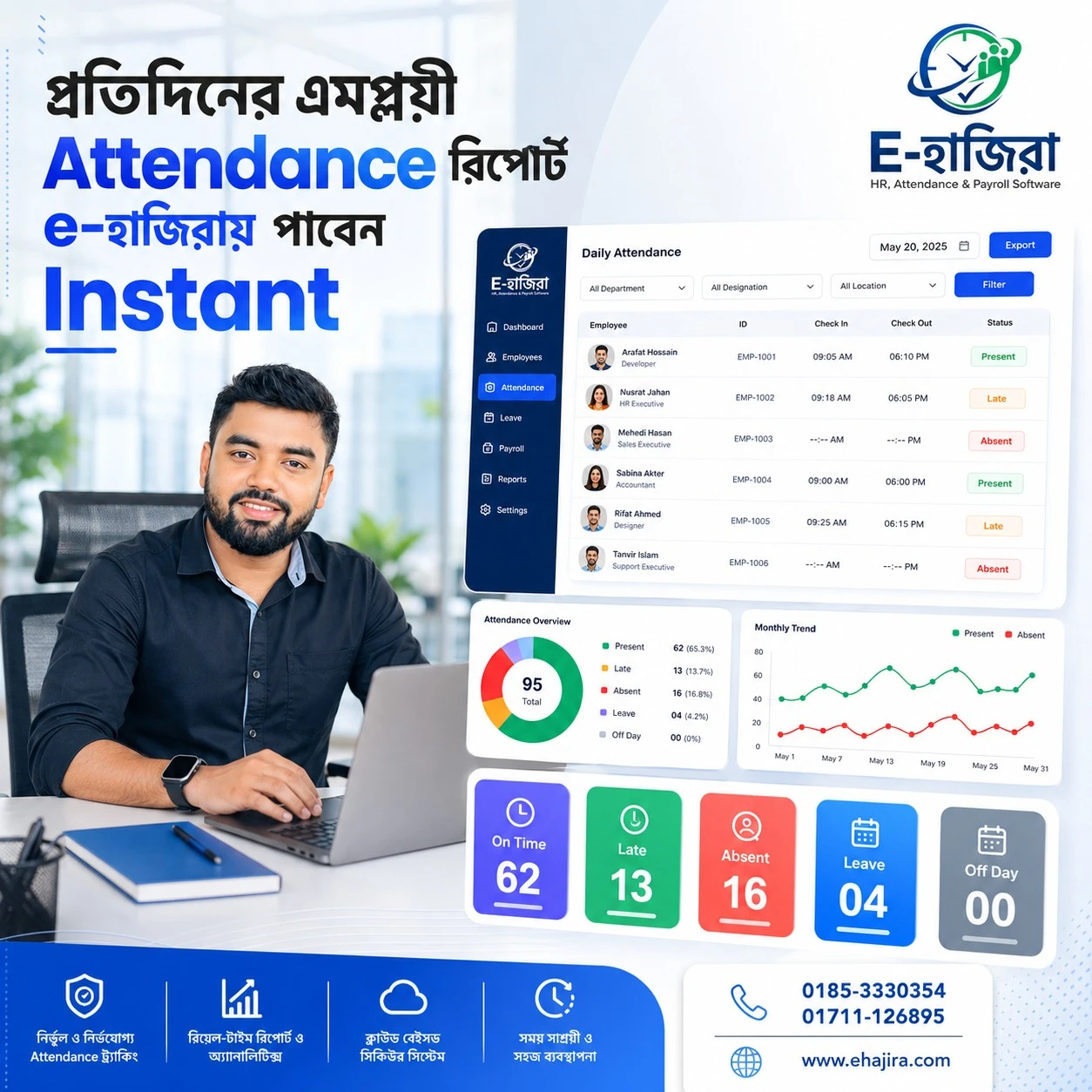
eHajira brings attendance into a broader HR and payroll environment. Its published product information describes daily and monthly attendance reports, alongside related reporting and export options. This provides businesses with a foundation for organizing attendance information more consistently.
This guide explains how daily attendance events become useful monthly reports, how eHajira can support that process, and what organizations should establish to keep reporting accurate, understandable and practical.
Why Daily Attendance and Monthly Reporting Must Connect
A monthly attendance summary is only as reliable as the information behind it. If employee identities, schedules or punch records are incorrect, an attractive report can still present misleading results.
For example, a worker may complete an approved afternoon shift but appear late because the wrong schedule was assigned. Another employee may have a missing check-out that requires investigation before the day can be interpreted.
A connected process links the original attendance information with the employee’s approved work arrangement and any authorized corrections. HR can then review the monthly outcome with a clearer understanding of its basis.
The objective is not simply to produce a report faster. It is to produce a report that can be explained when an employee, manager or payroll officer asks a question.
Understanding Raw Punches and Processed Attendance
A punch is an attendance event recorded by a supported device or application. It may represent arrival, departure or another attendance action defined by the organization.
Processed attendance interprets those events using the relevant configuration. This may involve the employee’s shift, the working date and the rules the employer has approved.
Consider an employee who makes several punches during one day. The system needs an appropriate way to interpret those events rather than assuming that every pair represents a separate full working period.
This distinction matters during troubleshooting. If a monthly result looks wrong, HR may need to inspect the original information and schedule before changing the final record. A correction to the wrong layer can create further confusion.
What eHajira Offers Businesses in Bangladesh
eHajira is an HR, attendance and payroll software solution offered by TRIMATRIK MULTIMEDIA. The provider describes attendance collection from compatible devices and report access through a shared software environment.
Its published reporting guide identifies daily attendance, monthly attendance, late, overtime, leave and payroll reports, with Excel or PDF export. Package contents and the precise report layout should still be verified for the organization’s selected setup.
For a business, this means the discussion can move beyond collecting punches to deciding how attendance information will be reviewed and used.
A suitable implementation should demonstrate the complete journey: an attendance event is received, interpreted against the correct schedule, checked for exceptions and included in the required report.
The Bangladesh Workplace Context
Organizations in Bangladesh operate with varied attendance requirements. A corporate office may use standard working hours, while a retailer manages opening and closing shifts. A manufacturing business may run overnight duties, and a service company may send employees directly to customer locations.
These differences affect reporting. A single calendar-day view may not adequately explain an overnight shift, and office-based assumptions may not fit an approved field assignment.
For example, a company with branches in Dhaka and Chattogram may need a common monthly reporting process while maintaining different local schedules.
eHajira should therefore be configured around actual work arrangements. The organization needs clear employee assignments, relevant attendance rules and an agreed method for handling unusual situations before relying on monthly totals.
Starting with Accurate Employee Records
Attendance events must be associated with the correct employee. Names alone may be insufficient when people share similar identities or work in different branches.
An organization should maintain consistent employee identifiers and verify the information connecting employees to their attendance accounts or devices. Transfers, joining dates and departures also require attention.
For example, a newly joined employee should not be treated as absent for days before their employment began. Likewise, an employee transferred between branches should not accidentally acquire two unrelated attendance identities.
During an eHajira demonstration, test these situations using representative records. Confirm how employee changes affect report scope and which details HR needs to update before the next reporting period.
Connecting Attendance Sources
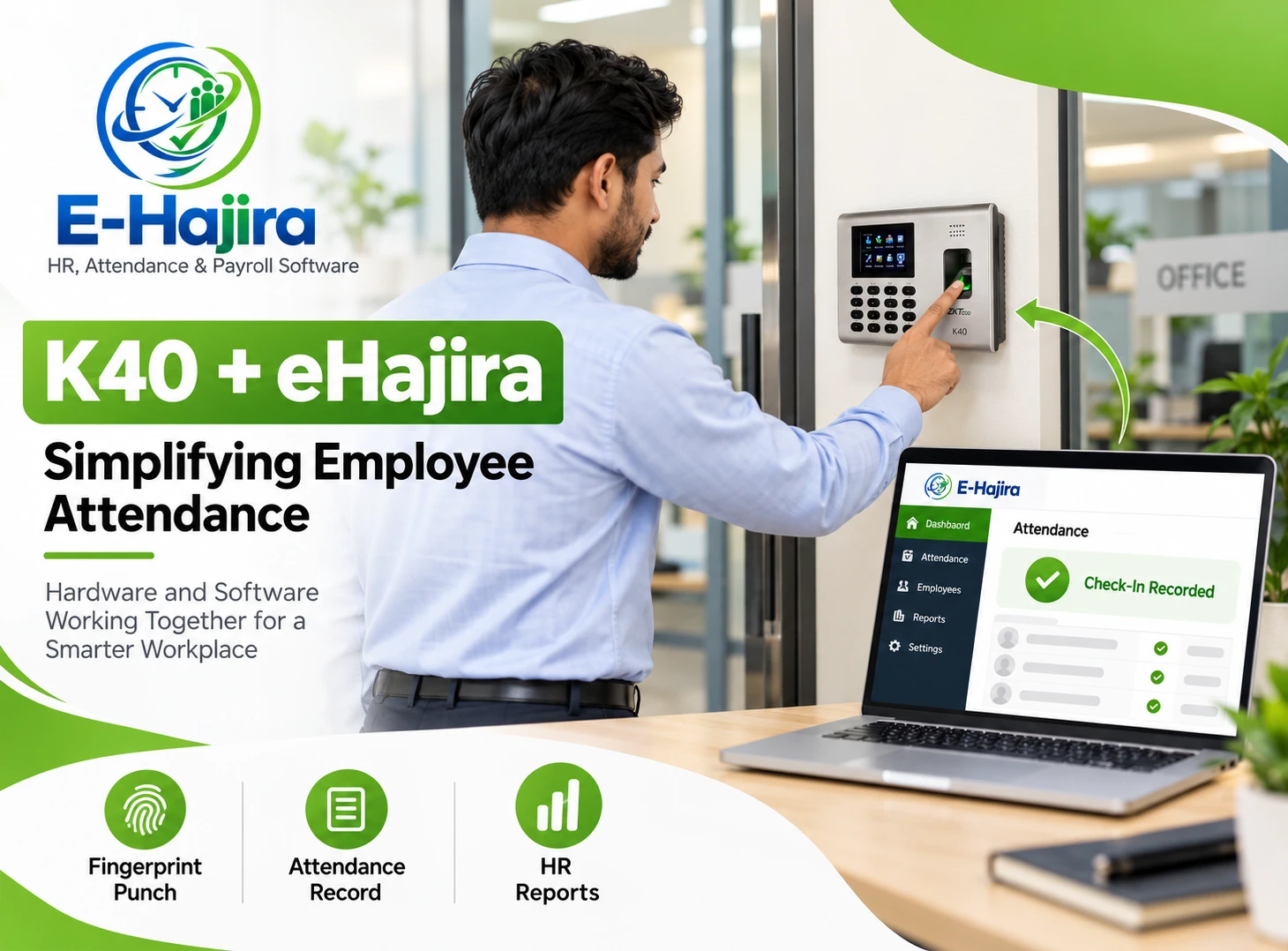
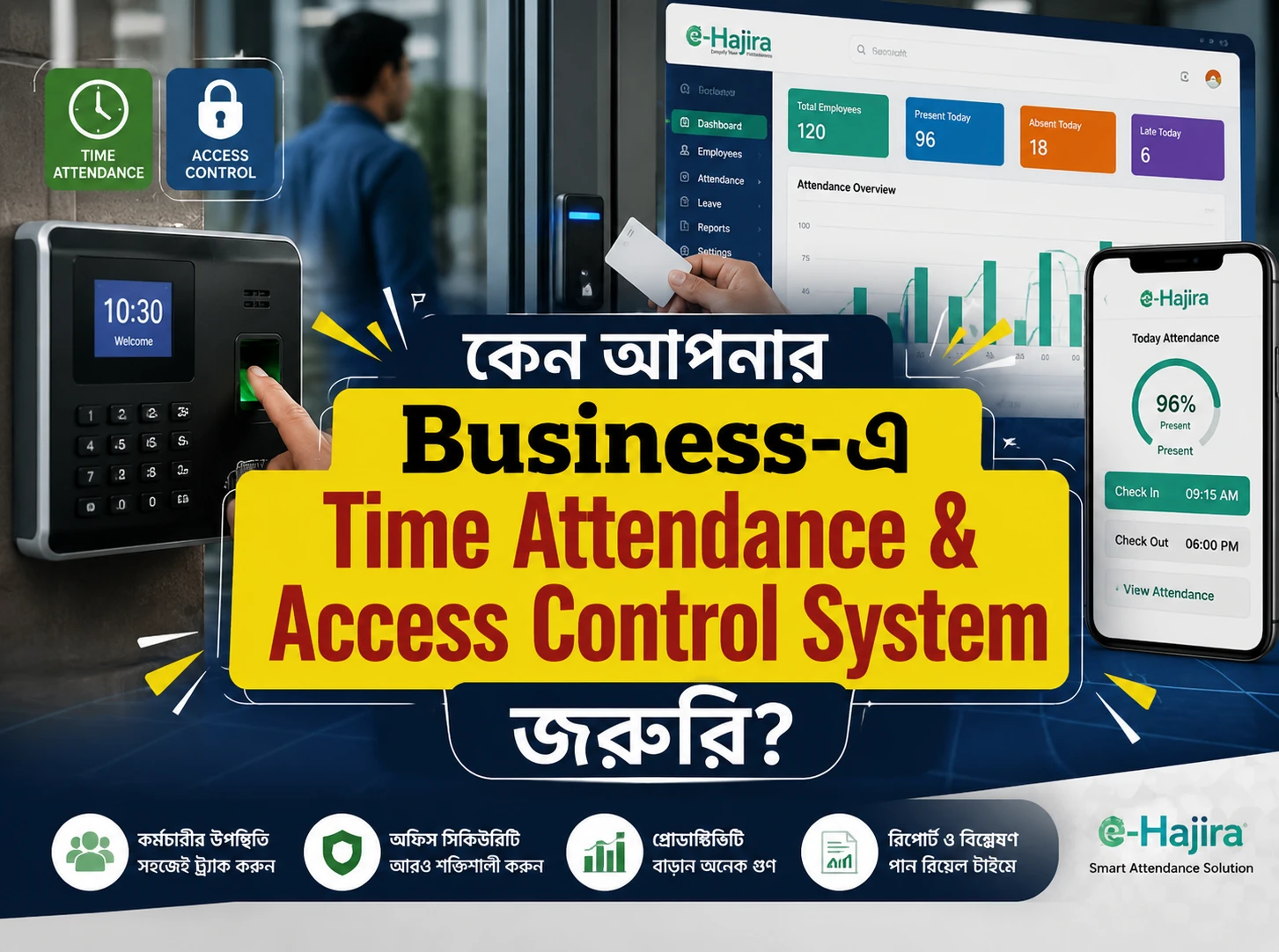
Different employee groups may use different attendance methods. A main office might use fingerprint terminals, while another workplace uses compatible card or face-recognition devices.
The eHajira provider describes collecting supported device information into a common dashboard. The organization should confirm the compatibility and integration requirements for its actual hardware.
Integration requires more than identifying a device brand. Businesses should discuss connection arrangements, employee mapping and how delayed information is handled.
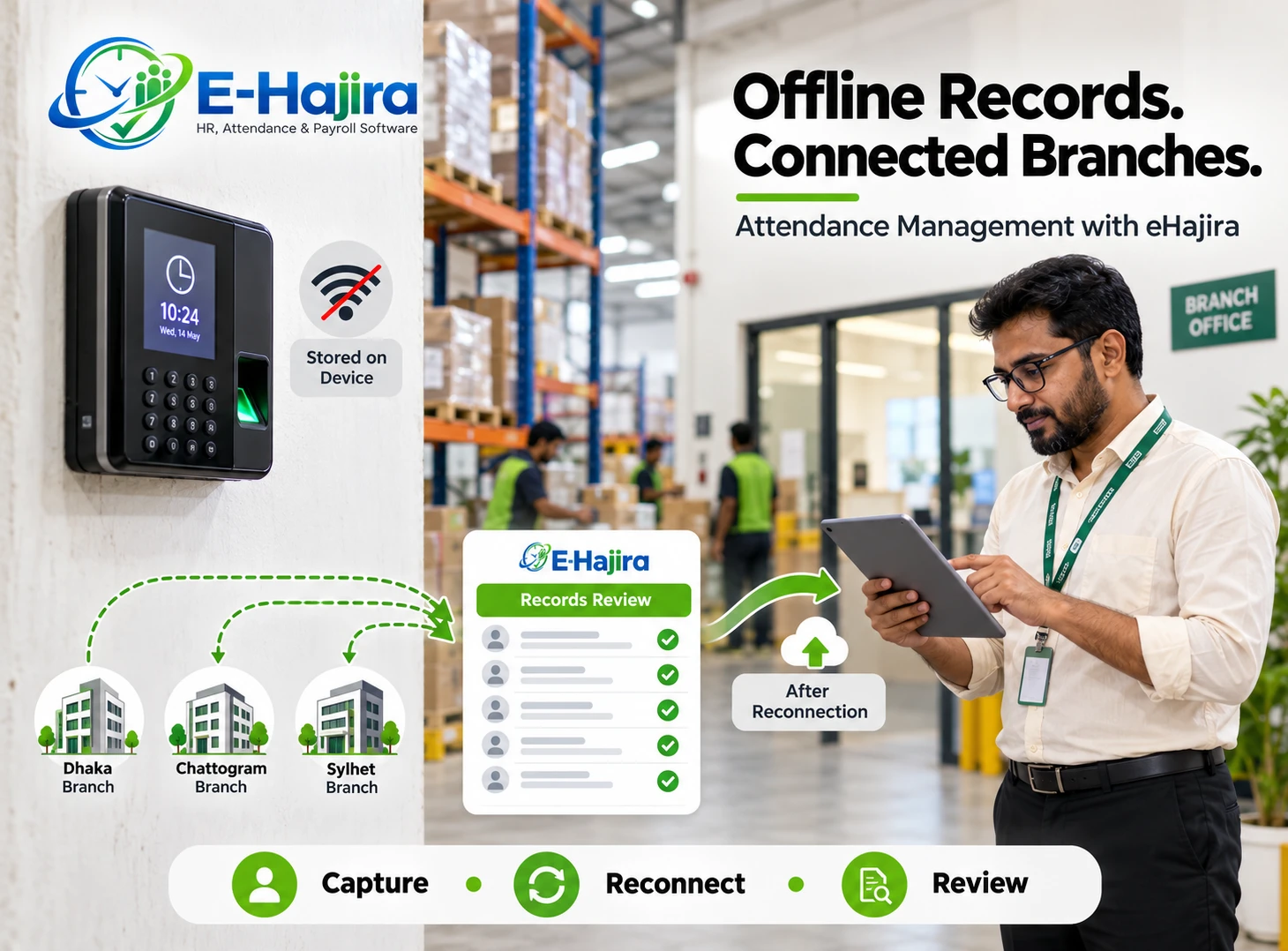
For example, a branch device may retain punches while connectivity is unavailable. HR needs to understand when those events become available centrally and when it is appropriate to finalize a report. Missing data should not automatically be interpreted as employee absence.
Assigning the Correct Shift and Roster
A recorded time has meaning only when compared with the employee’s approved schedule. Incorrect assignments can affect late arrival, early departure and attendance-day interpretation.
The eHajira roster guidance emphasizes connecting employee schedules with attendance administration and resolving exceptions before payroll preparation.
Suppose an employee changes from a morning shift to an afternoon shift. If the change is not reflected correctly, the monthly report may repeatedly show an inaccurate exception.
Organizations should establish who assigns schedules, who approves changes and when those changes take effect. The software workflow should then be tested against those responsibilities, including temporary assignments and duties that cross midnight.
Managing Calendars and Reporting Periods
A monthly summary needs a clearly defined period. The business should establish which dates are included and how approved weekly holidays, closures and other non-working days are represented.
A report covering the first to the last day of a calendar month may not match every organization’s payroll period. Custom date ranges, if required, should be confirmed in the selected eHajira setup.
For example, a company may review attendance using a period that ends before the calendar month closes. HR should ensure that everyone understands which days the report covers.
Clear period definitions prevent comparisons between reports that appear similar but include different dates. The report title and accompanying explanation should make the scope understandable.
Reviewing Attendance Daily
Daily review helps prevent unresolved problems from accumulating until month-end. HR or authorized supervisors can identify missing information while employees still remember the circumstances.
For example, a missing check-out noticed the next morning is usually easier to investigate than one discovered several weeks later. A branch-wide data problem can also be escalated before it affects a complete monthly summary.
A practical daily routine distinguishes technical issues from employee requests. It also identifies approved schedule changes or leave that may not yet be reflected.
Businesses should confirm which daily views eHajira provides and who can access them. The aim is timely exception handling, not unnecessary manual checking of every correctly processed record.
Building a Useful Monthly Attendance Summary
A monthly summary should answer the questions its audience actually needs answered. HR may require detailed employee records, while management may need a more compact overview.
Depending on the available report, relevant information could include the reporting period, employee identity and attendance outcomes defined by the organization. The exact fields and calculation methods should be demonstrated.
For example, a manager reviewing a department needs to understand whether a figure represents days, events or minutes. A late-arrival count and total late time are different measures.
Before adopting an eHajira report, request a sample containing realistic situations. Check whether the format is clear and whether the underlying information can be reviewed when clarification is needed.
Interpreting Presence, Absence and Exceptions
Attendance labels should have agreed meanings. A missing punch, an approved leave day and an unexplained absence should not be treated as interchangeable.
An employee with one recorded event may have an incomplete record rather than a confirmed full-day absence. Similarly, a scheduled holiday should not be assessed against an ordinary workday.
Organizations should document how these situations are reviewed and represented in their configuration. The report should reflect the approved outcome rather than leave staff guessing.
For example, before counting an unresolved day in a monthly summary, HR should check whether a correction request or approved leave applies. This improves both the accuracy and fairness of the final record.
Reviewing Late Arrival and Early Departure
Late arrival and early departure reports can help organizations understand schedule-related exceptions. However, the numbers need context.
An employee may arrive after the usual office start time but be working an approved alternative shift. Another may leave the office early to attend an authorized customer meeting.
The relevant eHajira reports and settings should be tested against these examples. Businesses should confirm how grace periods, approved arrangements and time differences are represented.
A monthly pattern can prompt a conversation, but it should not automatically establish misconduct or a payroll consequence. Managers should review the circumstances and apply the organization’s appropriate policies before making decisions.
Handling Missing Punches and Corrections
Missing punches are a common reason monthly attendance remains incomplete. A clear correction process helps employees report discrepancies and gives authorized staff a consistent review method.
For example, an employee who forgot to check out can identify the date and explain the situation. The supervisor can review the circumstances before HR finalizes the outcome.
Businesses should confirm eHajira’s correction submission, permissions and review steps for their chosen package. Approval routing and detailed change history should not be assumed without demonstration.
After a correction is applied, verify the relevant report again. The organization needs to know whether the report reflects the updated information and whether any additional processing is required.
Bringing Leave into the Monthly Review
Approved leave provides essential context for attendance. An employee on authorized leave should be assessed under the relevant leave arrangement rather than treated like an unexplained absence.
Before closing the month, HR should check for pending requests that could affect the report. The organization should also distinguish leave approval from attendance correction.
For example, a leave request approved after an initial report was produced may require a revised review. Staff should understand which version is current.
Where eHajira connects leave and attendance, demonstrate the actual interaction using a sample case. Confirm how approved leave appears and how any later change affects attendance information used elsewhere.
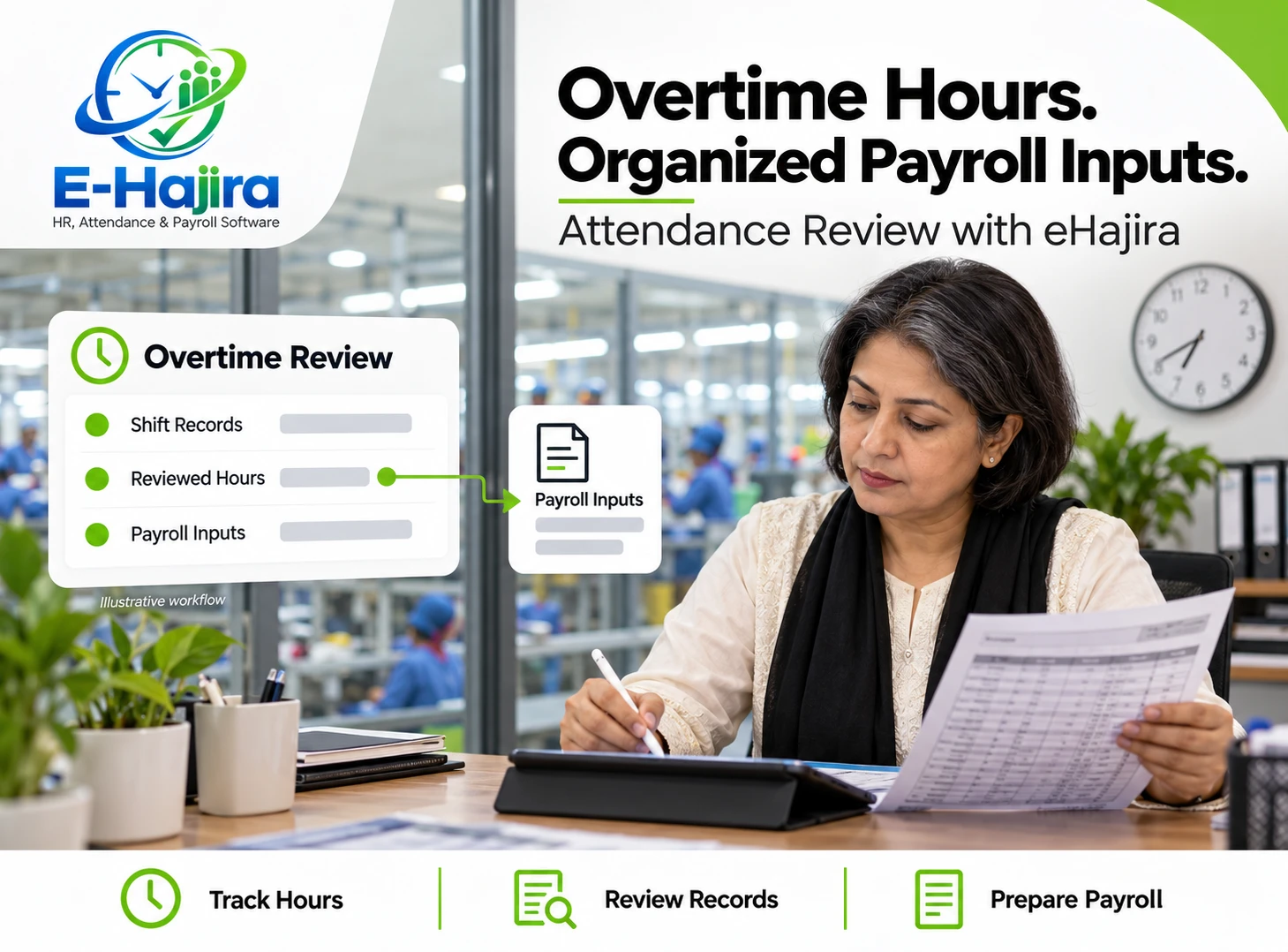
Reviewing Overtime Separately
Time recorded beyond a scheduled shift is not automatically approved overtime. The employer may need to consider authorization, breaks and the applicable working arrangement.
A monthly overtime report can support review, but it does not remove the need to verify the basis of the calculation.
For example, a late check-out could reflect approved additional work, a forgotten punch or time spent on a non-work activity. These situations should not be treated identically without examination.
When discussing eHajira, provide the organization’s overtime requirements and request a worked example. Confirm the calculation, approval responsibilities and relationship to payroll before using the result for payment preparation.
Reporting Across Departments and Branches
Organizations with several departments or locations need reports that reflect their management structure. A branch manager may need information about local employees, while central HR requires broader visibility.
The business should confirm which filters and permissions are available in its eHajira configuration. It should also decide how transfers during a reporting period are represented.
For example, an employee who changes branch midway through the month should not disappear from both reports or be counted incorrectly in each.
Comparisons also need care. Two departments with different schedules or approved working arrangements may not be directly comparable. Management should understand those differences before interpreting summary figures.
Understanding Automated Reporting
Automation can reduce repeated collection, processing and formatting work. However, several different functions are often described as “automated reporting.”
Generating a report from stored information is different from automatically emailing it on a schedule. A dashboard refresh is also different from a final approved monthly report.
The sources reviewed establish on-demand reporting and export options for eHajira. Scheduled distribution, automatic emailing and unattended month-end approval should be confirmed separately.
Businesses should explain the outcome they need. For example, “HR needs to generate a monthly report after exceptions are resolved” is a different requirement from “management must receive a finalized report automatically every month.”
Exporting Reports to Excel and PDF
Exports allow authorized staff to use attendance information in meetings, reviews and approved administrative work. The provider lists Excel and PDF options in relevant eHajira materials.
The organization should inspect actual exported samples. Confirm that names, dates and totals are readable and that the export contains the information required.
An exported file is a copy taken at a particular time. If attendance changes afterward, the old file may no longer represent the current record.
Businesses should therefore define how final reports are named, stored and replaced. Editing a spreadsheet copy does not necessarily update the source system, and it should not become an undocumented substitute for authorized corrections.
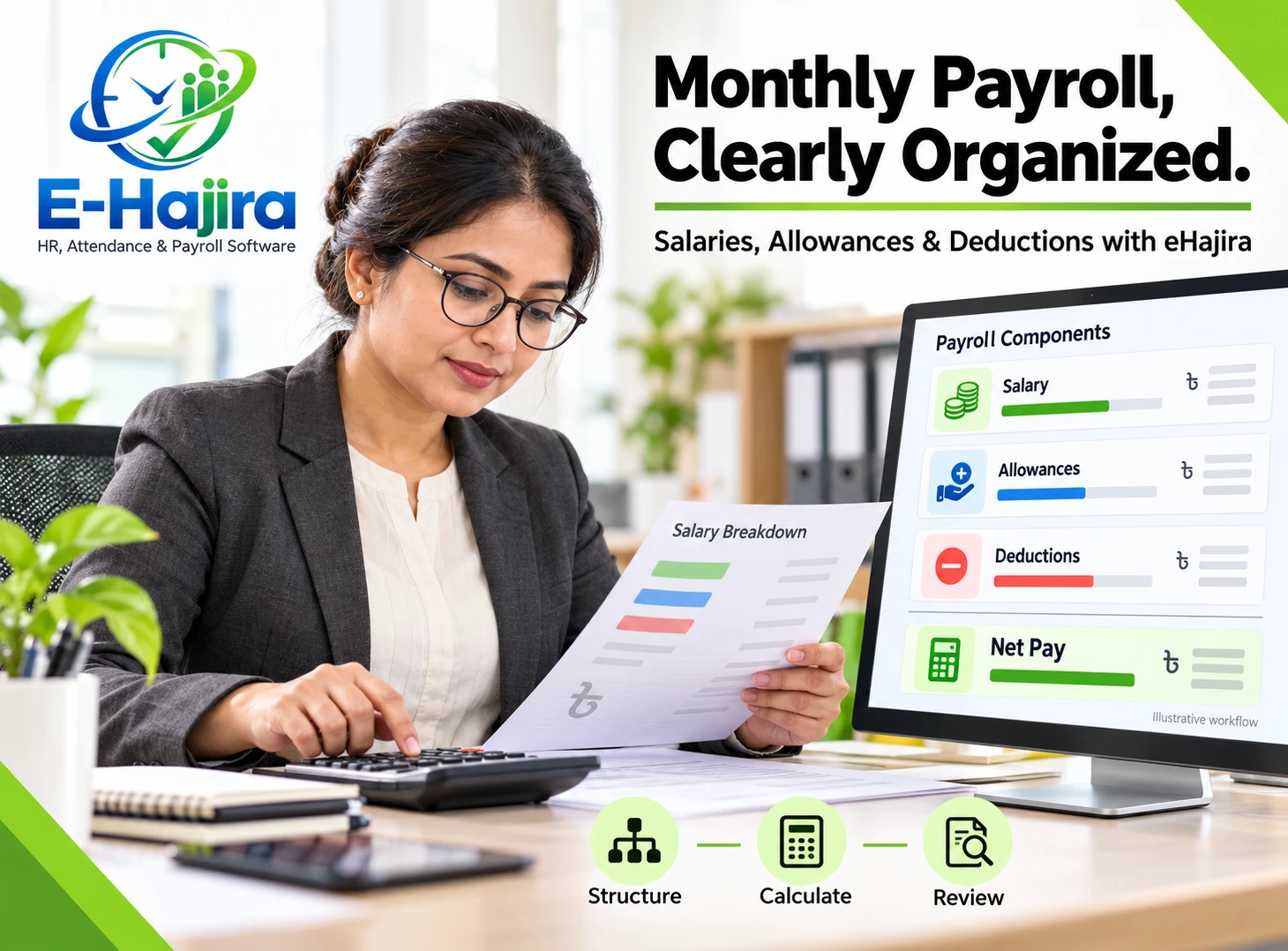
Connecting Monthly Attendance with Payroll
Attendance summaries can provide important payroll inputs, but the final payroll requires its own verification. HR should resolve attendance questions before the information is relied upon.
The provider describes eHajira payroll processing as using verified attendance and leave data. Businesses should test the exact interaction in their selected setup.
For example, an approved attendance correction may affect an employee’s monthly information. Responsible staff should confirm that the change is reflected where needed before payroll is finalized.
A report label alone should not trigger an unquestioned deduction or payment. The employer remains responsible for applying relevant policies, approvals and requirements to the employee’s actual circumstances.
A Practical Month-End Example
Consider a service company with office employees and technicians working at customer sites. Throughout the month, attendance enters the system through approved sources.
Supervisors review exceptions regularly. Near month-end, HR checks unresolved punches, approved leave and schedule changes before generating the relevant attendance report.
An employee with a missing check-out submits an explanation. After authorized review, the record is corrected and the report is generated again. HR then checks the final output before passing verified information into payroll preparation.
This example illustrates an operating process to demonstrate with eHajira. The specific screens, approval steps and report fields depend on the organization’s chosen package and configuration.
Protecting Reports and Measuring Improvement
Attendance reports contain employee information and should be shared only with authorized people. Access to the system and exported files both require attention.
The organization should establish who can generate detailed reports, who receives summaries and how files are retained. Shared folders and email distribution should follow the same responsibility-based approach as software permissions.
To assess value, compare the new process with the previous one. Review the time required to prepare a report, the number of unresolved exceptions and the effort spent answering attendance questions.
Improvement should be demonstrated through actual experience. A well-configured eHajira process should help staff produce clearer information with less avoidable reconciliation, while preserving human review where it matters.
Frequently Asked Questions
1. What is a monthly attendance summary?
It is a report organizing attendance outcomes for a defined period. Its meaning depends on the underlying schedules, rules and verified records.
2. Does eHajira provide monthly reports?
Yes. Published provider information describes daily and monthly attendance reporting. Confirm the layouts and fields included in your selected package.
3. Are raw punches the same as attendance results?
No. Raw punches are recorded events. Processed attendance interprets them using the relevant employee assignment, schedule and configuration.
4. Why is accurate employee information important?
Punches must connect to the correct person. Incorrect identity mapping can produce misleading attendance records and monthly summaries.
5. Can multiple attendance devices feed the system?
The provider describes supported device integration. Businesses should confirm compatibility and connection requirements for their actual devices.
6. Does a missing punch mean absence?
Not necessarily. It may indicate incomplete information or a technical problem. The circumstances should be reviewed before a final classification.
7. Should attendance be reviewed daily?
Regular review helps resolve discrepancies while circumstances are clear. It can reduce the volume of unresolved issues at month-end.
8. Can reports include late-arrival information?
The provider lists late reporting. Confirm the available details and how the selected configuration applies your approved attendance rules.
9. Is late time the same as late frequency?
No. The number of late events and the total time difference are separate measures. Reports should make the distinction understandable.
10. How should early departures be reviewed?
Compare the recorded time with the correct schedule and any approved arrangement. An early check-out does not explain the circumstances by itself.
11. Can overnight shifts affect monthly reporting?
Yes. Punches across two dates need correct shift interpretation. Test overnight examples before relying on reports.
12. How does leave affect attendance?
Approved leave provides context for the employee’s status. Confirm how leave information is reflected in your eHajira reports and calculations.
13. Does a late check-out automatically mean overtime?
No. Overtime requires assessment under the applicable policy and authorization process. Additional recorded time alone is insufficient.
14. Can monthly reports support payroll?
Yes, as verified input. Payroll staff must still check approvals, calculations and the applicable treatment of attendance outcomes.
15. Can eHajira export reports?
Provider materials list Excel and PDF exports for relevant offerings. Review actual samples and confirm availability for your package.
16. Does an exported spreadsheet remain synchronized?
Do not assume so. An export is generally a copy of information at a point in time. Confirm any synchronization requirement separately.
17. Can reports be emailed automatically?
Scheduled emailing was not established by the reviewed reporting information. Ask the provider to demonstrate any required distribution automation.
18. Can different branches receive separate reports?
Confirm available filters and role permissions. The organization should define which employees each manager is authorized to review.
19. Can employees review their own attendance?
Access depends on the selected interface and permissions. Confirm what employees can see and how they report discrepancies.
20. What if attendance changes after a report is exported?
Generate and review an updated report as needed. Use a clear versioning process so recipients know which output is current.
21. What if payroll is already finalized?
Follow the organization’s authorized adjustment process. Confirm how eHajira supports changes after processing before altering records.
22. Should businesses use a reporting cutoff?
A clear administrative deadline can support timely review. The policy should also address legitimate issues identified later.
23. How can a business test eHajira reporting?
Use a sample month containing normal attendance, leave, missing punches and shift changes. Compare the output with expected results.
24. How should success be measured?
Review preparation time, unresolved exceptions and record accuracy. Feedback from HR, managers and employees can identify remaining improvements.
Building a Reliable Reporting Routine
Monthly attendance reporting works best when it begins with accurate daily information. Correct employee assignments, appropriate schedules and timely exception handling create the foundation for useful summaries.
For businesses in Bangladesh, eHajira offers attendance reporting capabilities worth evaluating within the full HR workflow. Demonstrate your actual reporting period, employee groups and exception scenarios, then confirm the package and configuration that meet your needs. This helps turn daily punches into monthly information that supports clear, responsible administration.