Attendance System
 Access Control
 Door Security
 Turnstile & Entrance Control
 Security Inspection
 Parking Management
 Safety Products
 Software
 Other
Centralized Multi-Branch HR Management: A Guide to Streamlining Employee Records, Attendance, and Payroll in Bangladesh
October 26, 2026
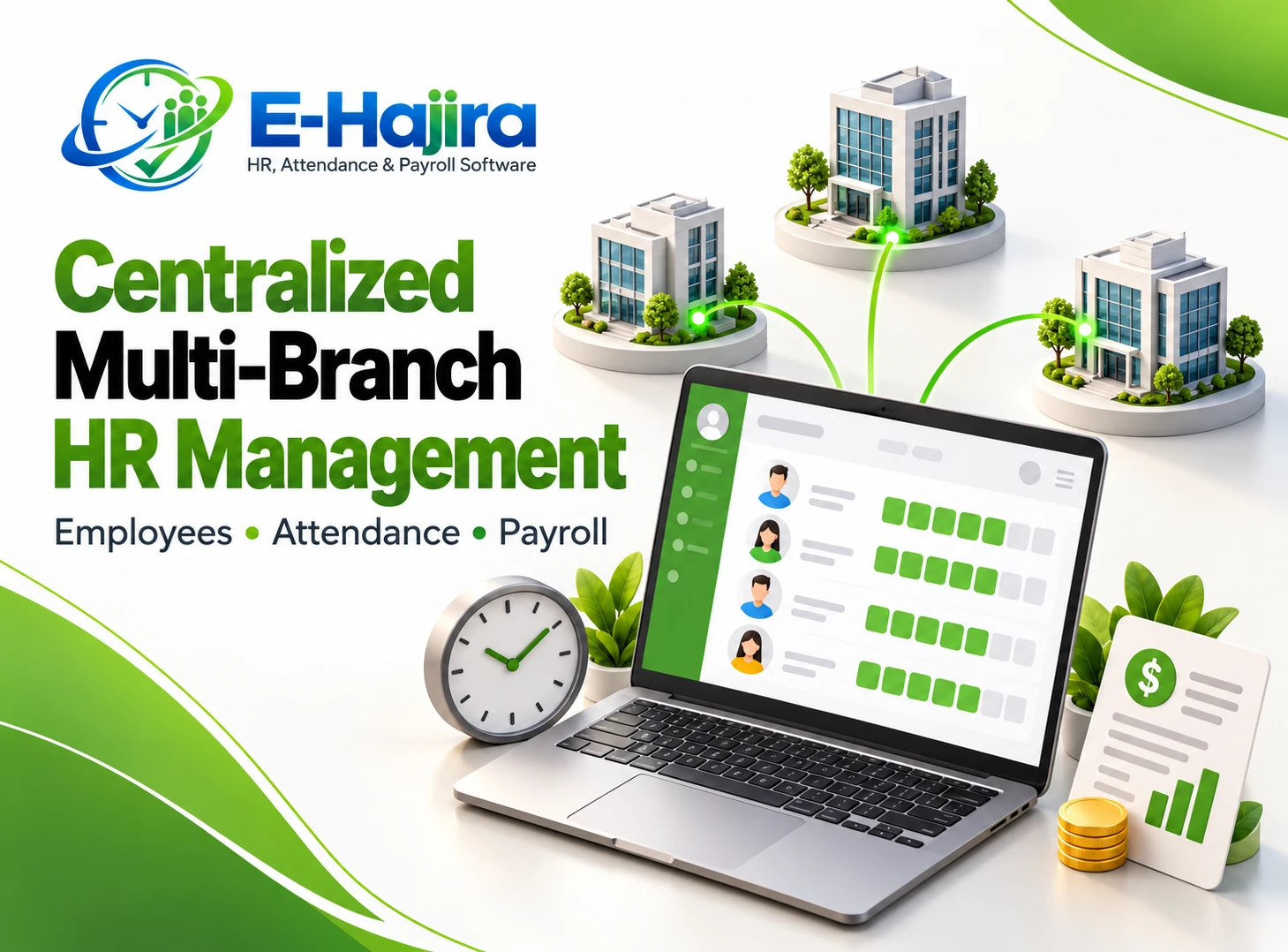
Centralized Multi-Branch HR Management: A Guide to Streamlining Employee Records, Attendance, and Payroll in Bangladesh
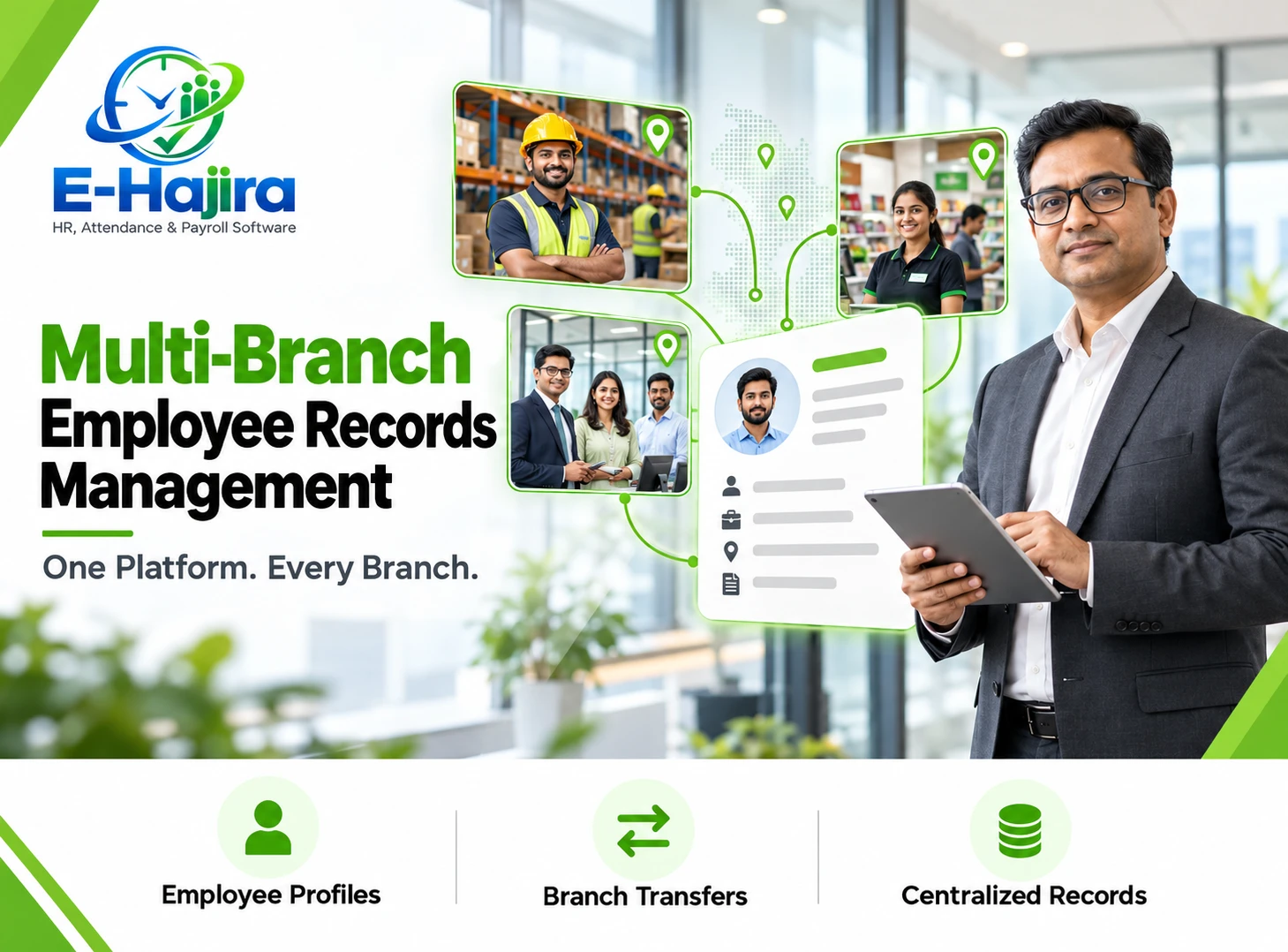
Managing employees across several locations requires more than collecting attendance reports at the end of each month. Every branch generates information about recruitment, transfers, shifts, leave, overtime, and salary adjustments. When these records remain in separate spreadsheets or disconnected systems, head office can struggle to establish which information is current and approved.
Centralized multi-branch HR management brings these activities into a shared administrative framework. Branch teams handle local responsibilities, while authorized managers gain a consolidated view of the workforce. The objective is consistent information, clearer accountability, and a more dependable connection between employee activity and payroll.
For organizations evaluating eHajira in Bangladesh, this guide explains the main workflows, implementation priorities, and questions that should shape a purchasing decision.
What Is Centralized Multi-Branch HR Management?
Centralized multi-branch HR management connects employee information from different locations within one coordinated system. It can bring together employee profiles, attendance, leave, shifts, approvals, payroll inputs, and reporting, depending on the selected software package.
Centralization does not require head office to perform every task. A branch manager may approve attendance corrections, while HR reviews policy exceptions and finance authorizes payroll.
The distinction is that everyone works from connected records with defined permissions. Instead of repeatedly exchanging files, teams can follow an agreed process in which local actions contribute to consolidated organizational information.
Why It Matters for Organizations in Bangladesh
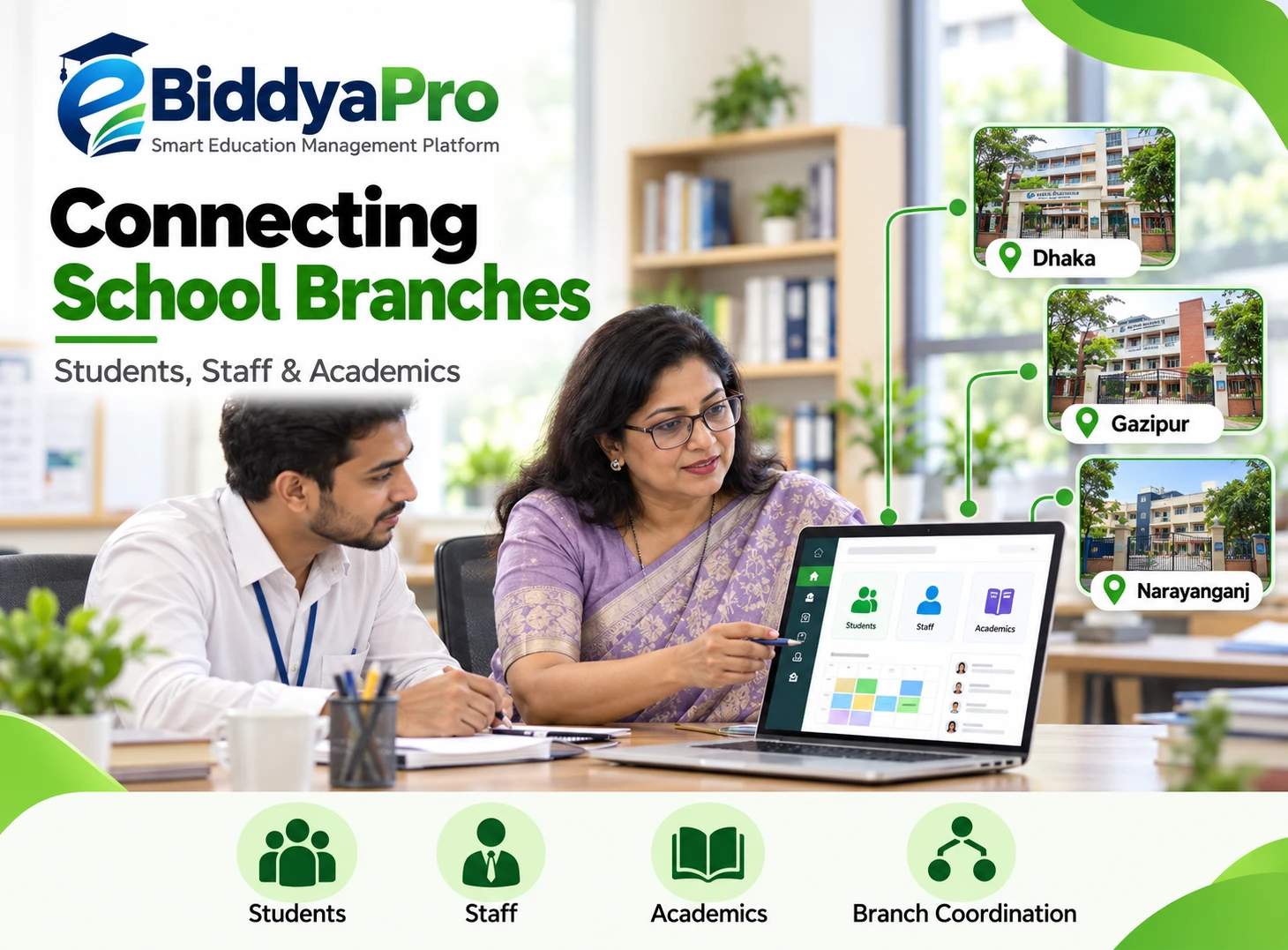
A business operating an office in Dhaka, a warehouse in Gazipur, and outlets in other districts may need different working arrangements at each location. Head office still requires a consistent view of headcount, attendance exceptions, and employment costs.
Bangladesh-focused eHajira product listings explicitly address multi-branch administration and workforce management. This establishes a locally marketed use case, but it should not be interpreted as evidence of nationwide adoption or a measured software market share.
For buyers, the practical question is whether the proposed system fits their operating model. Branch structure, staffing patterns, device connectivity, support, and payroll complexity matter more than the size of a feature list.
Where eHajira Fits into the Workflow
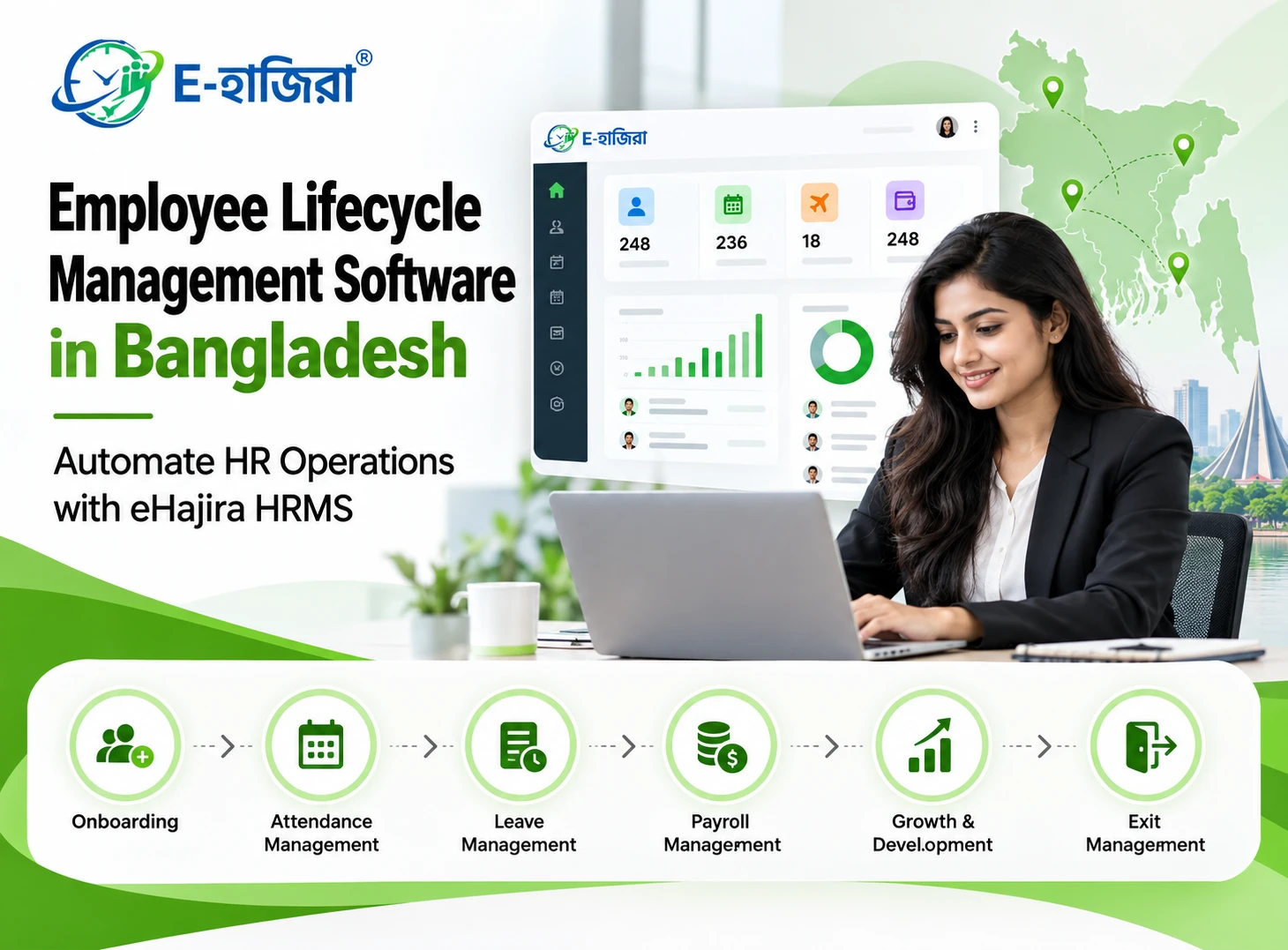
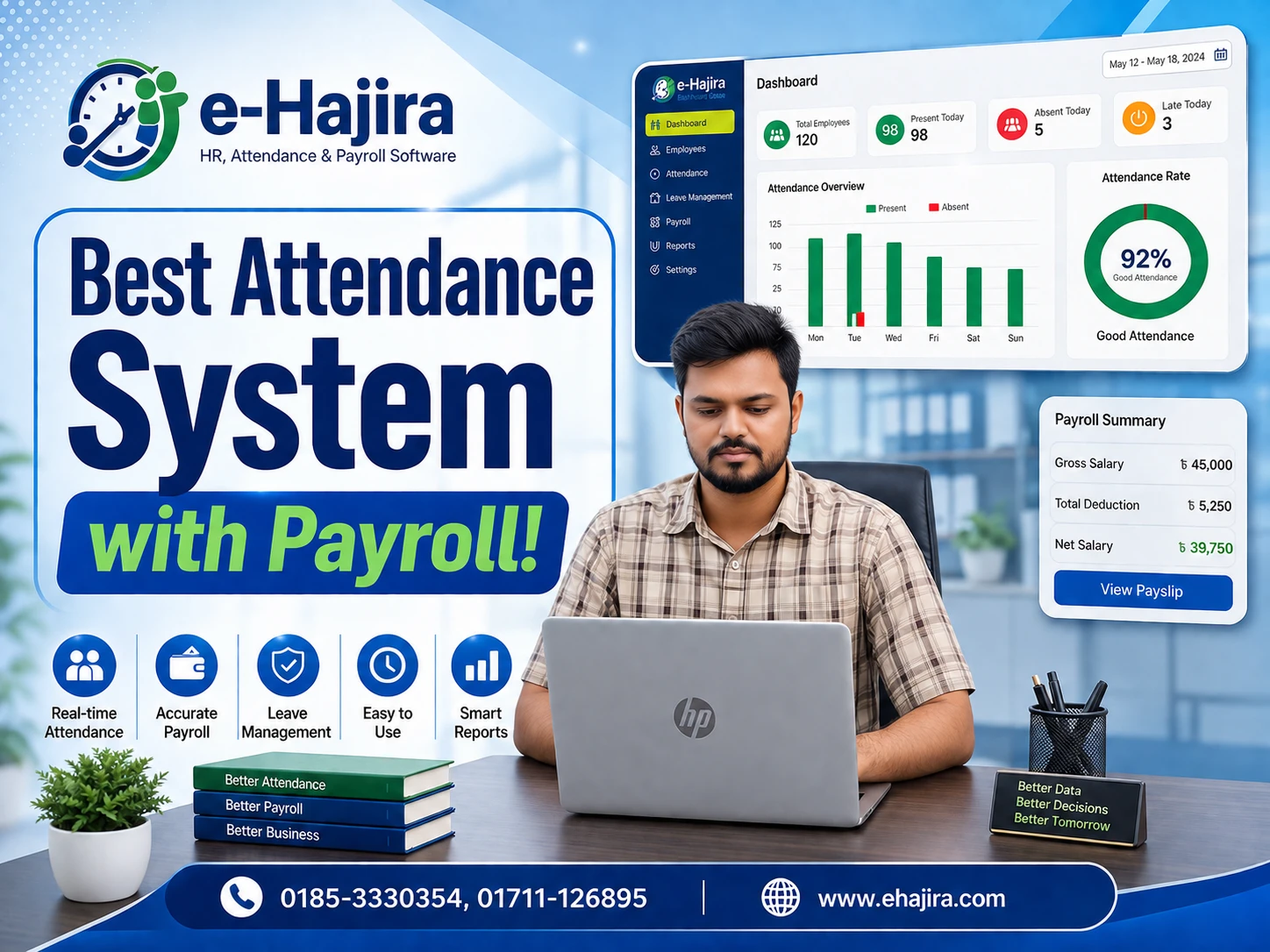
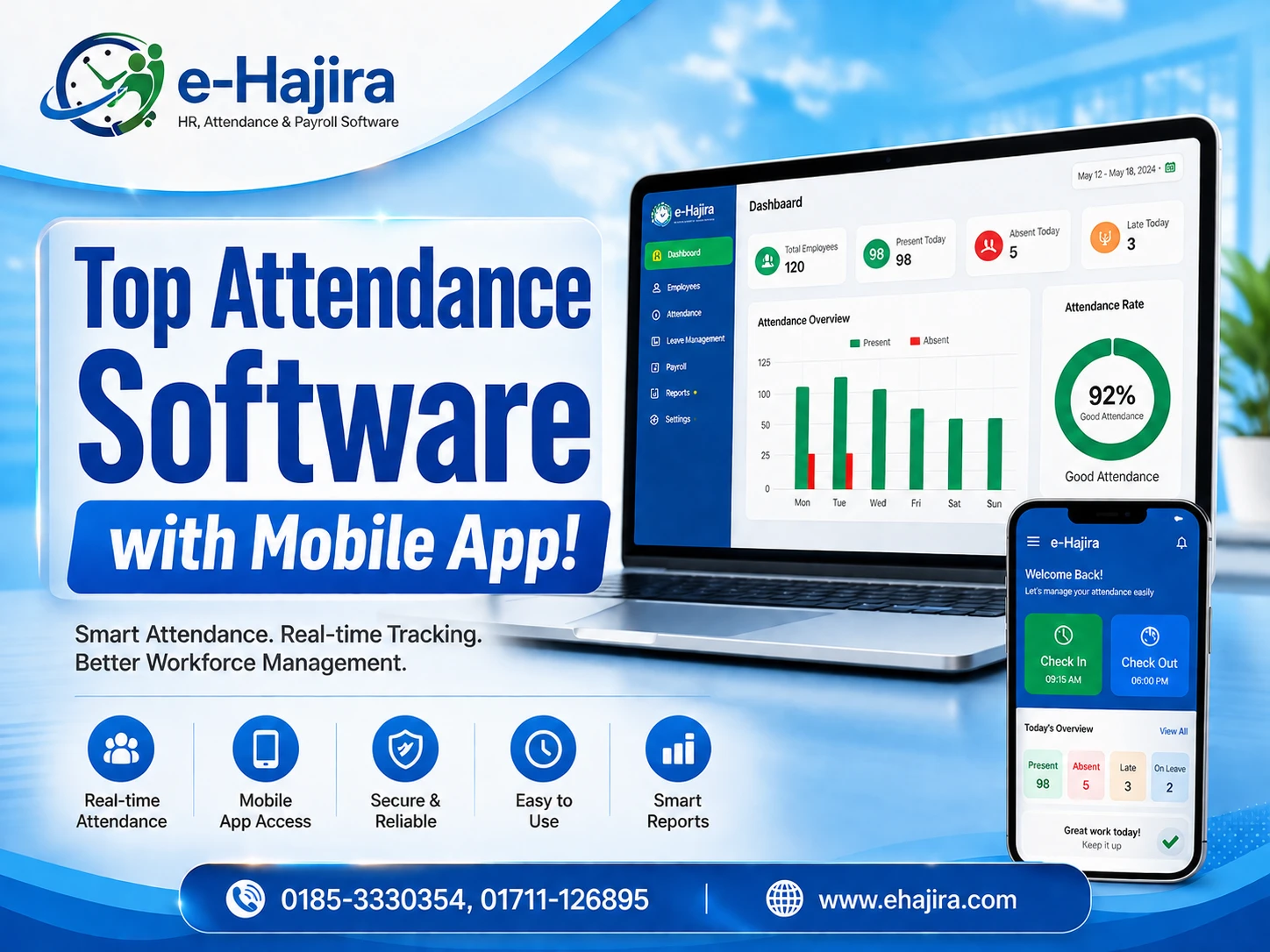
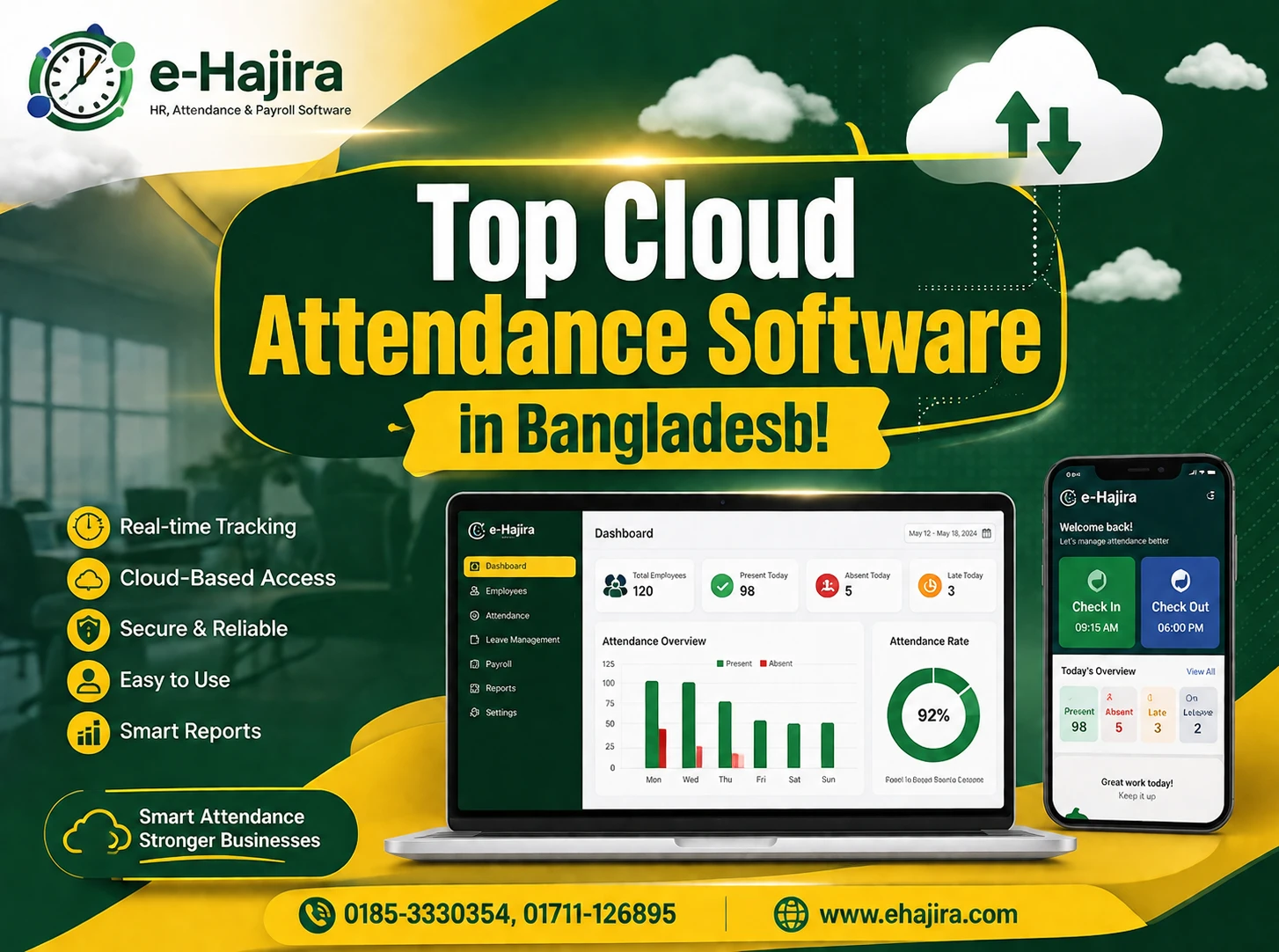
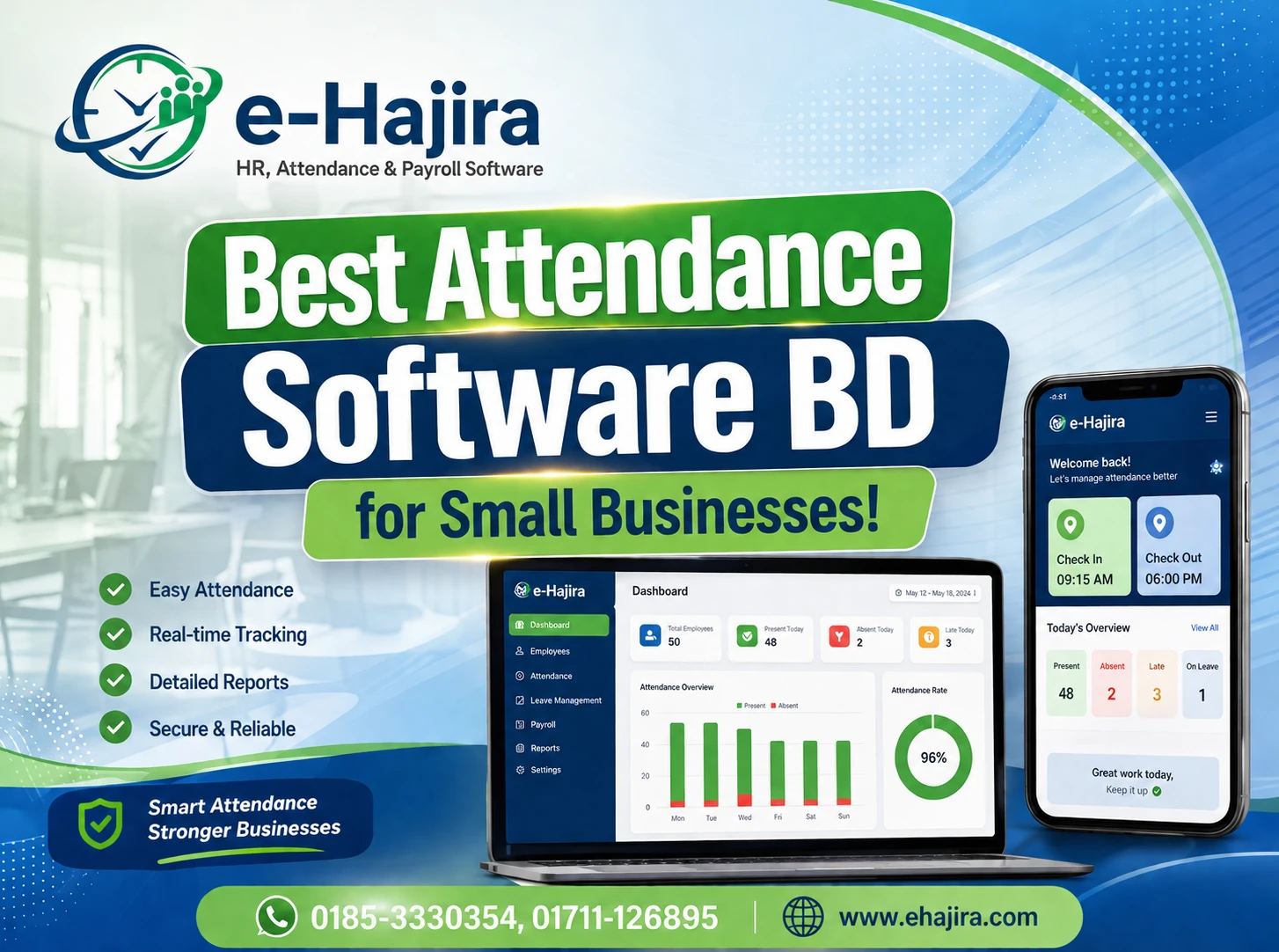
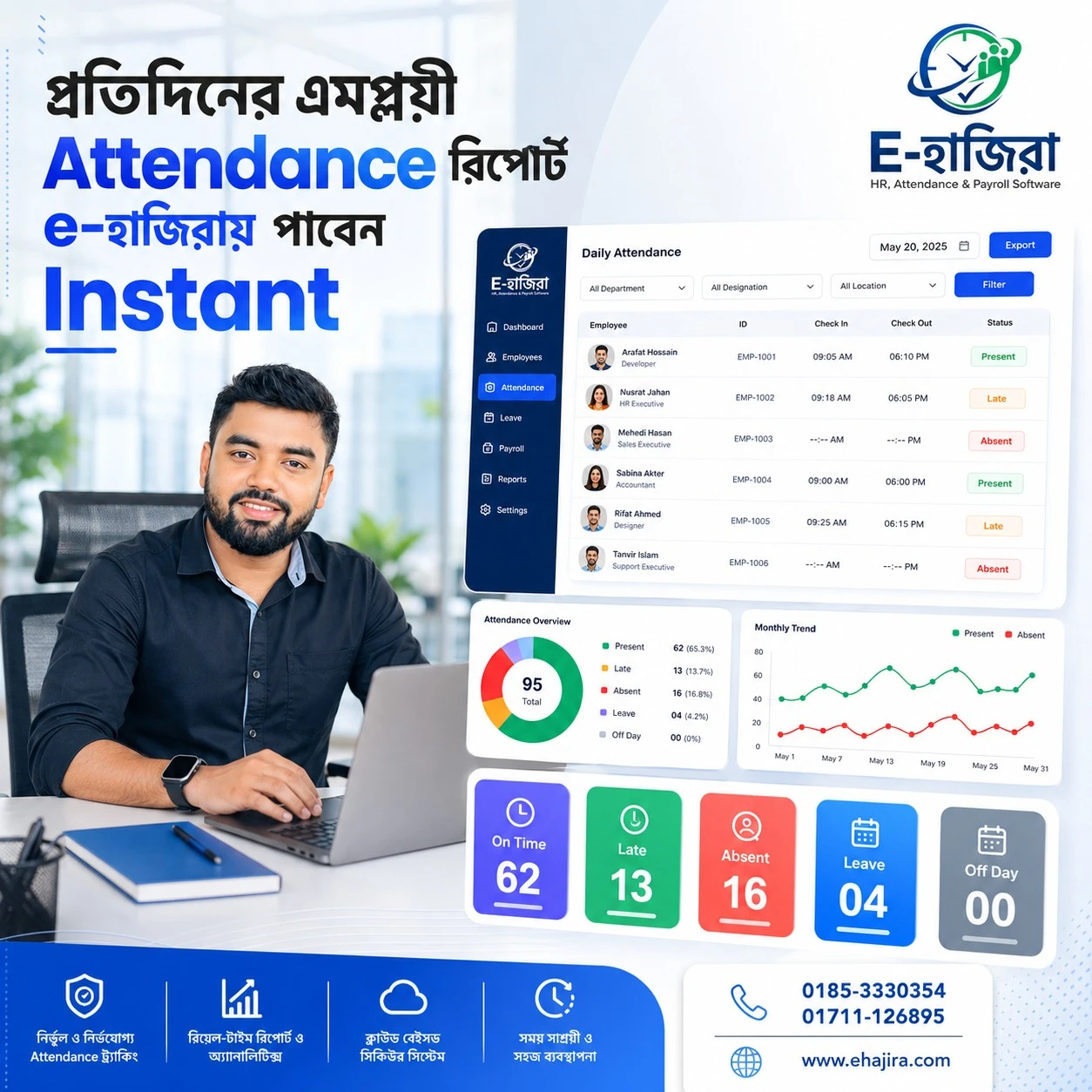
Published eHajira materials describe attendance, employee records, leave, shifts, payroll, reporting, and employee self-service. A Corporate Ultimate listing also advertises multi-branch or multi-company consolidation and API integration within that package.
These descriptions provide a starting point for evaluation. They do not establish that every capability is included in every subscription or configured identically for every customer.
Businesses should request a demonstration based on their own branch structure. The workflows below explain what to assess, including functions that may require configuration, integration, or a particular package. Written scope should distinguish confirmed capabilities from proposed customization.
Creating One Reliable Employee Record
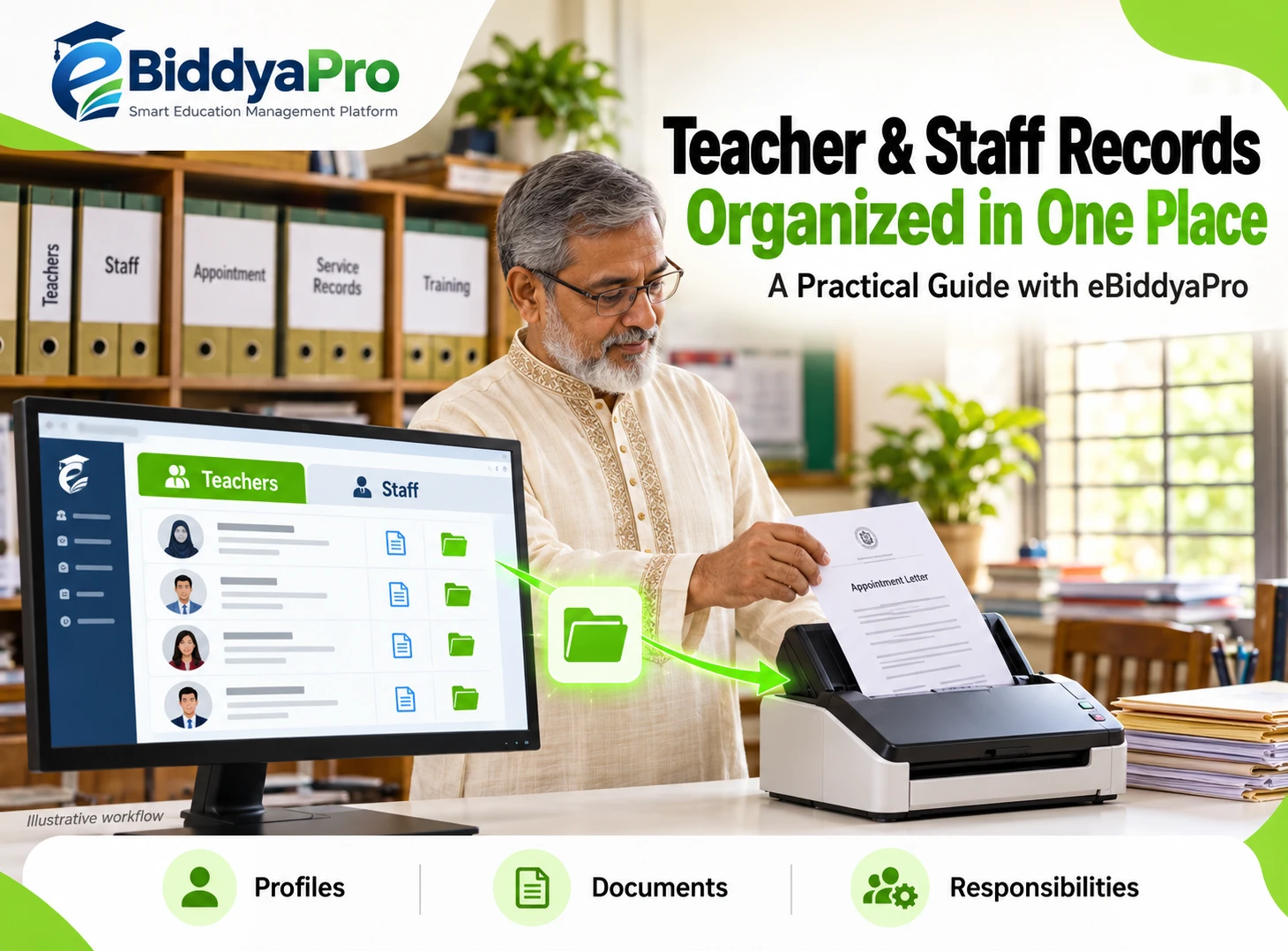
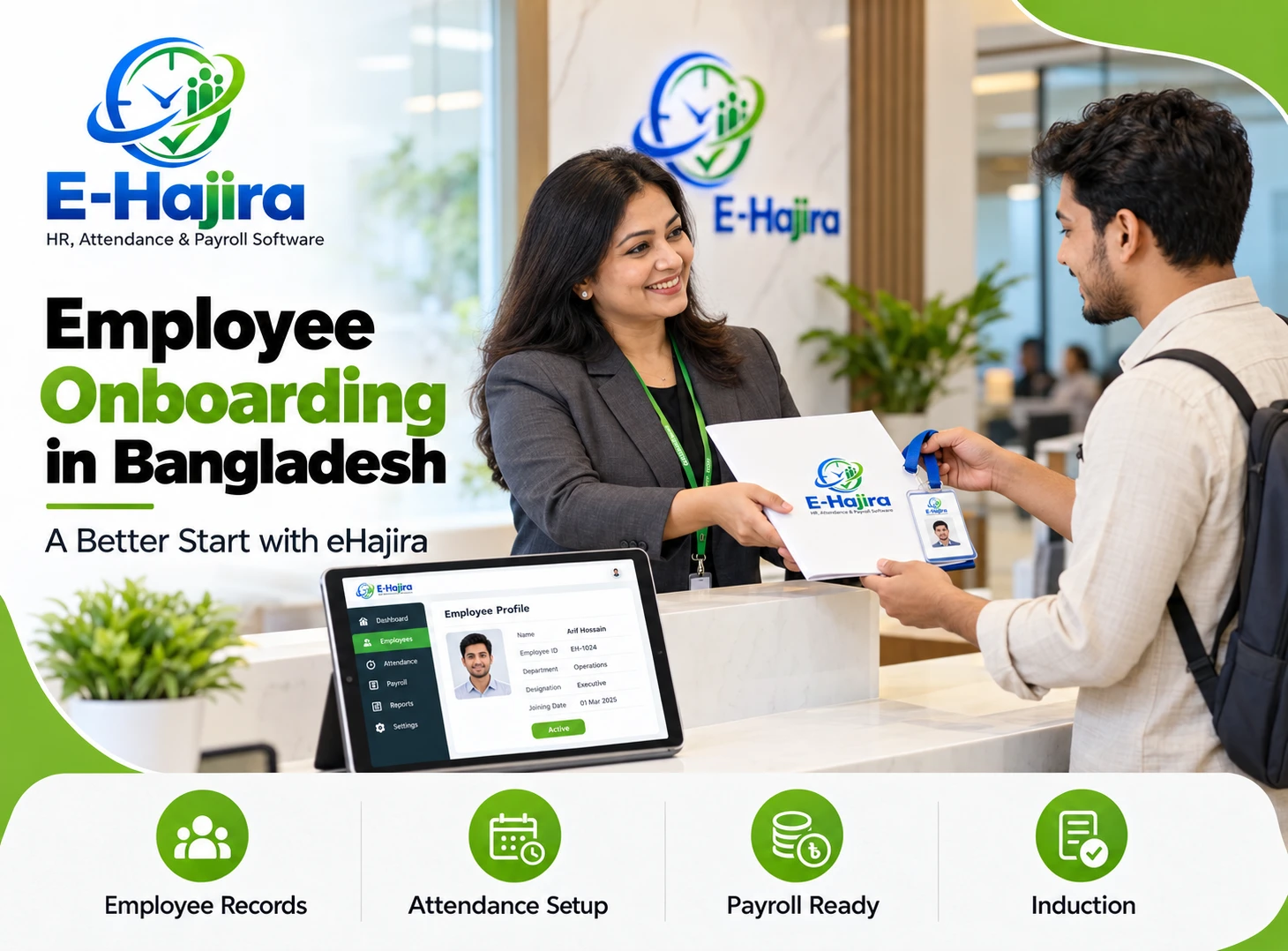
A centralized employee database should assign a stable identifier to each person. This identifier connects employment details with attendance, leave, and payroll, even when a person changes department or branch.
Essential records may include joining dates, designation, employment status, reporting manager, assigned location, and salary history. Access to sensitive fields should depend on the user’s responsibilities.
Data preparation deserves attention before migration. Duplicate profiles, inconsistent names, and outdated employee lists can produce incorrect headcounts or duplicate payroll entries. Cleaning records at the beginning is usually easier than correcting errors after several branches have started using the system.
Separating Branches, Departments, and Legal Entities
Branches, departments, and companies represent different organizational relationships. A branch identifies a location, while a department describes a function. Separate legal entities may have distinct payroll responsibilities and approval structures.
A system should represent these differences clearly. An employee can belong to the accounts department at a regional branch without being employed by a separate company.
Organizations evaluating multi-company functionality should test data separation and consolidated reporting independently. A management dashboard may combine information across entities, but payroll records and permissions must still follow the approved organizational structure.
Connecting Attendance Devices Across Locations
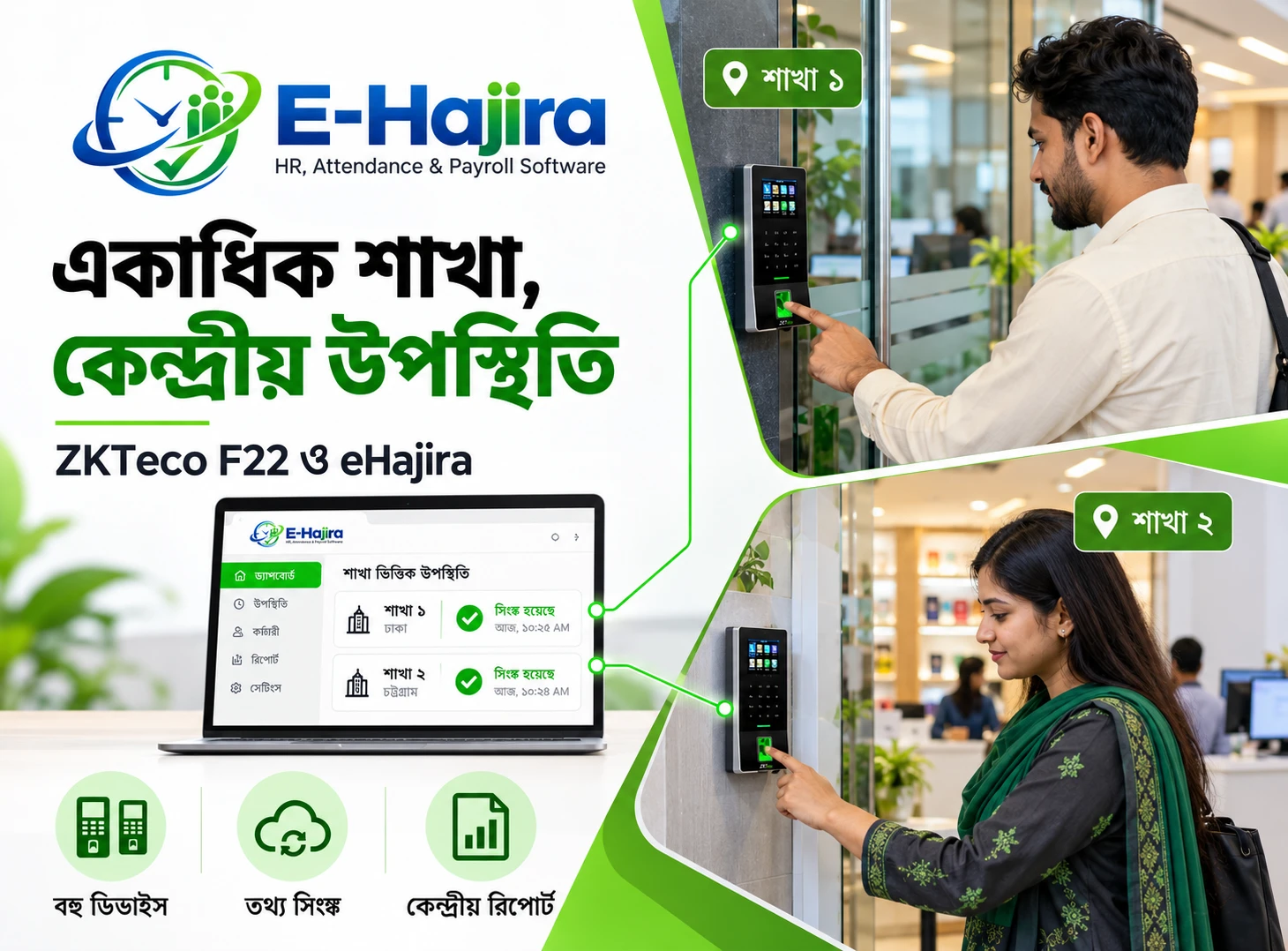
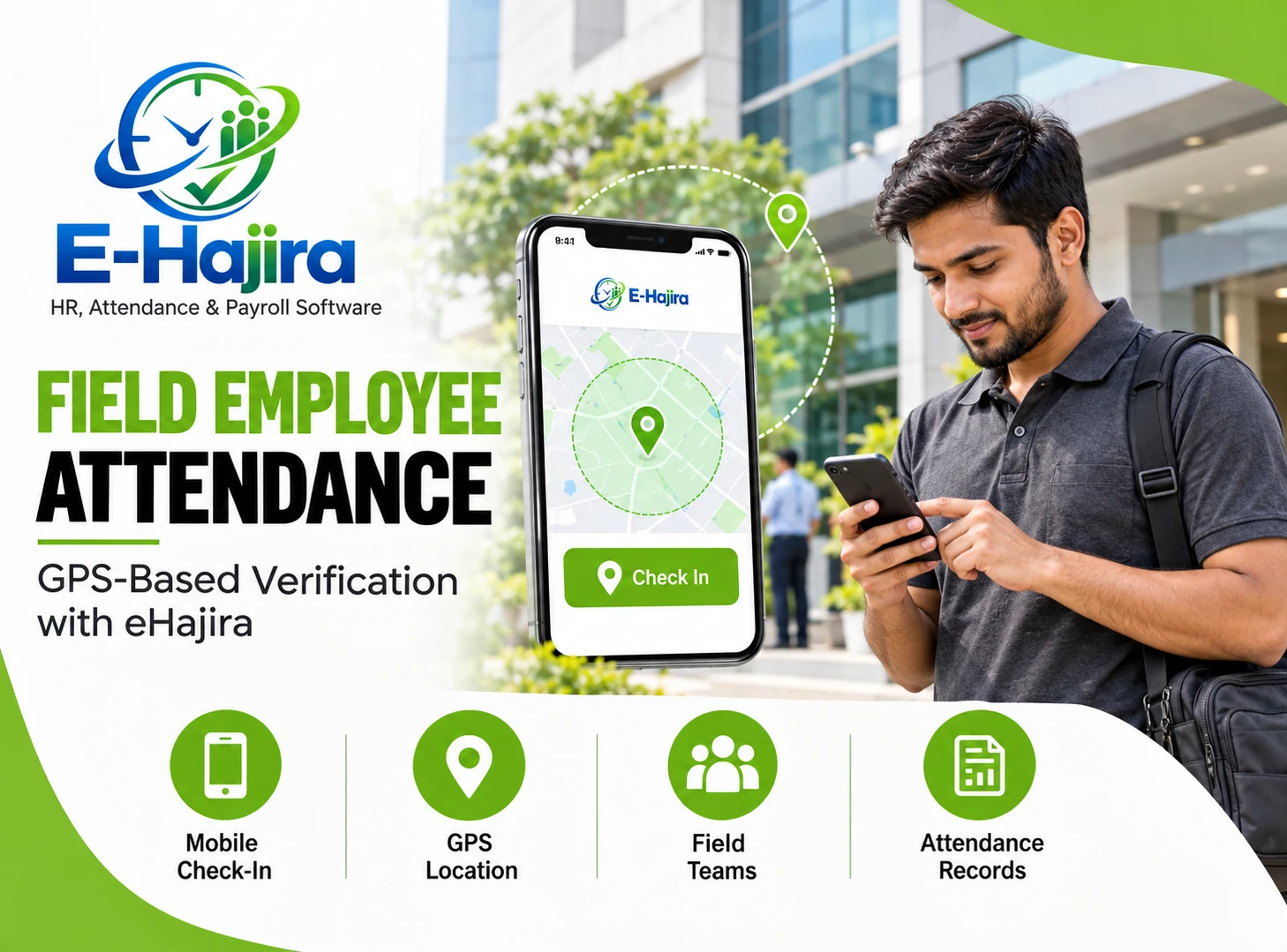
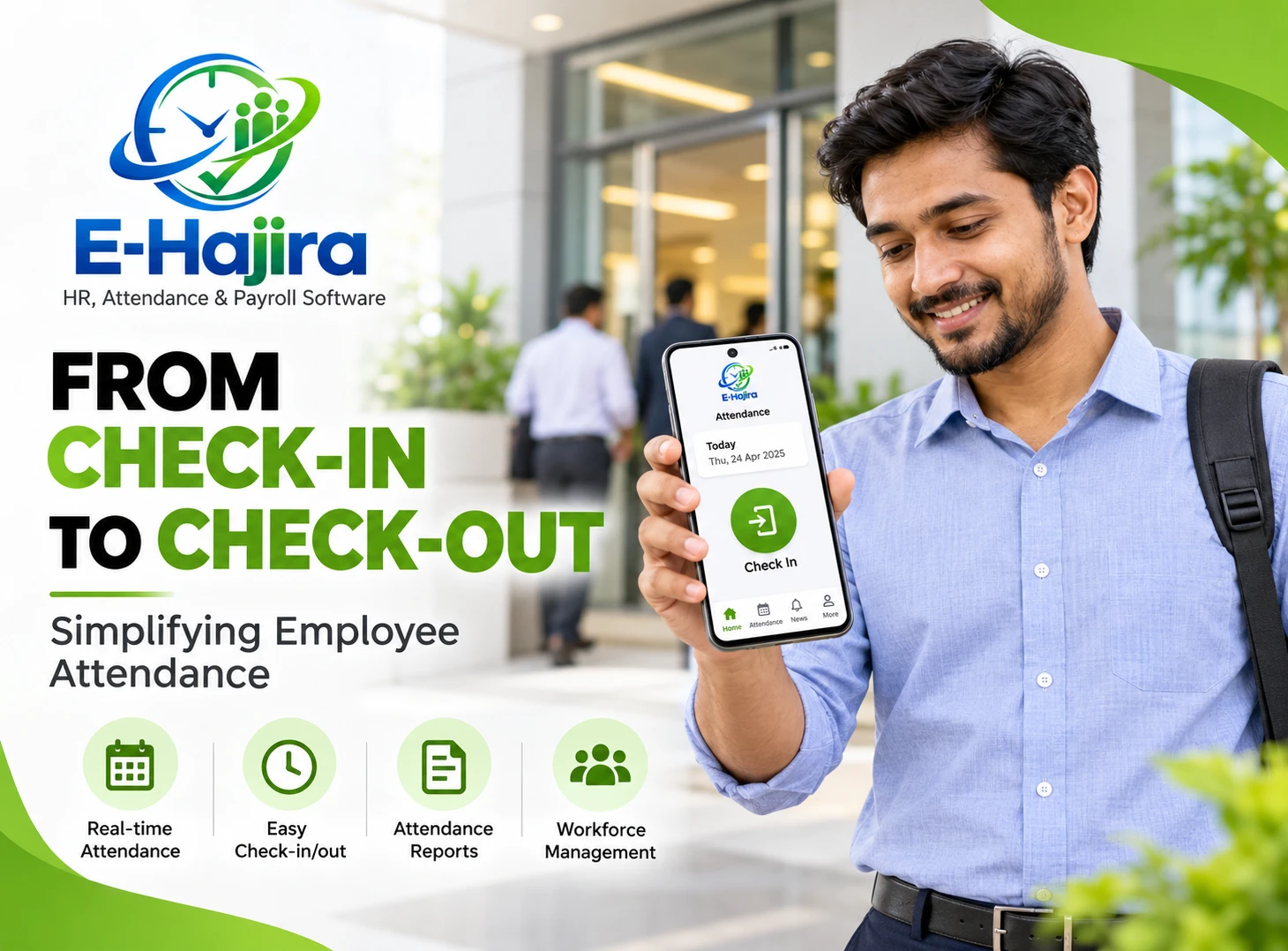
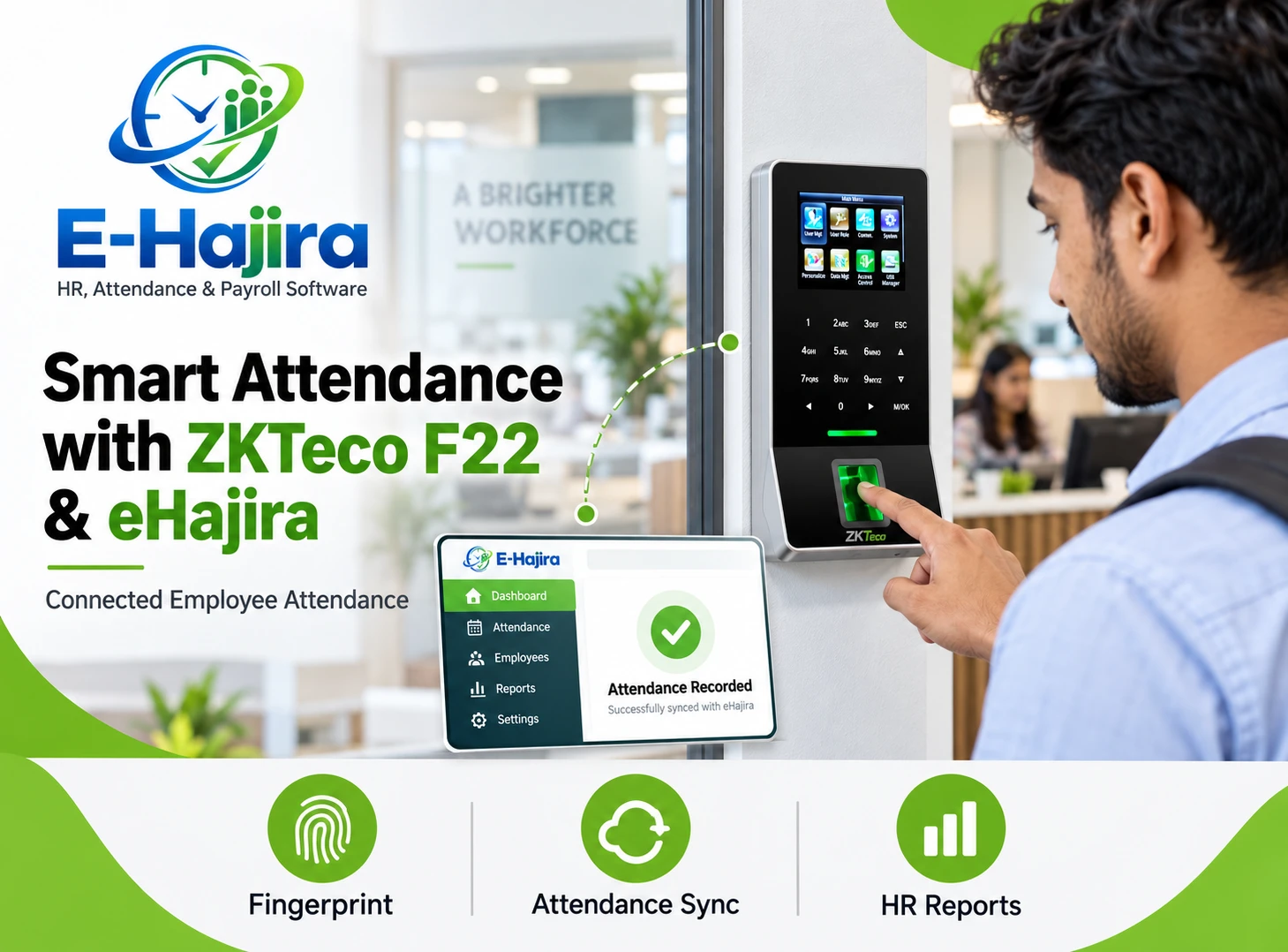
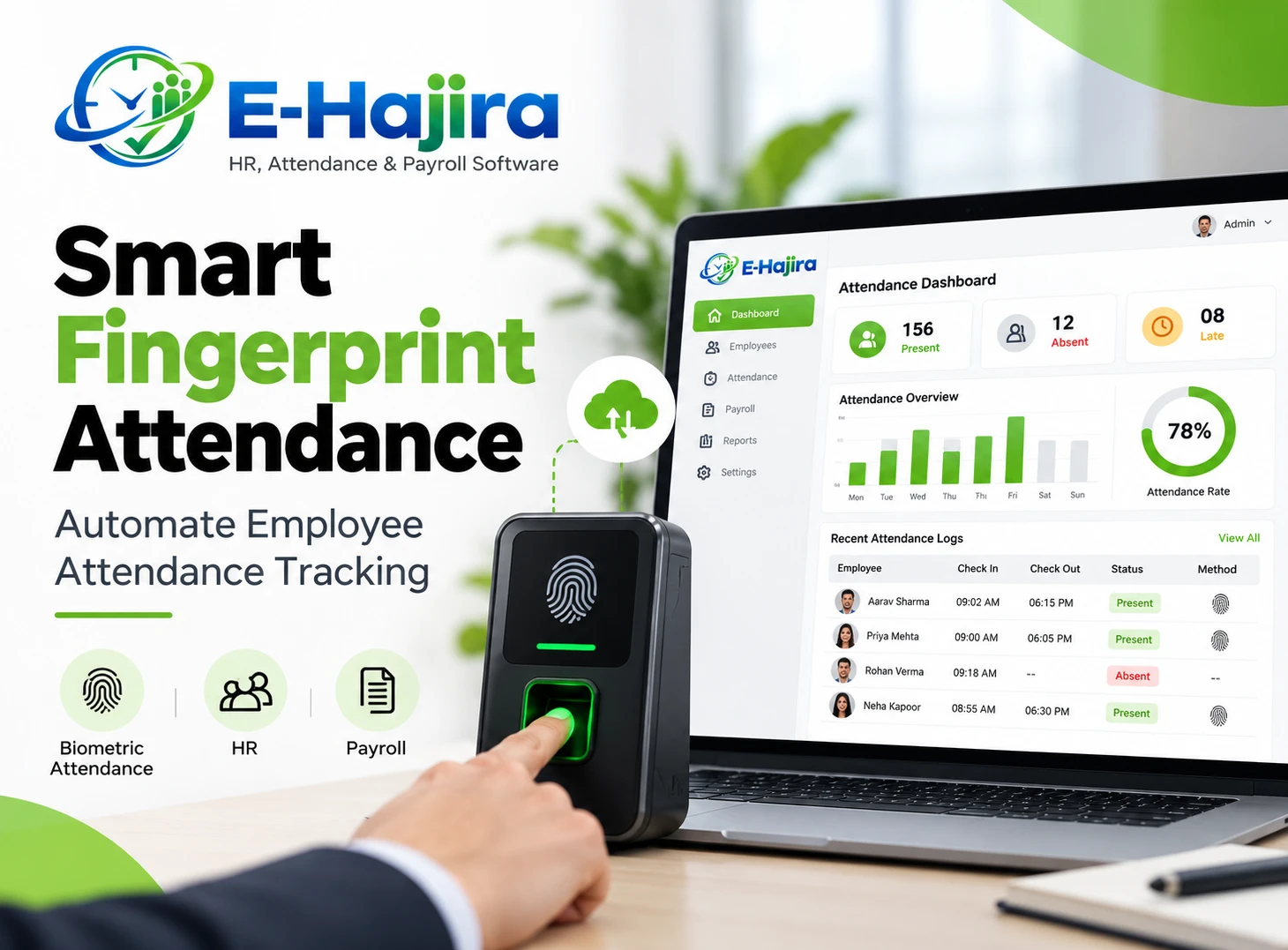
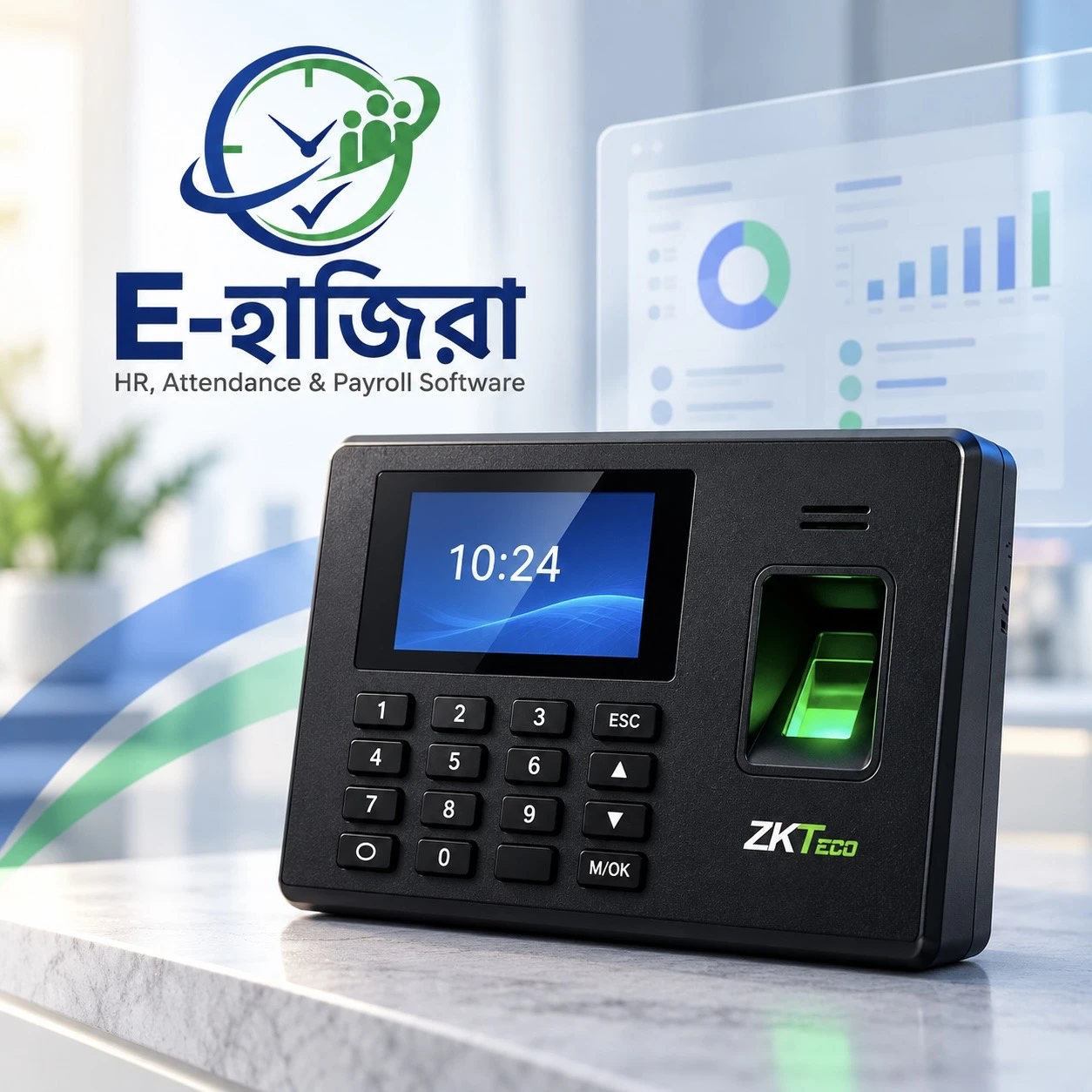
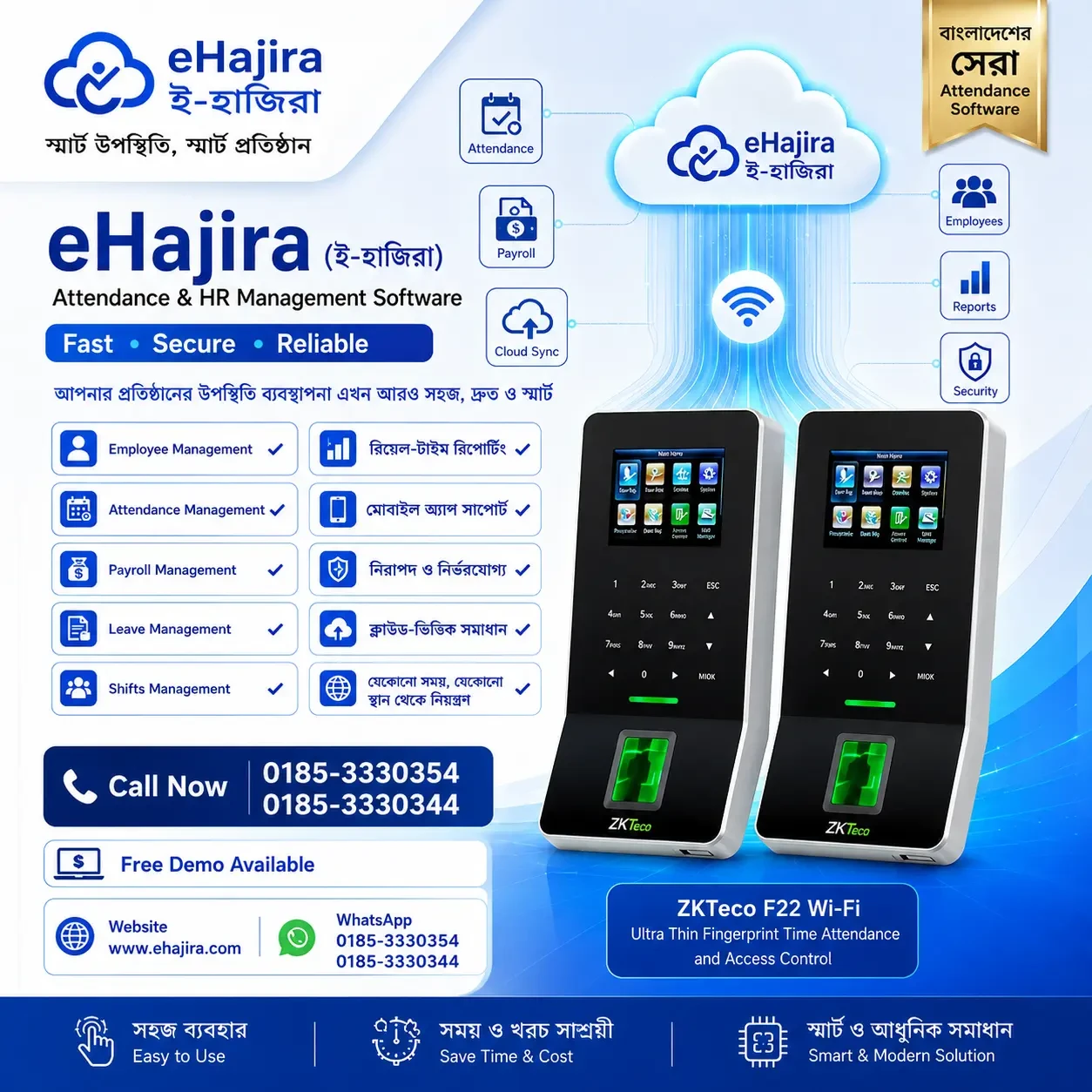
Attendance consolidation starts with reliable collection of employee events. eHajira’s published materials advertise compatibility with selected biometric and RFID devices, while a higher-tier listing also describes mobile GPS or geofenced check-in. Exact device models, communication methods, and package availability require confirmation.
A practical demonstration should use the organization’s existing hardware wherever possible. Device branding alone does not prove compatibility with every model or firmware version.
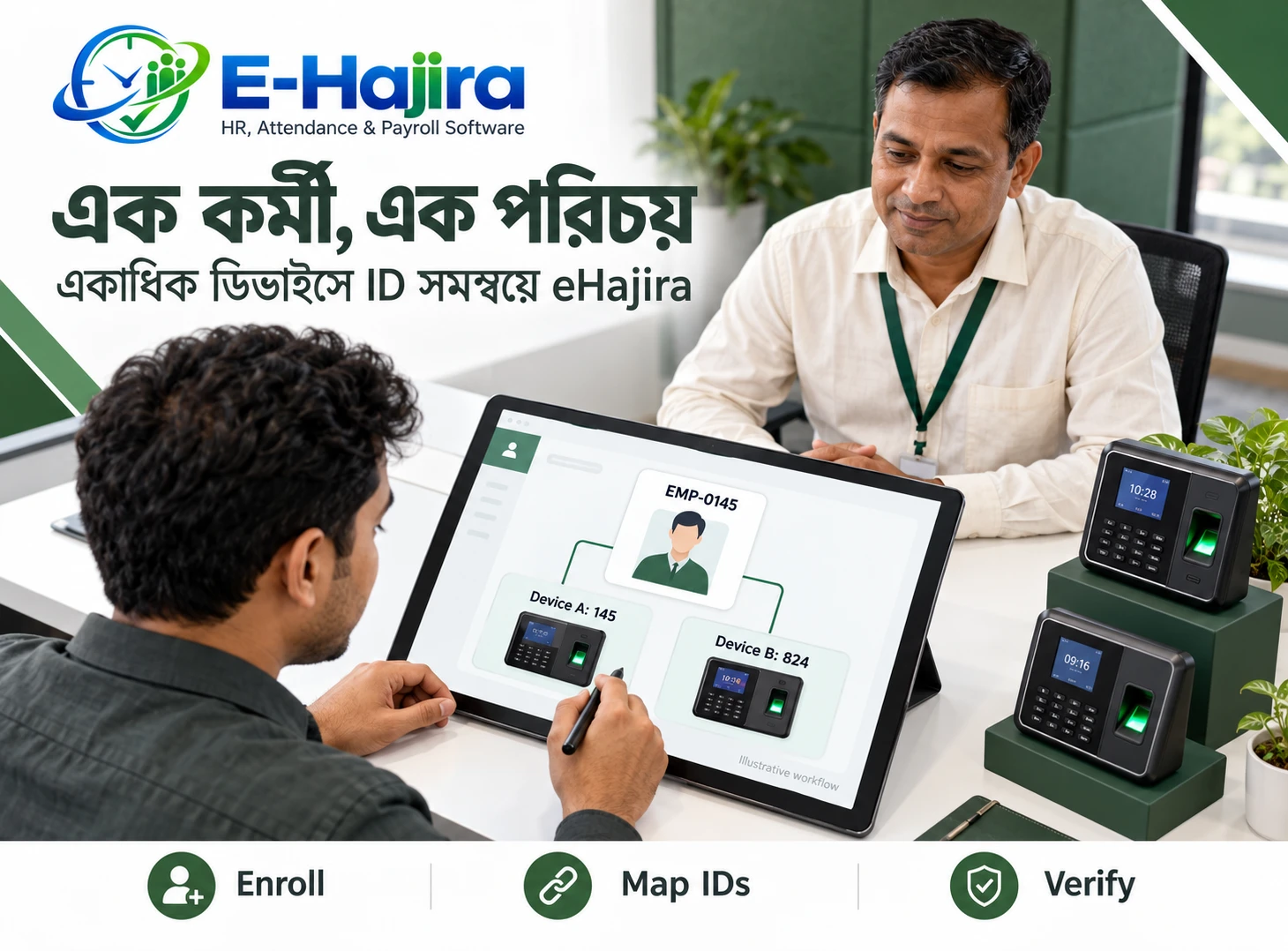
Businesses should also inspect synchronization delays, duplicate events, clock settings, and employee-ID mapping. A connected device is useful only when its records reach the correct employee profile accurately and consistently.
Turning Attendance Events into Approved Records
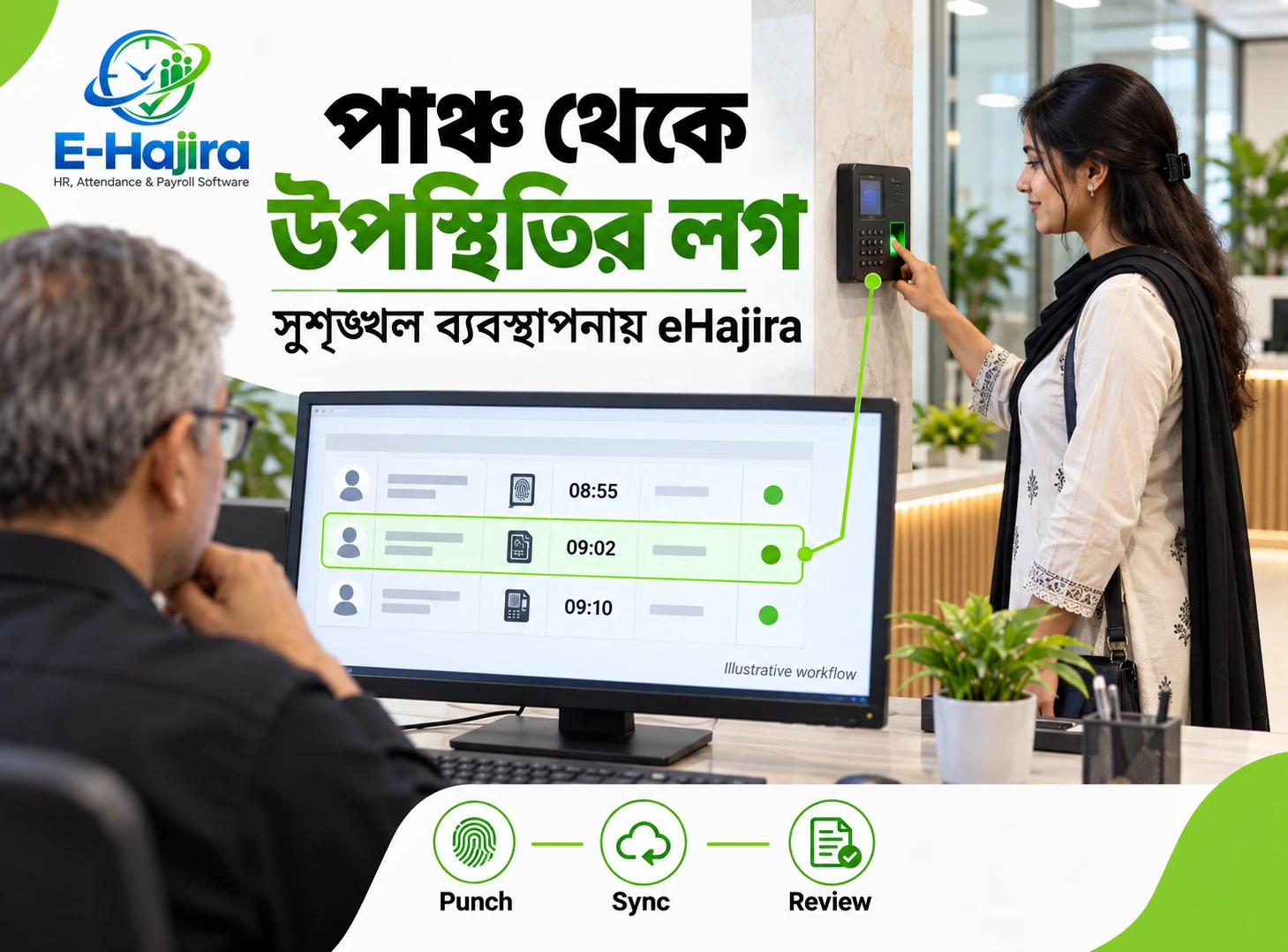
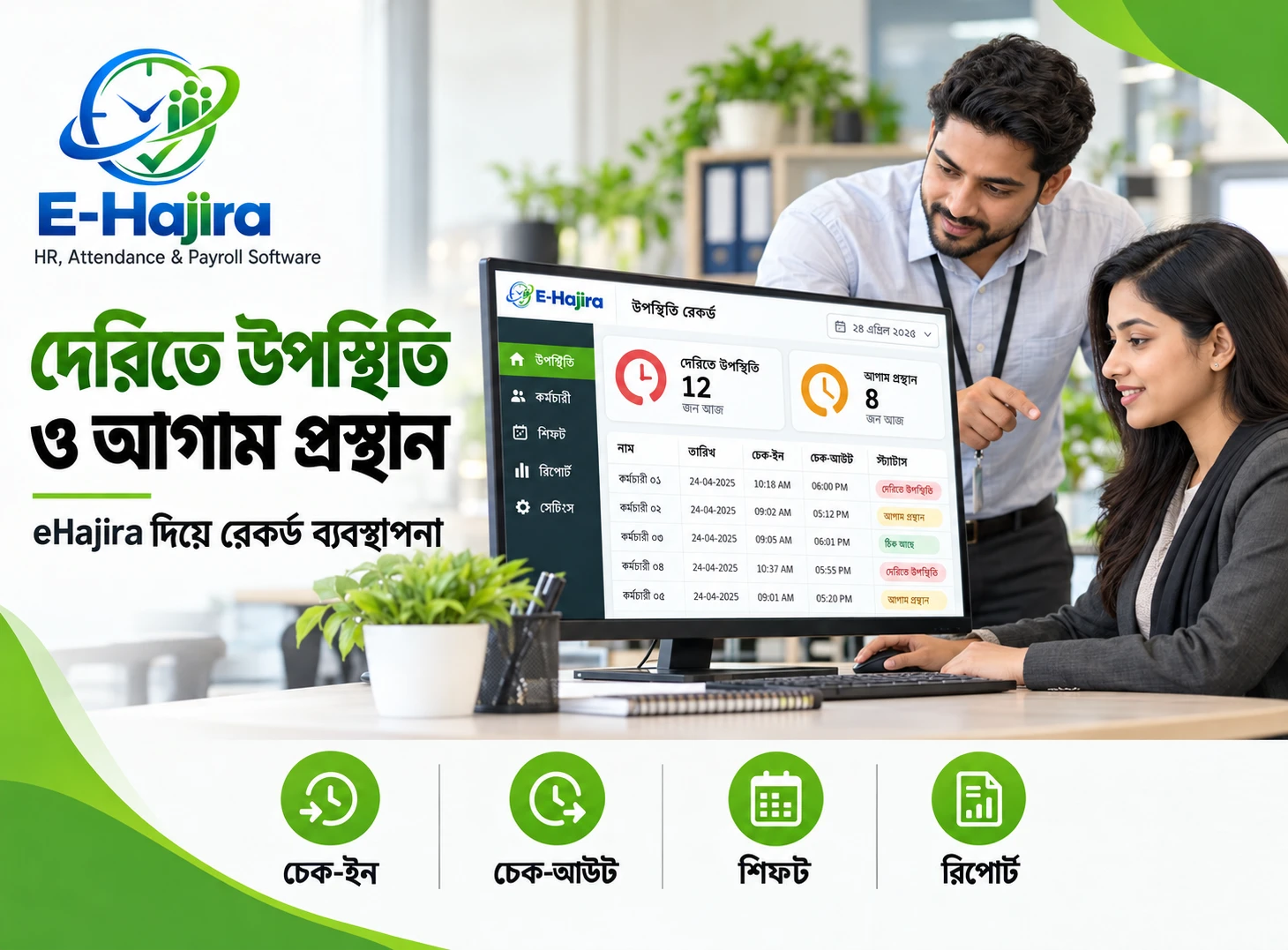
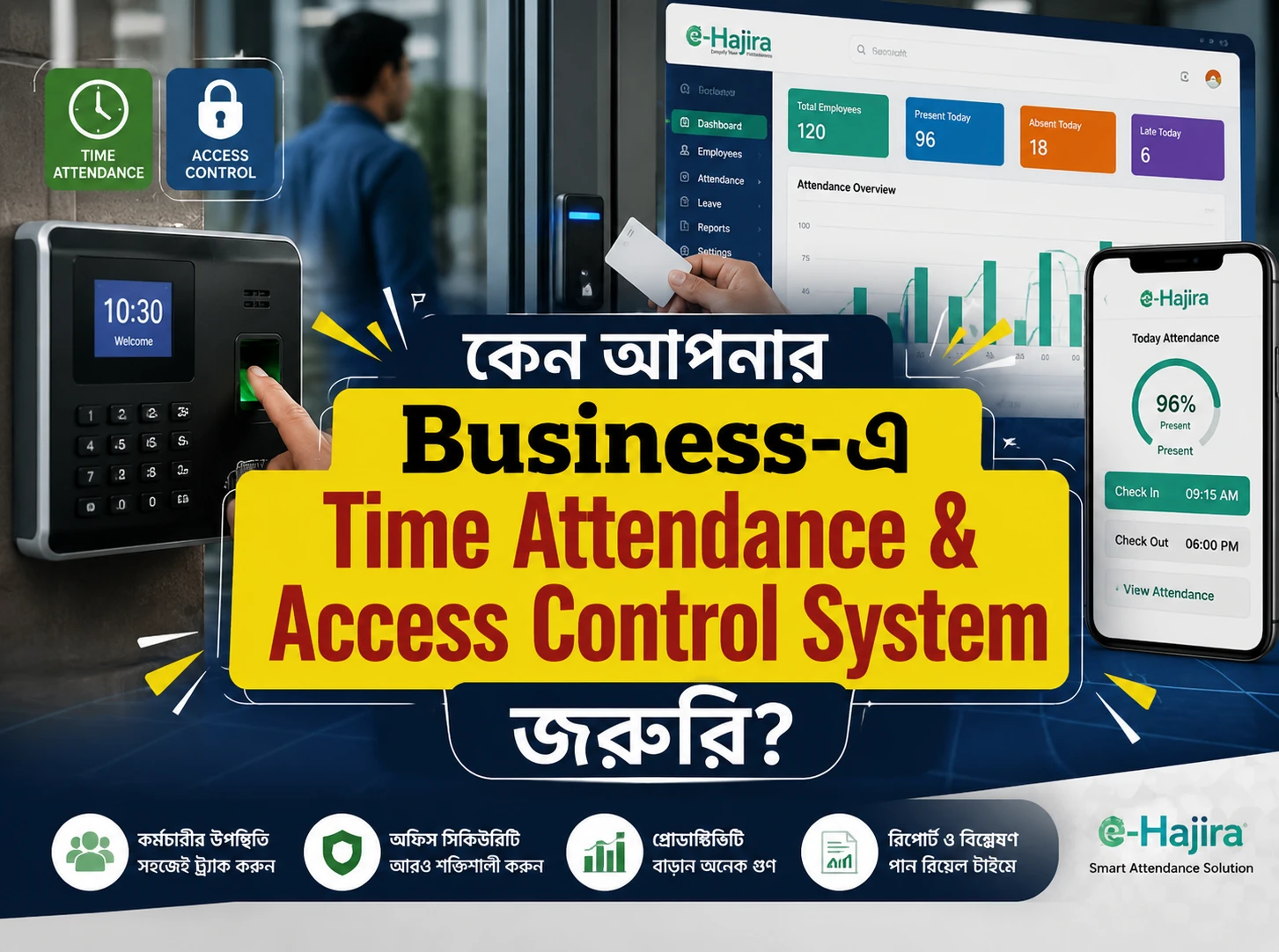
A fingerprint scan or card tap records an event. It does not automatically establish payable working time. Interpretation depends on the assigned shift, leave status, authorized exceptions, and approved attendance policy.
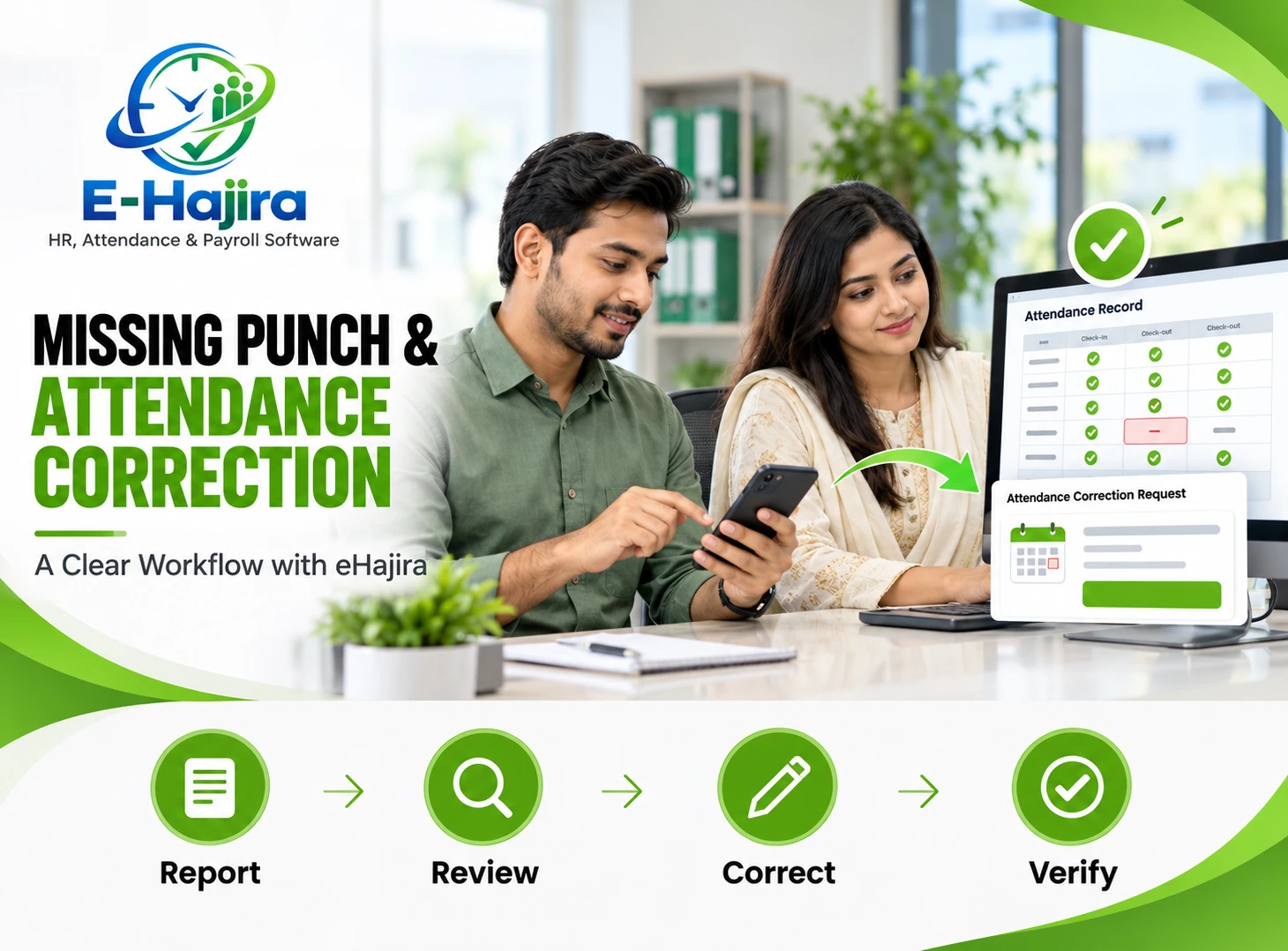
Missing punches should therefore enter a review process. An employee may have forgotten to check out, worked off-site, or encountered a device problem. Automatically treating every missing event as absence can create avoidable disputes.
Branch managers should review exceptions within defined deadlines. Original events should remain distinguishable from approved corrections, helping HR understand how the final attendance record was produced.
Managing Different Shifts and Overnight Work
Multi-branch organizations may operate office hours, rotating shifts, or continuous services. Each arrangement needs a clear schedule and effective dates.
Overnight work requires particular care. A shift beginning on one calendar day and ending the next should not be split incorrectly into absence and overtime. Break treatment, early arrival, and late departure also need agreed rules.
During evaluation, businesses should test representative cases rather than only standard office attendance. Shift changes midway through a month and temporary assignments can reveal whether the system handles real operational complexity.
Coordinating Leave and Approval Responsibilities
Centralized leave management helps connect applications, approvals, balances, and attendance. Employees should be able to understand their request status, while managers need sufficient information to consider staffing needs.
Approval authority should reflect the organization’s structure. A branch supervisor might review availability, with HR handling exceptions or requests outside normal policy.
The system should preserve the sequence of decisions and apply approved changes consistently. Cancelled leave, revised dates, and requests spanning payroll periods require careful handling. Once payroll has closed, retrospective changes should follow a controlled adjustment process.
Linking Attendance with Payroll
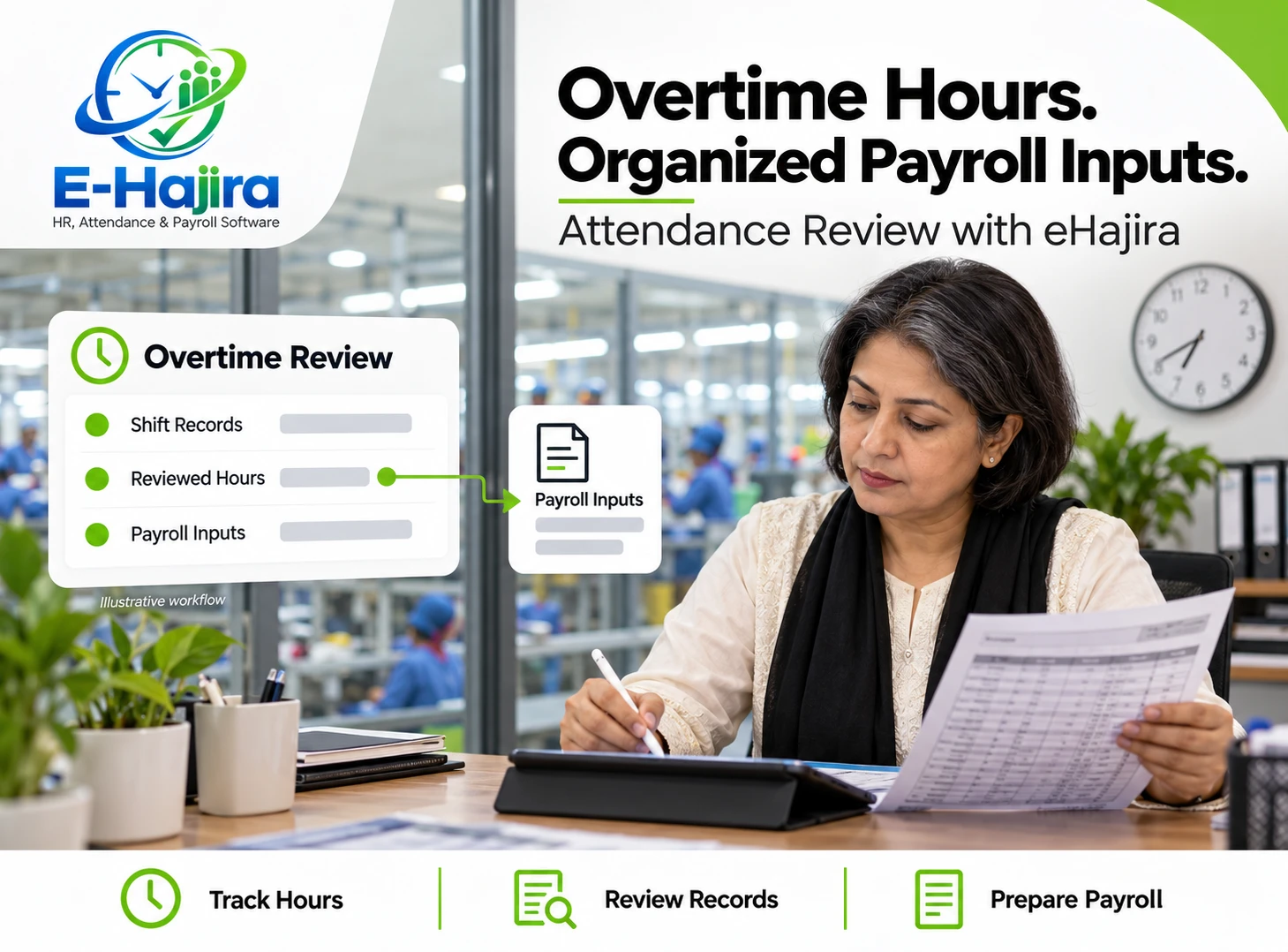
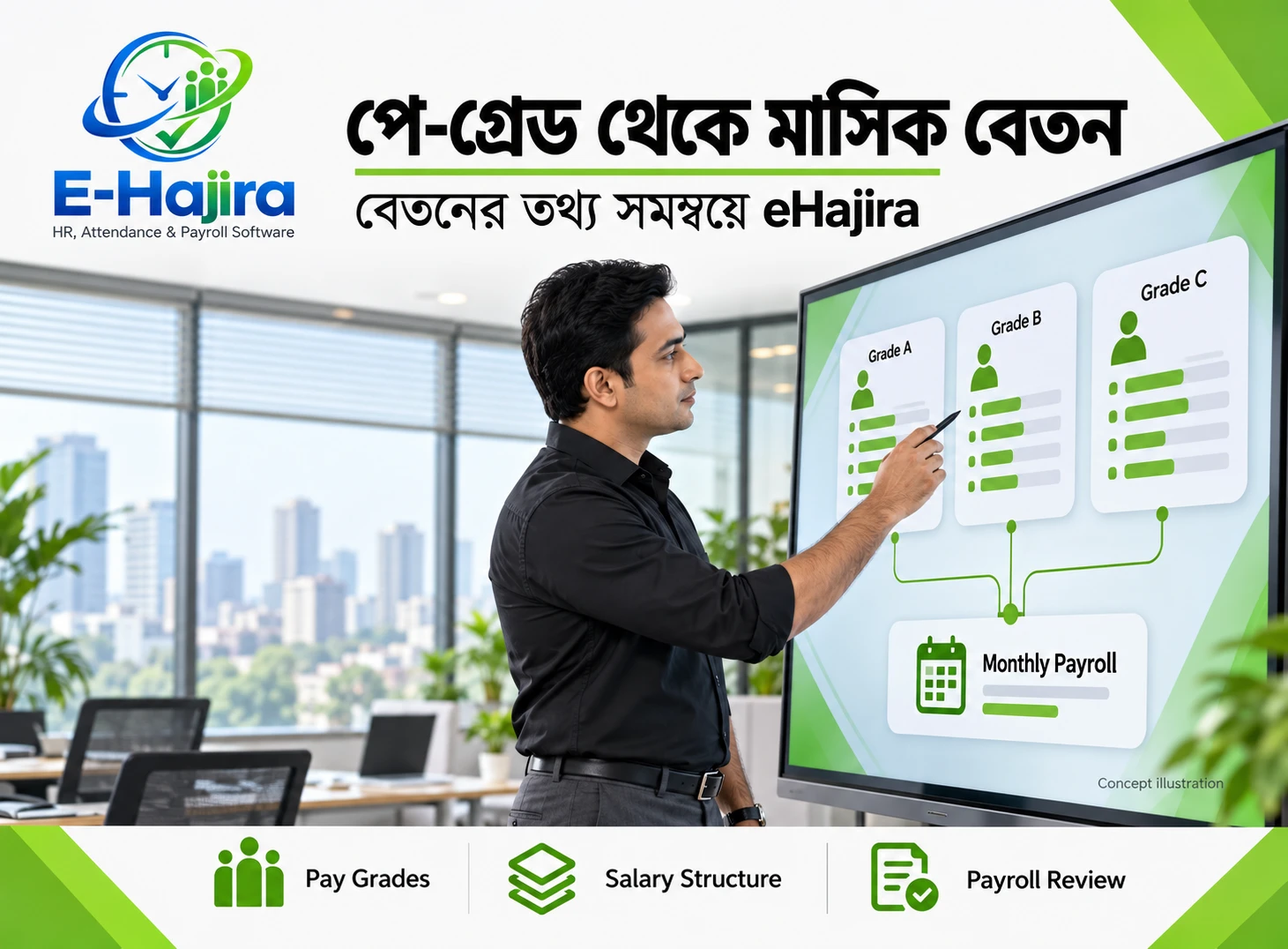
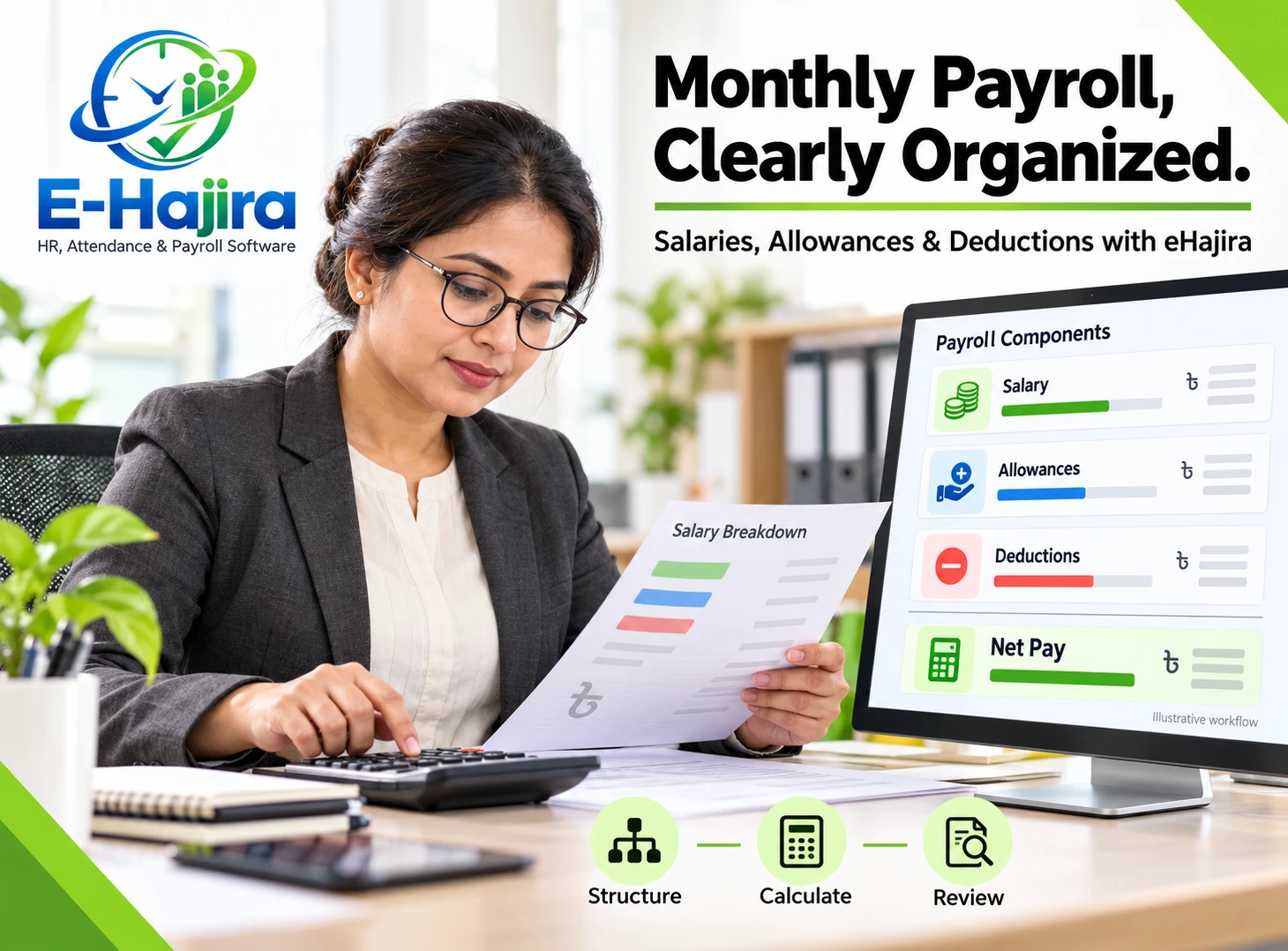
Payroll brings together approved employment information and pay-period transactions. Relevant inputs may include salary components, approved overtime, allowances, leave treatment, deductions, advances, and adjustments.
Attendance information should reach payroll only after the required review. A technically correct formula can still produce an incorrect salary if the underlying shift or leave record is wrong.
A dependable workflow separates preparation, review, approval, and release. HR validates workforce information, payroll staff examine calculations, and authorized approvers confirm the final output. Software supports this process, but it does not replace responsibility for the decisions behind it.
Keeping Bangladesh Rules and Policies Current
Payroll settings should reflect the requirements applicable to the employer, worker category, and sector. The official Laws of Bangladesh website publishes the Bangladesh Labour Amendment Act, 2026, demonstrating why organizations should not rely indefinitely on older payroll templates.
This guide does not prescribe a universal overtime formula, leave entitlement, or deduction rule. Such settings require review against current requirements and the organization’s circumstances.
Businesses should ask who maintains regulatory updates and how changes are tested. Historical payroll should retain its original calculation basis, while new rules should have explicit effective dates and approval records.
Managing Transfers and Employee Movement
An employee moving between branches should normally retain the same organizational identity. Creating a new profile for each transfer can fragment service history and duplicate records.
Transfers should record an effective date and update the relevant manager, shift, and location assignments. Payroll reporting may also need to allocate costs between branches according to the organization’s approved method.
Temporary visits require a different treatment from permanent transfers. Businesses should test whether employees can record attendance at another authorized location without inadvertently changing their home branch or generating duplicate daily records.
Providing Employee Self-Service
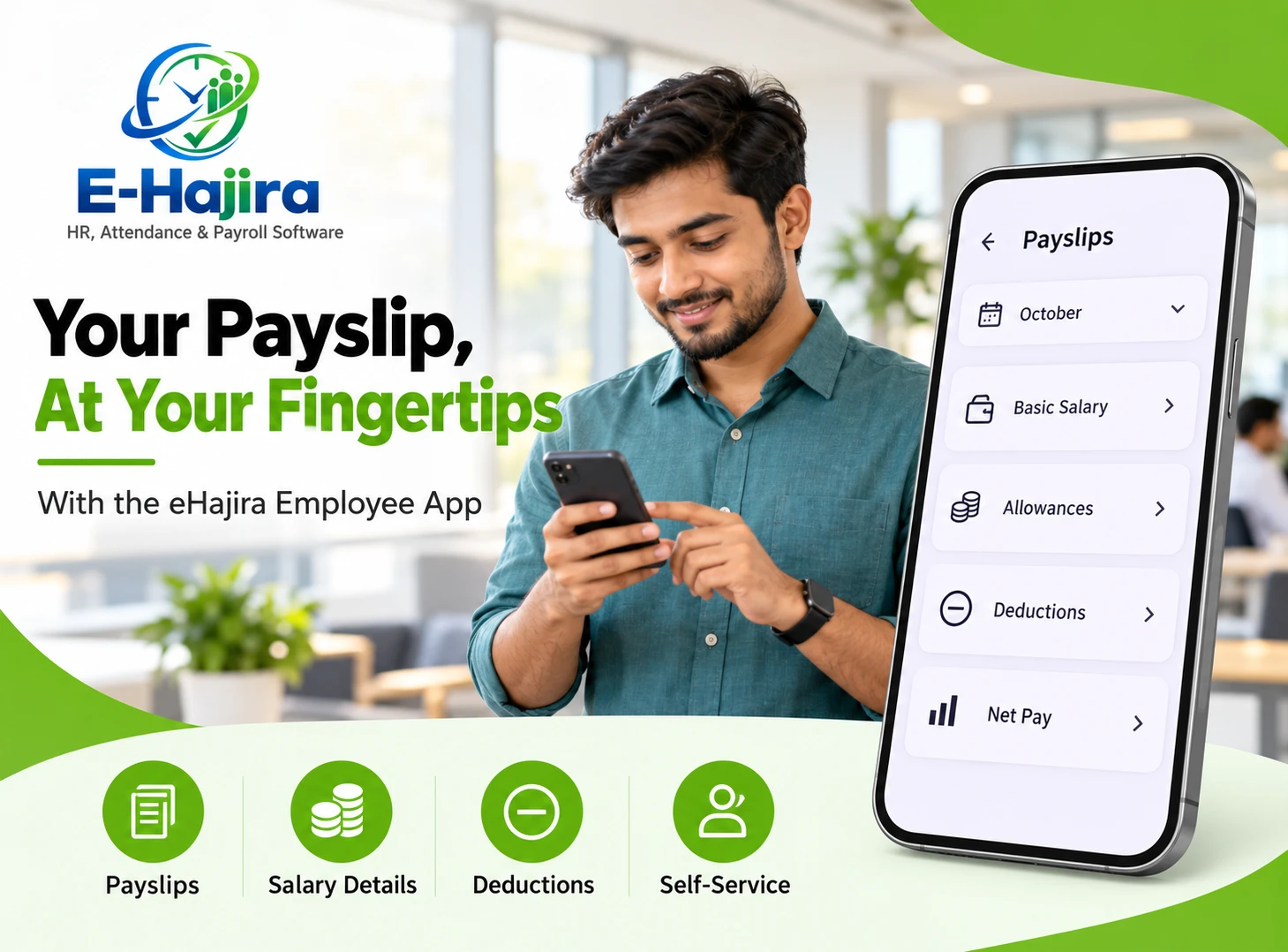
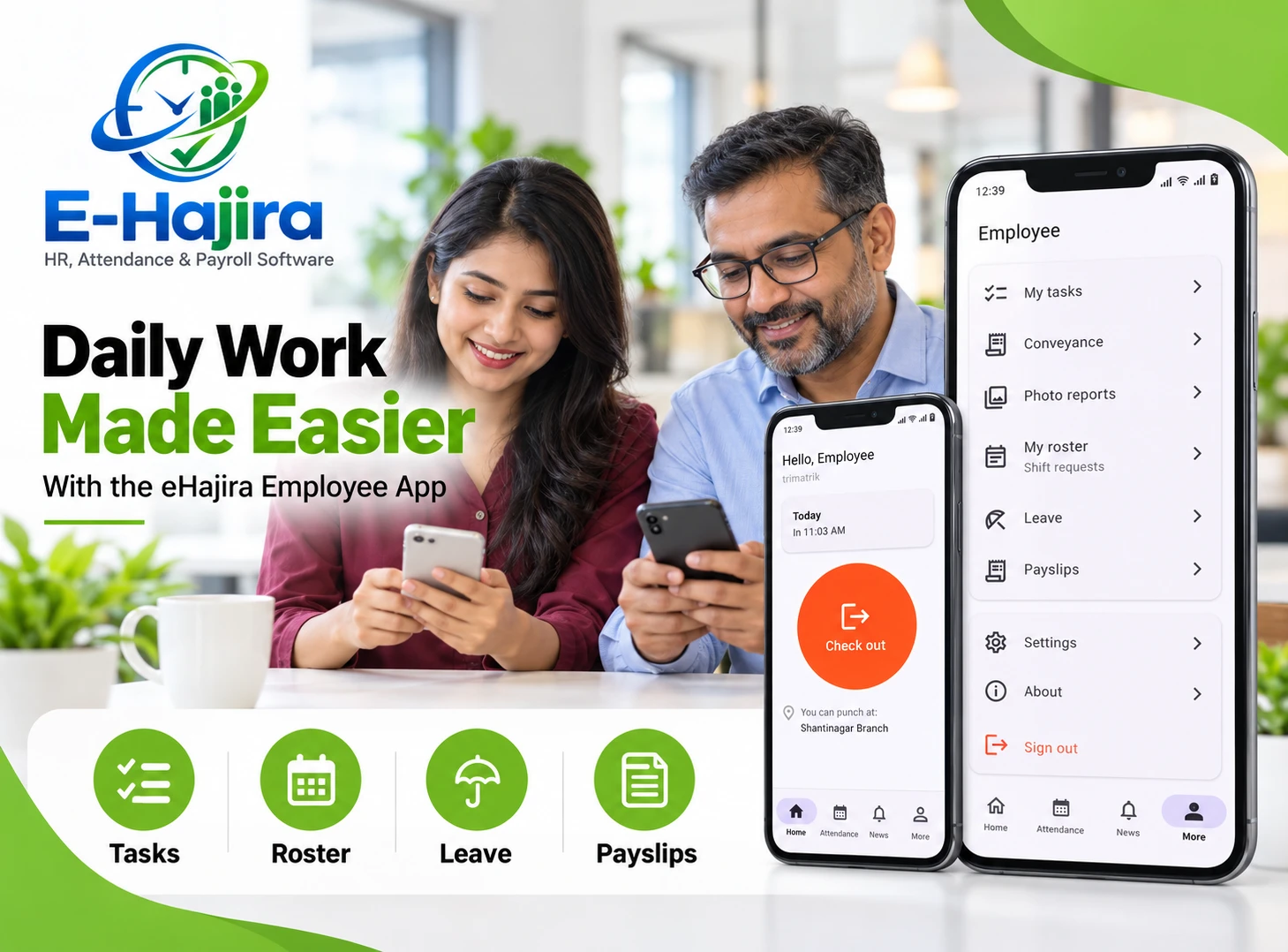
Employee self-service can reduce routine administrative requests by making selected records available directly to staff. eHajira’s published package information describes access to attendance, leave applications, and payslips through an employee portal. Availability should be confirmed for the proposed subscription.
The experience should be tested on the devices employees actually use. A portal that works on a desktop may still be difficult to navigate on a smaller screen.
Self-service also needs clear boundaries. Viewing a salary record, requesting a correction, and changing payroll information are different permissions and should not be treated interchangeably.
Producing Meaningful Branch Reports
Centralized reporting can help managers compare headcount, attendance exceptions, approved overtime, and payroll totals across locations. However, comparisons require consistent definitions.
A branch with more overtime may have greater demand, fewer staff, or a different operating schedule. A high exception count may reflect device problems rather than employee behavior.
Reports should support investigation rather than automatic conclusions. Managers need access to appropriate detail, including the reporting period and approval status. Consolidated totals become more useful when users can trace them back to the records and decisions that produced them.
Protecting Payroll and Personal Information
HR systems contain information that should not be visible to every user. Branch managers may need attendance access without permission to inspect salaries across the organization.
Businesses should evaluate individual accounts, role-based permissions, administrative activity logs, secure connections, and account removal procedures. Privileged access deserves additional protection because it can affect many employees simultaneously.
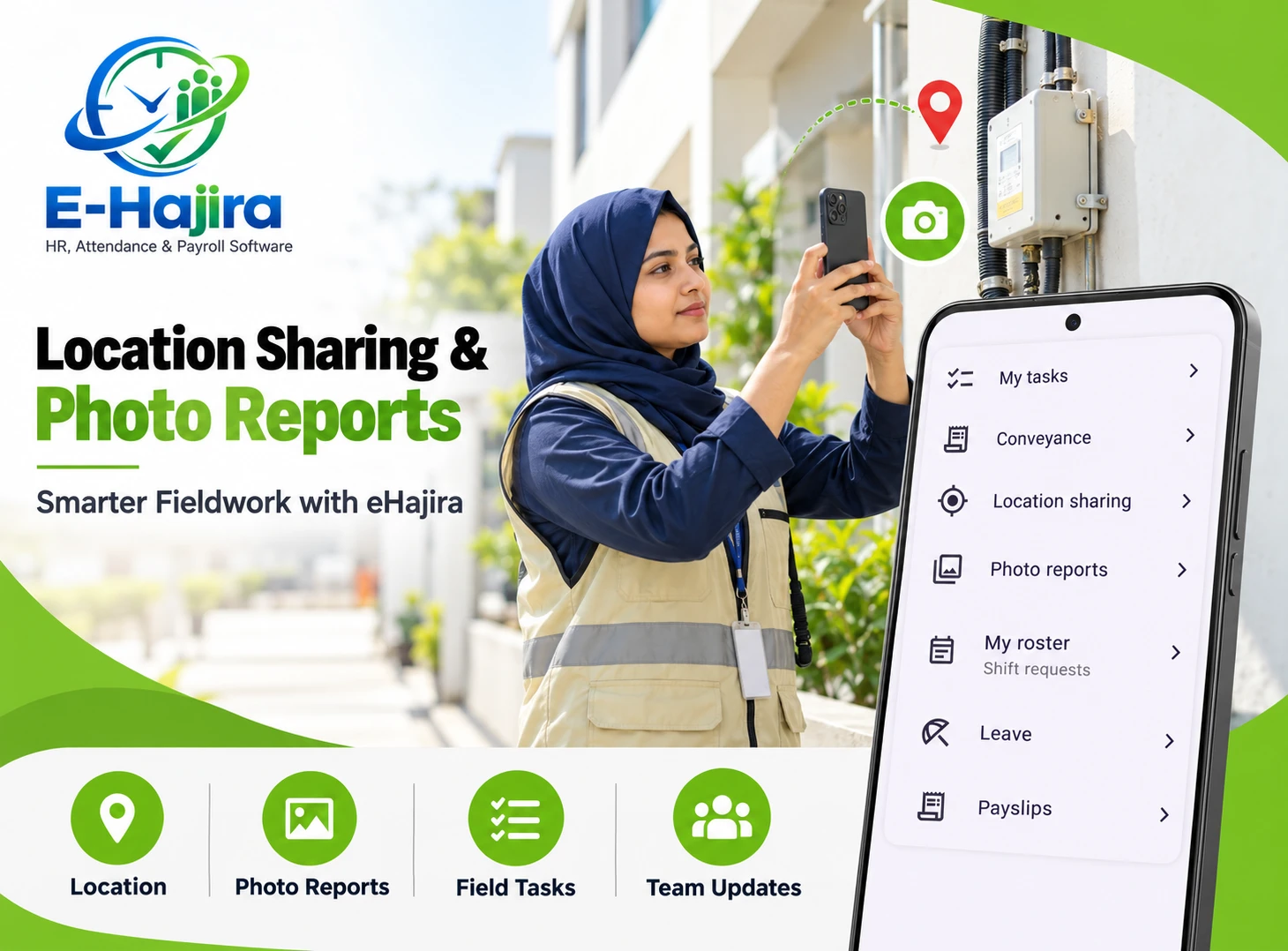
Biometric and location functions require clarity about what information is collected and retained. Organizations should confirm whether biometric templates remain on devices or are transferred, and distinguish event-based location capture from continuous tracking. Only the information needed for the agreed workflow should be collected.
Planning for Connectivity and Recovery
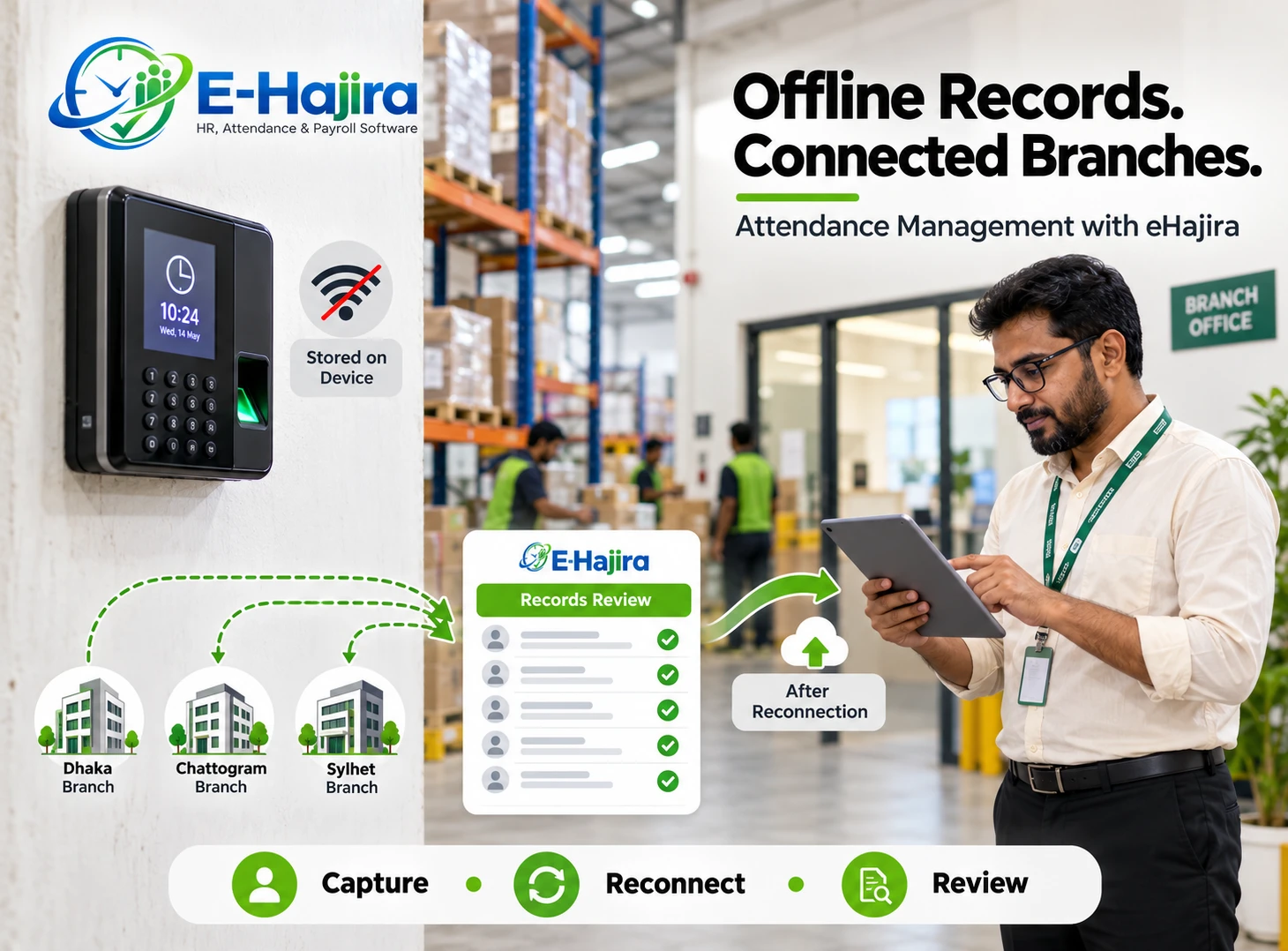
A cloud platform depends on reliable communication, but branch connections can fail. Businesses should understand which activities continue during interruptions and how delayed information is reconciled.
Some attendance devices can retain events locally, but this must be verified for the actual hardware and configuration. Local event storage does not mean the complete HR application works offline.
Recovery procedures matter as much as backups. Organizations should ask how restoration is tested, how quickly service can resume, and how much recent work could be lost. Payroll deadlines should be considered when defining support and recovery arrangements.
Understanding Costs and Implementation Scope
The total cost of multi-branch HR software may include subscriptions, setup, devices, integration, migration, training, messaging, and ongoing support. Published eHajira packages differ in employee capacity and capabilities, so a quotation should match the intended deployment.
Businesses should confirm whether charges depend on active employees, branches, entities, or selected modules. They should also clarify customization fees and the treatment of future policy changes.
A useful proposal describes deliverables and responsibilities. It should identify who prepares data, configures rules, validates payroll, trains users, and supports the first operational cycle.
Introducing eHajira Through a Controlled Pilot
A pilot should include representative conditions, such as a standard office branch and a location with rotating shifts. Limiting the initial rollout makes discrepancies easier to investigate.
The organization should test attendance collection, corrections, leave, transfers, and a complete payroll cycle. Comparing the output with independently checked calculations helps distinguish configuration issues from data problems.
Expansion should follow agreed acceptance criteria. Useful measures include unresolved attendance exceptions, payroll differences, processing time, and user readiness. This approach gives eHajira implementation a practical foundation before additional branches depend on the system.
Frequently Asked Questions
1. What is centralized multi-branch HR management?
It is a shared approach to managing workforce information across several locations. Employee records, attendance, leave, and payroll inputs are connected through common processes and permissions. Local managers retain relevant responsibilities while head office gains a consolidated organizational view.
2. Is eHajira suitable for organizations in Bangladesh?
Its published offerings target Bangladesh workforce administration and include attendance, HR, and payroll functions. Suitability depends on the organization’s structure, policies, devices, and package selection. A demonstration using representative employee cases provides stronger evidence than a general feature overview.
3. Can all branches use one employee database?
That should be a core requirement of a centralized deployment. Each employee needs a stable identifier, with branch assignments recorded separately. Businesses should verify how the proposed setup prevents duplicate profiles and preserves information when employees transfer between locations.
4. Can branch managers see only their own employees?
This depends on the available permission controls and configuration. Organizations should test branch-level access directly, including reports, searches, exports, and payroll screens. A restricted dashboard alone is insufficient if other functions expose records outside the manager’s responsibility.
5. Does eHajira support multiple companies?
A published Corporate Ultimate offering advertises multi-company consolidation. Businesses should confirm the applicable package and demonstrate separation of employee records, approvals, and payroll. Consolidated reporting should not blur the distinction between companies with separate administrative responsibilities.
6. Will existing attendance devices work with the software?
Compatibility depends on the model, firmware, communication method, and deployment. Businesses should provide exact device details and request a live integration test. They should also confirm employee-ID mapping and whether delayed events synchronize accurately after a connection interruption.
7. Is attendance synchronization always immediate?
Synchronization speed depends on device communication, network availability, and system configuration. “Real-time” should be tested under normal branch conditions. Administrators should also understand how delayed events are identified and whether reports clearly show incomplete or outdated attendance information.
8. Can employees check in through mobile phones?
Mobile attendance is advertised in selected eHajira materials, but availability and controls require confirmation. Businesses should test location permissions, geofence behavior, failed submissions, and user authentication. Mobile check-in should follow a clearly communicated policy appropriate to the employee’s work.
9. How should missing attendance punches be handled?
Missing punches should trigger review rather than an automatic assumption about absence. Employees or supervisors can provide explanations through the approved process. The final correction should identify the approver and remain distinguishable from the original device-generated attendance event.
10. Can the system manage overnight shifts?
This capability should be tested with the organization’s actual shift boundaries. A correct setup must associate entry and exit events across midnight appropriately. Businesses should also examine breaks, extended shifts, early arrivals, and changes to rosters during a payroll period.
11. Can different branches have different schedules?
A multi-branch setup should accommodate approved operational differences where supported. Organizations should test branch holidays, shift patterns, and temporary schedules. Centralization should provide consistent oversight without forcing every location into an unsuitable single attendance arrangement.
12. Does payroll automation eliminate calculation errors?
No. Automation applies configured rules to available information. Incorrect salary settings, missing approvals, or attendance errors can still affect results. Independent testing, exception review, and final approval remain necessary before payroll is released or payment instructions are prepared.
13. Are overtime calculations automatically legally compliant?
Compliance cannot be assumed from a product label. The applicable rules and their implementation must be reviewed for the employer’s circumstances. Businesses should confirm the calculation basis, effective dates, approval requirements, and how relevant regulatory changes are maintained.
14. Can employees access payslips and leave balances?
Employee self-service is described in published eHajira offerings, but the exact functions should be confirmed. Organizations should test record accuracy, document access, and account security. Employees should see only their own information unless they hold separately authorized management responsibilities.
15. What happens when someone transfers to another branch?
The transfer should update the employee’s assignment without unnecessarily creating a new identity. Effective dates help preserve earlier attendance and payroll history. Businesses should test how the change affects supervisors, device access, leave approvals, and branch-level reporting.
16. Does payroll software automatically send salary payments?
Payroll calculation and payment execution are separate functions. A system may generate payslips or export payment files without transferring money. Organizations should confirm any banking or payment integration, its approval controls, and the process for reconciling completed or failed payments.
17. Can historical Excel data be imported?
Import capability depends on the supported templates and scope. Businesses should clean identifiers, dates, employee status, and salary fields before migration. A trial import should be reconciled against the source records before the organization transfers its complete historical dataset.
18. How long does implementation usually take?
There is no universal timeline. Data quality, branch count, integrations, payroll complexity, and training needs all affect delivery. A provider should propose milestones after reviewing requirements. Completing a validated payroll pilot is more meaningful than meeting an arbitrary installation deadline.
19. How can a business measure the return on investment?
Compare administrative effort, payroll corrections, attendance exceptions, and reporting delays before and after deployment. Include setup, recurring fees, training, and internal staff time. Improvements should be measured using the organization’s own results rather than assumed percentage savings.
20. What should we prepare for an eHajira demonstration?
Prepare the branch structure, employee categories, device models, shift patterns, leave policies, and sample payroll calculations. Include difficult cases such as transfers and overnight work. Ask the team to demonstrate complete workflows and document any limitations or additional requirements.
Build a More Connected HR Operation with eHajira
Centralized multi-branch HR management works best when shared information is supported by clear responsibilities. Accurate employee records, reliable attendance collection, controlled approvals, and validated payroll create the foundation for dependable administration.
For Bangladesh organizations considering eHajira, the next step is a demonstration built around actual branch conditions. Confirm the package scope, test representative cases, agree on support, and complete a controlled pilot. This approach helps businesses streamline employee records, attendance, and payroll while maintaining local accountability and central oversight.