Attendance System
 Access Control
 Door Security
 Turnstile & Entrance Control
 Security Inspection
 Parking Management
 Safety Products
 Software
 Other
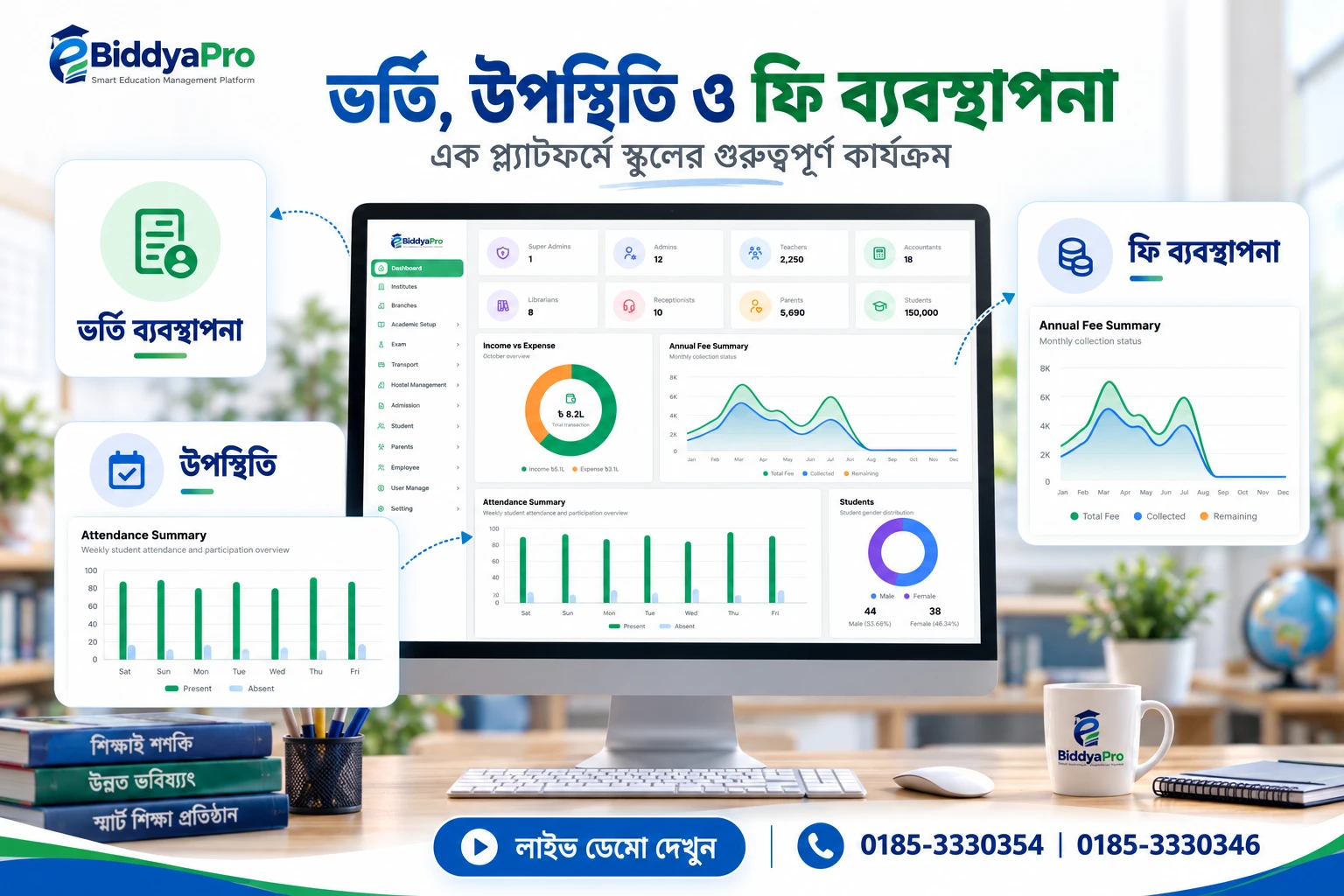
Managing Applicant Information and Eligibility Reviews with eBiddyaPro
October 28, 2026

Managing Applicant Information and Eligibility Reviews with eBiddyaPro
Admission season brings opportunity and administrative pressure. Educational institutions receive applications from families with different backgrounds, previous academic experiences and document requirements. Staff must organize those applications, identify incomplete information and review each case against the admission rules that apply.
When information is scattered across paper forms, spreadsheets and personal messages, maintaining consistency becomes difficult. One employee may update a telephone number while another continues using the original form. A missing document may remain unnoticed until the final enrollment stage. Applicants may also receive conflicting explanations about their status.
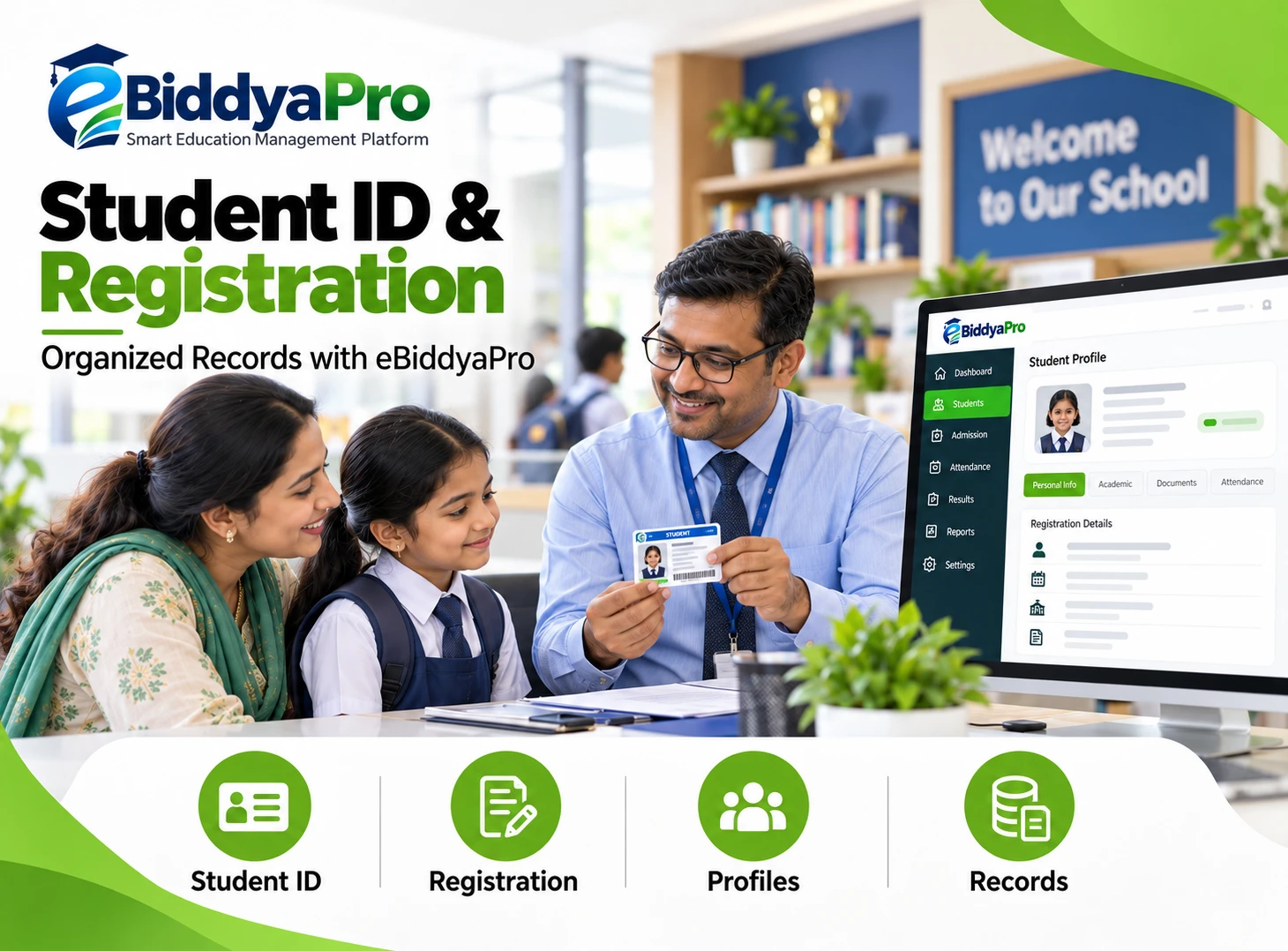
eBiddyaPro, the education management platform offered by TRIMATRIK MULTIMEDIA, provides a starting point for institutions seeking more organized digital administration. Its published guidance discusses admission applications, applicant information, document checks and enrollment decisions, while advising institutions to confirm their required workflows and package features.
This guide explains how schools, colleges and madrasas in Bangladesh can structure applicant information and eligibility reviews around eBiddyaPro. It also distinguishes administrative support from admission decisions that remain subject to institutional policy and applicable official requirements.
Understanding Applicant Information Management
Applicant information management is the process of collecting, maintaining and reviewing the details associated with a person seeking admission. It begins before enrollment and should preserve a clear distinction between applicants and current students.
A useful applicant record identifies the person, the academic session and the class or programme requested. It also connects relevant guardian information and any documents required by the institution.
For example, two applicants may have similar names but seek admission to different classes. Staff need enough reliable information to distinguish them without opening unrelated records.
Good information management also supports continuity. If a family corrects a spelling error, the institution should know which version is current and prevent the outdated detail from being reused later.
What an Eligibility Review Actually Establishes
An eligibility review examines whether an application meets the conditions applicable to the requested admission. Those conditions must come from the institution’s approved policy and any official instructions governing the process.
Eligibility and selection are different questions. A person may satisfy the requirements for consideration without automatically receiving an admission offer. Selection may involve another prescribed process, available places or an authorized decision.
Application completeness is also different from eligibility. A fully completed form can contain information that requires clarification, while an otherwise eligible applicant may have omitted a document.
Keeping these distinctions clear helps staff communicate accurately. It also prevents a software status or administrative note from being mistaken for a final admission decision.
The Bangladesh Admission Context
Educational institutions in Bangladesh do not all follow an identical admission process. Requirements can vary by institution type, academic level and the official arrangements applicable to a particular admission cycle.
The Directorate of Secondary and Higher Education’s GSA platform provides government and non-government school admission services. Its published interfaces distinguish application services, institutional access and admission-related information.
Where an official centralized process applies, an institution’s internal software should support its responsibilities without being presented as a replacement for that process. Staff must consult the relevant current instructions before configuring local procedures.
For example, an institution may use its administrative system to organize information received after an official selection. That does not give the institution permission to introduce an unrelated screening method contrary to the prescribed admission arrangements.
Where eBiddyaPro Fits
The strongest use of eBiddyaPro begins with a documented institutional workflow. Rather than asking only whether the platform has an admission module, explain what staff need to do with each application.
A school might need to distinguish incomplete applications from those ready for review. A college may need to organize previous academic information. Another institution may prioritize the transition from an approved applicant to a student record.
The workflows in this article describe a practical operating model. They do not establish that every eBiddyaPro package includes automatic eligibility scoring, configurable review stages, document authentication or multi-level approvals.
Institutions should demonstrate their forms, required records and decision responsibilities with the provider. This makes the proposed setup concrete and reduces misunderstandings about product capability.
Defining Requirements Before Opening Applications
A consistent review process begins before the first application arrives. Institutions should establish the requirements for the relevant session and communicate them clearly.
The admission team needs to know which information is essential, what documents are required and which person can resolve uncertain cases. Requirements should not be invented differently by individual employees during processing.
For example, if previous academic records are required for a particular class, applicants should receive clear instructions about the acceptable document. Staff should also know what to do when an applicant cannot immediately provide it.
When discussing eBiddyaPro, bring these approved requirements to the demonstration. Confirm whether the proposed fields and workflow support them and identify any work that will remain outside the platform.
Designing an Appropriate Applicant Record
A good applicant record captures the information needed for the admission purpose without collecting unrelated details. The structure should be understandable to applicants and useful to reviewers.
Names, contact details and the requested class should have clear labels. If dates are collected, the expected format should be unambiguous. Instructions can explain which document should be used as the reference for identity information.
For instance, an applicant should not have to guess whether a field asks for their current class or the class they want to enter.
Ask the eBiddyaPro team which fields can be configured and whether the proposed form works clearly in the institution’s required languages. Test the experience with realistic information rather than empty demonstration screens.
Separating Application References from Student Identity
An application reference identifies a particular admission request. A student identifier supports the person’s ongoing relationship with the institution after enrollment.
These purposes should not be confused. Not every applicant becomes a student, and an individual may submit a new application in a later admission cycle.
For example, retaining an earlier application should not cause a returning applicant to be mistaken for a currently enrolled student. The institution needs a clear way to interpret both records.
During an eBiddyaPro demonstration, ask how applications are identified, how existing records are located and what happens after approval. Confirm whether identifiers are generated automatically or require an administrative action in the selected configuration.
Collecting Guardian and Contact Information
Accurate contact information helps the admission team request clarification and explain the next step. A valid telephone number is particularly useful when an application requires attention.
The institution should identify the relationship between the applicant and the contact person. It should also explain who may request changes or receive sensitive application information.
Consider a family that changes its primary phone number during the review period. Staff need an approved way to update the record and avoid continuing to use an outdated copy.
In eBiddyaPro, demonstrate the available contact structure and editing permissions. If direct guardian access, identity verification or automated messages are required, confirm those capabilities separately rather than assuming they accompany a general contact field.
Reviewing Documents for Completeness
Document review should begin with a practical question: has the institution received the material it actually requires? A file may be present but unreadable, incomplete or attached to the wrong applicant.
For example, a photograph of a certificate may omit part of the page. The correct response is to explain what is missing and request an acceptable copy under the institution’s policy.
Completeness checks should remain separate from authentication. Receiving a clear image does not prove that the issuing authority created it or that every detail is correct.
If file uploads are part of the proposed eBiddyaPro workflow, test supported formats, viewing, replacement and access restrictions. Also confirm how staff identify which document belongs to which application.
Checking Identity Information Responsibly
Names and dates should be compared carefully with the relevant supporting information. Small differences may require clarification rather than an immediate negative decision.
Bangladesh has an official Birth and Death Verification service operated under the Office of the Registrar General. Government-published information identifies the official e-Verify portal as a birth registration verification resource.
An institution may use an appropriate official source when necessary and authorized for its administrative purpose. However, storing a registration number in eBiddyaPro should not be described as automatic government verification.
No direct eBiddyaPro integration with that verification service was established by the sources reviewed here. Institutions should confirm any proposed integration and maintain a clear distinction between recorded information and externally verified information.
Reviewing Academic Background
Where the applicable admission process requires previous academic information, staff should review it against the correct requirement. A result from one programme may not be directly comparable with a differently structured assessment.
The institution should explain which evidence is acceptable and who can interpret unusual cases. Staff should avoid creating informal thresholds that are absent from the approved policy.
For example, a transfer applicant may present a report using different subject names. An authorized academic reviewer may need to clarify how that information relates to the requested placement.
For eBiddyaPro, test whether the necessary background fields and documents can be organized usefully. Automated equivalency decisions or academic recommendations should not be assumed without explicit confirmation.
Applying Age or Other Conditions Carefully
Some admission processes include age or other eligibility conditions. Those conditions must be taken from the instructions applicable to that institution and admission cycle.
An accurate review may depend on a specified reference date rather than the applicant’s age on the day staff open the record. Using the wrong date can produce an incorrect conclusion.
Institutions should document the correct interpretation and establish how uncertain cases are escalated. Staff should not resolve ambiguity by changing an applicant’s recorded date of birth.
If an institution wants software-assisted calculations in eBiddyaPro, it should demonstrate the exact rule and expected outcome. Confirm how exceptions are handled and who remains responsible for reviewing the result.
Handling Missing or Conflicting Information
Incomplete information should lead to a clear administrative response. Applicants need to know what requires attention and how to provide the correction.
For example, the admission form may use a shortened name while the supporting document shows a full name. A reviewer can identify the difference and request clarification through the approved process.
A correction request should be specific. General messages such as “your application has a problem” create uncertainty and can result in repeated office visits.
When evaluating eBiddyaPro, ask how reviewers can record a concern and communicate the required action. Clarify whether applicants can resubmit information, whether staff make changes on their behalf and how the institution recognizes the current version.
Giving Reviewers Clear Responsibilities
Admission work often involves several people, but responsibility should remain identifiable. One employee may check completeness, another review academic information and an authorized person confirm the final outcome.
The process should explain what each reviewer can decide. A staff member checking documents should not accidentally communicate a final admission offer.
For example, marking a document as received should mean exactly that, without implying eligibility or selection.
If the institution needs separate reviewer roles in eBiddyaPro, demonstrate the permissions and transitions. Multi-level approval, reassignment and reviewer-specific queues are capabilities to confirm, not features to infer from the platform’s general admission guidance.
Keeping Screening Consistent and Fair
Consistency means applying the same approved requirements to comparable cases. It does not mean ignoring a legitimate difference that the policy requires staff to consider.
Reviewers should use relevant information and avoid unsupported assumptions about a family’s circumstances. Information collected for administration should not become an informal basis for decisions unrelated to published requirements.
For example, a missing document and a failed eligibility condition should not automatically receive the same explanation. The first may require completion; the second may require an authorized decision.
Digital records can support consistency by making the relevant information easier to locate. Fairness still depends on the institution’s criteria, staff conduct and review arrangements.
Communicating Application Status Clearly
Applicants need understandable explanations of where they are in the process. “Submitted,” “under review” and “admitted” describe different situations.
A family receiving an acknowledgment should not mistake it for an offer. Likewise, a request for clarification should explain whether the application remains under consideration.
The institution should agree on the meaning of each status before using it in messages or reports. This prevents different departments from describing the same case inconsistently.
With eBiddyaPro, confirm which status and communication options are available. SMS, email, applicant portals and delivery tracking should each be checked for availability, configuration and any additional charges.
Distinguishing Eligibility from Seat Availability
A person can meet the conditions for consideration without necessarily receiving a place. Institutions should keep eligibility, selection and actual enrollment distinct.
Seat-related information may also need to be considered within an official admission process. The GSA platform includes institution- and class-based vacant-seat information, illustrating that capacity is a separate administrative element.
For an institution’s own records, staff should be able to explain whether a case is awaiting clarification, eligible for the next prescribed stage or already approved for enrollment.
If capacity controls or waiting-list management are required in eBiddyaPro, confirm them separately. The system should support the authorized process rather than introduce an unapproved selection method.
Moving from Approval to Enrollment
Once admission is properly authorized, the institution can prepare the student’s ongoing record. This is an important transition because applicant information begins supporting daily administration.
Before transfer, staff should verify identity details, guardian contacts and the approved academic placement. An unresolved error should not spread into class lists and future documents.
For example, the class initially requested may differ from the placement finally approved. The resulting student record must reflect the authorized outcome.
Ask eBiddyaPro to demonstrate this transition. Confirm which information is reused, which additional details are needed and whether the applicant record remains retrievable after enrollment.
Protecting Applicant Information
Admission records can contain children’s identities, family contacts and supporting documents. Access should reflect a legitimate administrative responsibility.
An institution should decide who can view documents, edit identity information and communicate outcomes. Personal accounts are preferable to uncontrolled shared access when accountability is required.
Staff should also understand how to handle downloads and printed copies. A controlled digital system loses much of its value if sensitive records are casually shared through unrelated channels.
Discuss permissions, backups, exports and retention with the eBiddyaPro provider. The institution should also establish how withdrawn or unsuccessful applications are handled under its applicable policies rather than keeping every record indefinitely without review.
Introducing the Workflow in Practical Stages
A pilot allows the institution to test its process before handling a full admission cycle. Use a small set of realistic cases, including a complete application, missing information and a corrected document.
Review both the staff experience and the applicant’s instructions. A technically functional form may still use confusing language or collect unnecessary information.
During the pilot, compare the expected result with the actual outcome at each stage. Resolve gaps in permissions, training or configuration before expanding use.
The institution can then assess whether staff spend less time searching, whether applicants receive clearer instructions and whether approved information reaches enrollment accurately. These observations provide a stronger measure of value than feature counts alone.
Frequently Asked Questions
1. What is applicant information management?
It is the organized collection and maintenance of admission-related details. It helps staff identify applicants, locate supporting information and follow each case through the institution’s process.
2. What is an admission eligibility review?
It examines an application against the conditions applicable to the requested admission. Those conditions should come from approved policy and relevant official instructions.
3. Does eligibility guarantee admission?
Not necessarily. Eligibility, selection and enrollment are separate stages. The final outcome must follow the prescribed process and authorized decisions.
4. What is eBiddyaPro?
eBiddyaPro is an education management platform by TRIMATRIK MULTIMEDIA. Institutions should confirm which modules and workflows are included in their proposed package.
5. Does eBiddyaPro automatically decide eligibility?
Automatic eligibility decisions were not established by the reviewed sources. Any requested calculation or screening rule should be demonstrated and verified before use.
6. Can institutions use their own admission forms?
Form configuration should be checked with the provider. Bring the approved form and test whether the required fields and instructions can be supported.
7. Can applicants submit documents online?
Document upload availability, formats and size limits must be confirmed. Do not assume that all submission methods are included in every package.
8. Does uploading a document authenticate it?
No. Uploading establishes receipt of a file. Authentication and acceptance may require separate checks involving the issuing authority or an authorized reviewer.
9. Can birth registration information be checked?
An official government verification service exists. Any review should follow the institution’s authorized purpose; direct integration with eBiddyaPro should not be assumed.
10. How should incomplete applications be handled?
Identify the missing information precisely and explain how it can be supplied. Follow the institution’s published process for deadlines and further review.
11. Can applicants correct mistakes?
The available correction method depends on configuration. Confirm whether applicants can resubmit information or whether authorized staff must process changes.
12. What if two applicants share the same name?
Use an application reference and relevant identifying information. Names alone should not determine which documents or decisions belong to a particular applicant.
13. Should applicants receive student IDs immediately?
The institution should distinguish application identity from enrolled-student identity. Confirm how eBiddyaPro handles both stages before deciding the procedure.
14. Can different employees review applications?
Role-specific access and review steps should be demonstrated. The institution must define each reviewer’s authority and decision responsibilities.
15. Does eBiddyaPro support multi-level approvals?
That capability should be verified directly. General admission functionality does not establish support for every proposed approval structure.
16. Can the system send status notifications?
Confirm the available channels, message options and charges. An acknowledgment should clearly differ from an admission offer.
17. Can it manage waiting lists?
Waiting-list and capacity functions should be checked separately. Any use must follow the admission process applicable to the institution.
18. Does eBiddyaPro replace the government admission portal?
No replacement should be assumed. Where official centralized procedures apply, institutions must follow the relevant instructions.
19. Can approved information become a student record?
Ask the provider to demonstrate the transition. Verify the information reused, the final placement and any additional administrative steps.
20. Who should see applicant documents?
Access should be limited to people with relevant responsibilities. Permissions and handling procedures should protect applicants’ personal information.
21. Can colleges and madrasas use this approach?
They can evaluate the workflow against their own requirements. Academic structures, forms and eligibility conditions should be tested with representative examples.
22. Should staff receive training?
Yes. Training should cover information entry, review responsibilities, corrections, communication and privacy—not just navigation within the software.
23. How long should applications be retained?
Retention should follow applicable requirements and a documented institutional policy. Different outcomes or record types may require different treatment.
24. How can an institution get started?
Request an eBiddyaPro demonstration using actual forms and sample cases. Confirm capability, package contents, training and support before implementation.
Building a Clearer Admission Process
Reliable applicant information helps institutions review cases consistently and communicate with families more clearly. The strongest process distinguishes completeness, eligibility, selection and enrollment while preserving responsibility for each decision.
For educational institutions in Bangladesh, eBiddyaPro offers a platform to evaluate for organized admission administration. Start with your approved requirements, demonstrate the complete workflow and verify the features your team needs. This creates a practical foundation for managing applications accurately from initial submission to authorized enrollment.